


It’s a question we hear all the time from customers building or upgrading their networks: “I need an Ethernet cable. Is that the same as a Cat5 cable?” It’s a point of common confusion, and getting it right is crucial for a fast, reliable connection. The short answer is: all Cat5 cables are Ethernet cables, but not all Ethernet cables are Cat5.
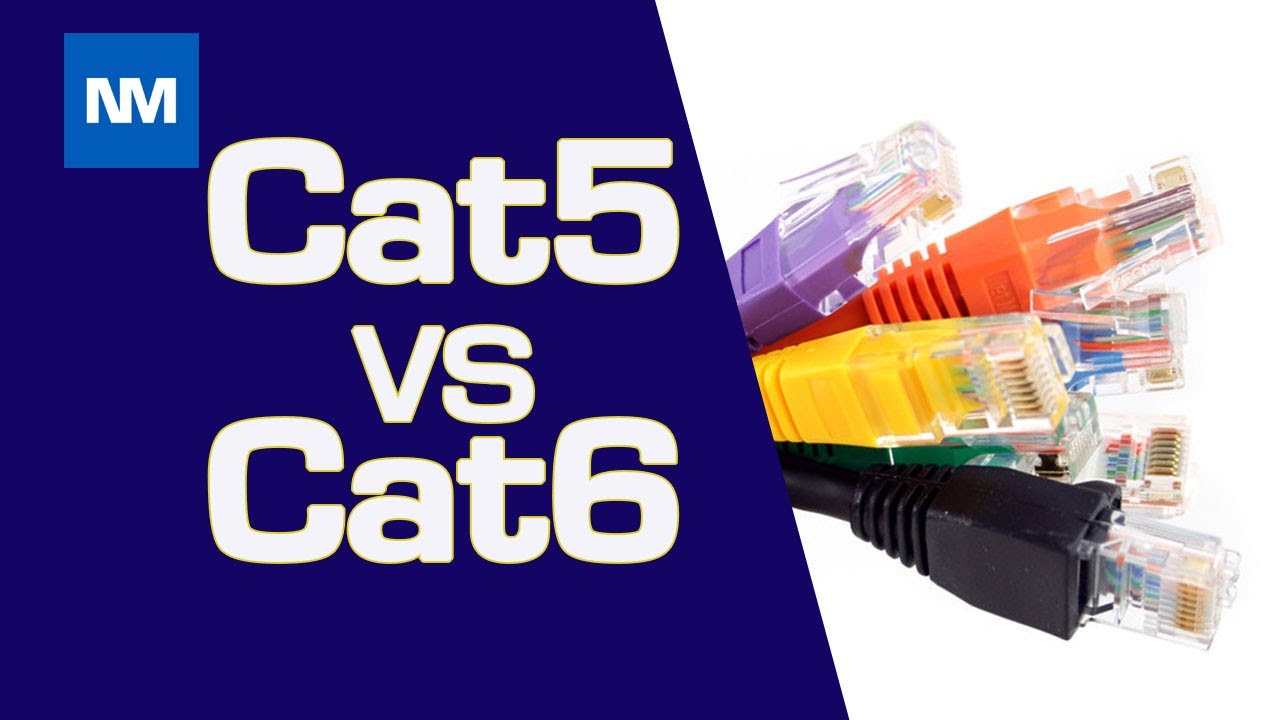
Think of “Ethernet” as the technology, the system that runs your wired network. The “Category” (or “Cat”) of the cable defines its performance capabilities within that system. Understanding this difference is the first step toward building a network that won’t let you down. As leading experts in high-performance cabling, we at DlayCable are here to clear things up and help you make the right choice.
In This Article:
- Understanding Ethernet: More Than Just a Cable
- Demystifying the “Cat”: What Do Cable Categories Mean?
- The Lowdown on Cat5: A Look at the Legacy Cable
- The Upgrade You Need: Cat5e, The Modern Minimum
- Future-Proofing Your Network: Cat6, Cat6a, and Beyond
- Quick Identification: How to Read Your Ethernet Cable
- The Final Answer and Our Expert Recommendation
- Build a Better Network with DlayCable
Understanding Ethernet: More Than Just a Cable
First, let’s define Ethernet. Ethernet isn’t a single type of cable. It’s the world’s most widely used technology for local area networks (LANs), standardized as IEEE 802.3. It’s the set of rules and hardware that allows devices—like your computer, router, smart TV, and gaming console—to communicate with each other over a wired connection.
A simple analogy: think of Ethernet as the entire highway system. It includes the rules of the road, the on-ramps, and the off-ramps. The cables themselves are like the different types of roads within that system—some are simple two-lane roads, while others are multi-lane superhighways built for much higher speeds and traffic volumes.
Demystifying the “Cat”: What Do Cable Categories Mean?
This is where the “Cat” comes in. “Cat” is short for Category. Each category is a standard, set by organizations like the Telecommunications Industry Association (TIA), that defines a cable’s performance capabilities. The higher the category number, the more stringent the standards are for speed, bandwidth, and resistance to interference.
Key performance metrics defined by a cable’s category include:
- Speed (Data Rate): Measured in megabits per second (Mbps) or gigabits per second (Gbps). This is how fast data can travel through the cable.
- Bandwidth (Frequency): Measured in megahertz (MHz). This determines how much data the cable can handle at one time. Think of it as the number of lanes on the highway.
- Crosstalk Resistance: This measures a cable’s ability to prevent signal interference from adjacent wires. Better resistance means a more stable and reliable connection.
The Lowdown on Cat5: A Look at the Legacy Cable
Now, let’s focus on the original query. Category 5 (Cat5) cable was the standard for many years. It was designed for network speeds up to 100 Mbps with a bandwidth of 100 MHz. In the era of early broadband, this was perfectly adequate for basic internet browsing and file sharing.
However, technology has moved on. Today, with average internet speeds often exceeding 100 Mbps, Cat5 is considered obsolete. It acts as a bottleneck, preventing you from getting the full speed you pay your internet service provider for. You won’t find reputable manufacturers like DlayCable producing new Cat5 cables because they simply don’t meet modern performance demands.
The Upgrade You Need: Cat5e, The Modern Minimum Standard
The successor to Cat5 is Cat5e (“e” for enhanced). While it also has a bandwidth of 100 MHz, it’s manufactured to a higher standard, allowing it to support speeds up to 1 Gigabit per second (1000 Mbps). It also features significantly improved resistance to crosstalk compared to Cat5.
For any modern home or office network, Cat5e is the absolute minimum standard you should use. It’s affordable and capable of handling most current internet plans, HD video streaming, and online gaming.
Future-Proofing Your Network: Cat6, Cat6a, and Beyond
If you want to ensure your network is ready for the future or if you have more demanding needs (like transferring large files between devices or using a 10G network), it’s wise to invest in a higher category cable. At DlayCable, we provide a full range of certified cables, ensuring you have the right foundation for any network.
- Cat6: A significant step up, Cat6 offers a bandwidth of 250 MHz. It reliably supports 1 Gbps speeds and can even handle 10 Gbps over shorter distances (up to 55 meters). Its tighter-wound conductors provide even better protection against interference, making it a great choice for a robust and future-proof home or office network.
- Cat6a: The “a” stands for “augmented.” Cat6a doubles the bandwidth to 500 MHz and is designed to reliably support 10 Gbps speeds over the full 100-meter distance. This is the gold standard for high-performance networks and a smart investment for anyone who wants peak performance for years to come.
- Cat7/Cat8: These are even higher-performance cables, typically used in data centers and highly specialized professional environments where maximum speed and shielding are critical.
Quick Identification: How to Read Your Ethernet Cable
Wondering what kind of cable you already have? It’s easy to check. Look closely at the outer plastic sheath (the jacket) of the cable. You will find text printed along its length that specifies the type. It will clearly state “CAT5,” “CAT5e,” “CAT6,” or a higher category.
The Final Answer and Our Expert Recommendation
So, to bring it all together: Cat5 is an outdated type of Ethernet cable. While it works within an Ethernet system, it will severely limit the performance of any modern network.
Our professional recommendation is clear:
- For new installations, use a minimum of Cat5e cable.
- For the best performance and to future-proof your network against faster internet speeds and more demanding applications, we strongly recommend using Cat6 or Cat6a cables. The small additional investment today will save you from performance bottlenecks tomorrow.
Build a Better Network with DlayCable
Your network is only as strong as its weakest link, and very often, that link is an outdated or low-quality cable. Choosing the right Ethernet cable ensures you get the speed, stability, and reliability you need for everything from critical business operations to seamless 4K streaming.
Ready to upgrade your network with confidence? Explore our comprehensive selection of high-quality, certified Ethernet cables at dlaycable.com. Our products are built with premium materials like pure copper conductors to guarantee peak performance and longevity. If you have any questions, our expert team is always here to provide personalized advice for your project.