


In a world dominated by wireless connectivity, the humble Ethernet cable remains the undisputed champion for speed, stability, and security. But when you’re setting up a new network or upgrading an old one, you’re faced with a critical choice: Cat5e or Cat6? As experts in high-performance network cabling at D-Lay Cable, we’re here to demystify the options and help you make the perfect choice for a fast and reliable connection.
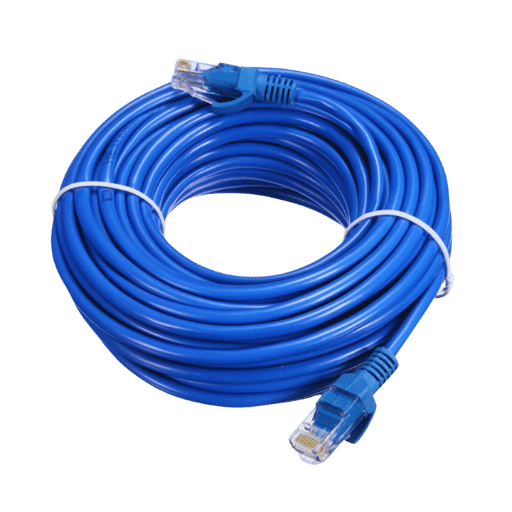
Making the right decision today will ensure your network can handle the demands of tomorrow, from 4K streaming and competitive gaming to a busy office environment. Let’s break it down.
In This Article:
The Quick Answer: Our Expert Recommendation
Don’t have time for the details? Here’s our professional advice:
For any new installation, always choose Cat6. The performance benefits and future-proofing it provides far outweigh the minor difference in cost. It is the modern standard for residential and commercial networks. If you are simply replacing a single faulty cable in an older, low-demand network, Cat5e is acceptable, but Cat6 is still the superior choice.
Understanding the Basics: Cat5e vs. Cat6
To understand our recommendation, it’s helpful to know what these categories mean. The “Cat” stands for “Category,” and the number indicates the generation and its capabilities. Higher numbers represent newer, more capable standards.
What is Cat5e Cable?
Cat5e (Category 5 enhanced) was the gold standard for years. It was designed to reduce “crosstalk”—interference between wires—compared to the original Cat5 standard. It reliably supports speeds up to 1 Gigabit per second (Gbps) over 100 meters and has a bandwidth of 100 MHz.
- Max Speed: 1 Gbps
- Bandwidth: 100 MHz
- Best For: Basic home internet plans (<1 Gbps), non-critical office tasks, and budget-sensitive projects.
While still functional, Cat5e is legacy technology. It meets the minimum requirements for many current internet plans but leaves little room for future growth. You can explore our reliable D-Lay Cable Cat5e cables for specific replacement needs.
What is Cat6 Cable?
Cat6 (Category 6) is a significant step up. It features more tightly twisted wires and often includes a plastic spline running through the center, which drastically reduces crosstalk and allows for higher performance. It supports speeds up to 10 Gbps at shorter distances (up to 55 meters) and has a bandwidth of 250 MHz.
- Max Speed: 10 Gbps (up to 55m), 1 Gbps (up to 100m)
- Bandwidth: 250 MHz
- Best For: High-speed home internet, competitive online gaming, 4K/8K video streaming, modern office networks, and future-proofing your home or business.
The superior construction of Cat6 cables, like our premium D-Lay Cable Cat6 selection, ensures a more stable and robust connection, ready for the increasing demands of modern devices.
Head-to-Head Comparison: The Key Differences
Here’s a simple table to visualize the differences:
| Feature | Cat5e | Cat6 |
|---|---|---|
| Speed (at 100m) | 1 Gbps | 1 Gbps (up to 10 Gbps at 55m) |
| Bandwidth | 100 MHz | 250 MHz |
| Crosstalk Reduction | Good | Excellent (Tighter twists, often has a spline) |
| Cost | Slightly Lower | Marginally Higher (Excellent Value) |
| Future-Proofing | Limited | Excellent |
Which Cable Should You Choose? A Scenario-Based Guide
Your specific needs will determine the best choice. Let’s look at a few common scenarios.
For Everyday Home Use
If your internet usage consists mainly of web browsing, social media, and streaming HD video on one or two devices, Cat5e can get the job done. However, with the rise of smart homes and multiple connected devices, choosing Cat6 is a smart, small investment to prevent future bottlenecks.
For High-Performance Gaming and 4K/8K Streaming
This is where Cat6 is non-negotiable. Competitive gaming demands the lowest possible latency, and streaming ultra-high-definition content requires significant, stable bandwidth. The 250 MHz bandwidth and superior noise resistance of Cat6 provide a cleaner signal, reducing lag and buffering for a frustration-free experience.
For Modern Offices and Business Networks
For any business, Cat6 is the minimum standard. Office environments involve multiple users, large file transfers, VoIP phones, and often Power over Ethernet (PoE) devices like security cameras and access points. The reliability and higher performance of Cat6 ensure your business operations run smoothly and efficiently.
For Future-Proofing Your Installation
Internet speeds are only going up. Installing cables in walls is a significant effort. Choosing Cat6 today ensures that when multi-gig internet plans become the norm in your area, your physical network infrastructure won’t be the weak link holding you back. Think of Cat6 as an investment in your property’s future.
Beyond Cat6: A Glimpse into the Future
It’s worth noting that technology doesn’t stop at Cat6. Standards like Cat6a (which supports 10 Gbps over the full 100 meters) and Cat8 (for high-speed data center applications) are also available. For most home and office users, Cat6 is the current sweet spot, but for those with extreme performance needs, D-Lay Cable offers a full range of advanced networking solutions.
Frequently Asked Questions (FAQ)
- Is Cat6 backward compatible?
- Yes. You can plug a Cat6 cable into a device or wall jack designed for Cat5e. The connection will work perfectly, though it will be limited to the speed of the slowest component in the chain.
- Can I mix Cat5e and Cat6 cables in my network?
- Absolutely. You can use a Cat6 patch cable to connect your PC to a Cat5e wall plate. Again, your overall speed will be determined by the lowest category component, but using a higher-quality cable never hurts.
- Is the higher cost of Cat6 really worth it?
- For new installations, 100% yes. The price difference has become very small, while the performance and future-proofing benefits are massive. The extra cost is minimal compared to the labor of re-installing cables a few years down the line.
The D-Lay Cable Verdict: Your Network Deserves the Best
While Cat5e is not yet obsolete, its time as the recommended standard has passed. For a network that is fast, reliable, and ready for the future, the choice is clear.
At D-Lay Cable, we are committed to providing products that offer uncompromising quality and performance. That’s why we confidently recommend our high-quality Cat6 Ethernet cables for all new home and office network installations. They provide the perfect balance of price, performance, and future-proofing to ensure your connection is never a source of frustration.
Ready to build a network that just works? Explore our full range of Cat6 Ethernet cables today or contact our team of experts for personalized advice on your project.