


In today’s hyper-connected world, a fast and stable internet connection is no longer a luxury—it’s a necessity. Whether you’re streaming 4K movies, competing in online games, running a business, or working from home, the backbone of your network is the humble Ethernet cable. But not all cables are created equal. You’ve likely seen the terms “Cat5e” and “Cat6” and wondered: what’s the real difference, and which one do I actually need?
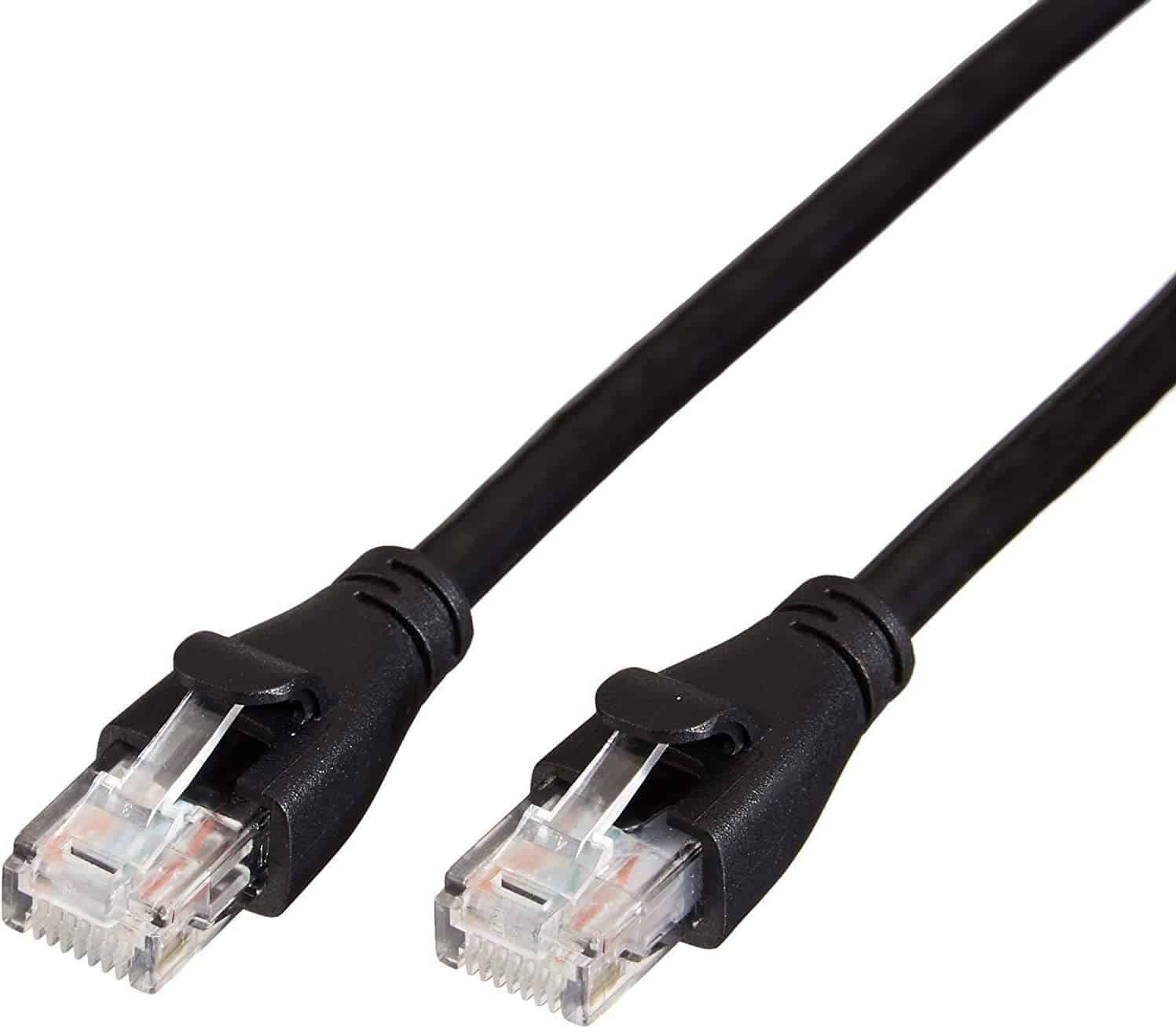
As a leading manufacturer of high-performance network cabling, we at D-Lay Cable have a deep understanding of the technology that powers your digital life. dlaycable will cut through the technical jargon to give you a clear, practical comparison between Cat5e and Cat6, helping you make an informed decision for a faster, more reliable network.
Table of Contents
- 1. Understanding Cat5e: The Reliable Standard
- 2. Understanding Cat6: The Performance Upgrade
- 3. Head-to-Head Comparison: Cat5e vs. Cat6 at a Glance
- 4. Which Should You Choose? A Practical Guide for Every Scenario
- 5. The Importance of Future-Proofing Your Network
- 6. The D-Lay Cable Difference: Why Quality Matters More Than Category
- 7. The Final Verdict
1. Understanding Cat5e: The Reliable Standard
First, let’s clarify a common point of confusion. The original “Cat5” cable is now obsolete. When people refer to Cat5 today, they almost always mean Cat5e (Category 5 Enhanced). For years, Cat5e has been the workhorse of home and office networking, and for good reason.
- Speed: Supports speeds up to 1 Gigabit per second (Gbps).
- Bandwidth: Operates at a frequency of 100 MHz.
- Best For: Standard home internet plans (up to 1 Gbps), basic office networking, VoIP phones, and everyday streaming and browsing.
Cat5e is a highly capable and cost-effective solution for many applications. It reliably delivers the gigabit speeds that most internet service providers offer today. For a typical family home or a small office with standard data needs, Cat5e gets the job done efficiently.
2. Understanding Cat6: The Performance Upgrade
Cat6 (Category 6) represents a significant step up in performance. While it also supports 1 Gbps speeds over the same distance as Cat5e (up to 100 meters), its real advantage lies in its construction and higher bandwidth potential.
- Speed: Supports 1 Gbps up to 100 meters and can achieve speeds of 10 Gbps in shorter runs (up to 55 meters).
- Bandwidth: Operates at a higher frequency of 250 MHz.
- Construction: Cat6 cables are built to stricter standards. They feature more tightly twisted wire pairs and often include a “spline” (a plastic separator) that runs down the center. This design drastically reduces crosstalk (interference between wire pairs) and external noise.
- Best For: Gaming, 4K/8K video streaming, smart homes with many connected devices, office environments, and anyone looking to “future-proof” their network infrastructure.
The superior construction of Cat6 means a more stable and robust signal, which is critical in environments with high data traffic or potential electromagnetic interference (EMI).
3. Head-to-Head Comparison: Cat5e vs. Cat6 at a Glance
To make it simple, here is a direct comparison of the key specifications. As manufacturers, we know these details are what truly define performance.
| Feature | Cat5e | Cat6 |
|---|---|---|
| Max Speed (at 100m) | 1 Gbps | 1 Gbps |
| Max Speed (at <55m) | 1 Gbps | 10 Gbps |
| Bandwidth | 100 MHz | 250 MHz |
| Crosstalk Reduction | Good | Excellent |
| Construction | Standard twisted pairs | Tighter twists, often with a central spline |
| Cost | Lower | Slightly Higher (approx. 20-30%) |
4. Which Should You Choose? A Practical Guide for Every Scenario
The best cable for you depends entirely on your needs. Let’s break it down by use case:
For the Average Home User:
If your primary activities are browsing the web, checking email, and streaming HD video on one or two devices, Cat5e is perfectly sufficient. It’s affordable and delivers the gigabit speeds your ISP provides.
For Gamers, Streamers, and Power Users:
If you demand the lowest latency for online gaming, stream in 4K or 8K, or transfer large files across your local network, Cat6 is the clear winner. The higher bandwidth and superior noise resistance provide a more stable, consistent connection, reducing lag and buffering.
For New Office Installations & Businesses:
For any new construction or major renovation, installing Cat6 is the standard recommendation. The minor additional cost is a small price to pay for a network backbone that can support growing data demands and future technologies, including short-run 10 Gbps connections between servers and switches.
5. The Importance of Future-Proofing Your Network
Internet speeds are constantly increasing. While 1 Gbps is common now, multi-gigabit home internet is on the horizon. Investing in Cat6 today ensures your physical network wiring won’t be a bottleneck tomorrow. Given the small price difference, we at D-Lay Cable almost always recommend Cat6 for permanent installations (like wiring inside walls) as a smart, long-term investment.
And for those on the cutting edge, categories like Cat6a (which supports 10 Gbps over the full 100 meters) and Cat8 (for high-speed data centers) are already available, demonstrating our commitment to providing solutions for every level of demand.
6. The D-Lay Cable Difference: Why Quality Matters More Than Category
Choosing between Cat5e and Cat6 is only half the battle. The quality of the cable itself is paramount. A poorly made Cat6 cable can perform worse than a high-quality Cat5e cable.
As a dedicated manufacturer, this is where we excel. Here’s what to look for, and what we guarantee in our products:
- 100% Pure Bare Copper Conductors: We exclusively use pure copper. Cheaper cables often use Copper Clad Aluminum (CCA), which has higher resistance, is prone to breaking, and can be a fire hazard.
- Robust Sheathing and Insulation: Our cables are built to last, with durable jackets that protect the internal wires from physical stress and interference.
- UL and ETL Certifications: Our products are rigorously tested by third-party labs like Underwriters Laboratories (UL) and Intertek (ETL) to ensure they meet and exceed strict safety and performance standards.
- Precision Manufacturing: The consistency of the twists and the quality of the spline in our Cat6 cables are what deliver that superior performance and noise cancellation.
7. The Final Verdict
So, what’s better, Cat5e or Cat6?
The simple answer: For basic needs and tight budgets, Cat5e is adequate. For superior performance, stability, and future-proofing, Cat6 is the recommended choice and offers the best value for a modern network.
Ultimately, building a reliable network starts with quality components. By choosing a certified, well-manufactured cable from a trusted source like D-Lay Cable, you’re ensuring that whether you pick Cat5e or Cat6, you’re getting the performance you paid for. If you have any questions or need a custom cabling solution, our team of experts is here to help you build the perfect network foundation.