


In today’s hyper-connected world, the speed and reliability of your network are paramount. Whether you’re setting up a home office, managing a small business, or architecting a high-performance data center, the physical backbone of your connection—the Ethernet cable—plays a critical role. But with a wide array of categories available, from Cat5e to Cat8, choosing the right one can be confusing.
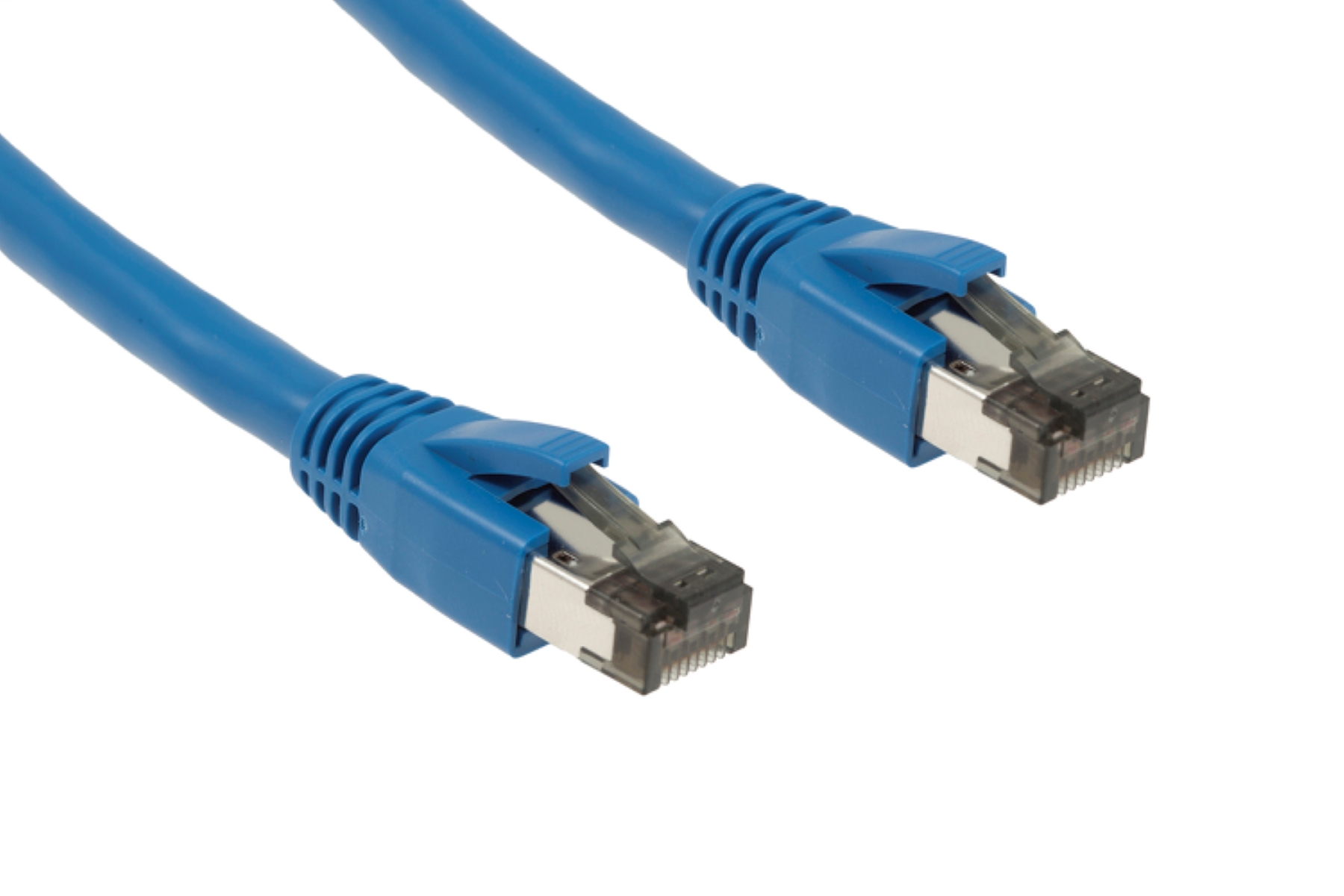
As a leading manufacturer of high-quality network cabling solutions, we at D-Lay Cable understand the nuances that differentiate these standards. dlaycable will demystify the two ends of the modern Ethernet spectrum: the ubiquitous Cat5e and the powerhouse Cat8. We’ll break down their differences, explain the technology behind them, and help you make an informed decision for your specific needs.
Article Directory
Quick Comparison: Cat5e vs. Cat8 at a Glance
For those who need a quick answer, this table highlights the fundamental differences between Cat5e and Cat8 Ethernet cables.
| Feature | Cat5e (Category 5 Enhanced) | Cat8 (Category 8) |
|---|---|---|
| Max Speed | 1 Gbps (Gigabit per second) | 25 Gbps or 40 Gbps |
| Max Bandwidth (Frequency) | 100 MHz | 2000 MHz (2 GHz) |
| Max Cable Length | 100 meters (328 feet) | 30 meters (98 feet) |
| Shielding | Typically Unshielded (UTP) | Always Shielded (S/FTP) |
| Common Application | Home networks, small/medium offices, VoIP phones | Data centers, server rooms, high-bandwidth professional applications |
| Cost | Low | High |
Deep Dive: Understanding Cat5e Cable
Category 5 Enhanced (Cat5e) has been the gold standard for residential and light commercial networking for over two decades. It was an improvement upon the now-obsolete Cat5 standard, designed specifically to support Gigabit Ethernet speeds (1 Gbps) over a distance of up to 100 meters.
- Performance: With 1 Gbps speed and 100 MHz bandwidth, Cat5e is more than sufficient for most everyday internet activities, including HD video streaming, online gaming, video conferencing, and general web browsing.
- Construction: Most Cat5e cables are Unshielded Twisted Pair (UTP), meaning the four pairs of copper wires inside are twisted to reduce interference, but there is no additional metallic shield. This construction makes them flexible, easy to install, and highly cost-effective.
- Best For: Home networks, office cubicles, connecting routers, PCs, printers, and VoIP phones where standard Gigabit speed is adequate.
Deep Dive: Understanding Cat8 Cable
Category 8 (Cat8) is the latest and most powerful generation of copper Ethernet cabling recognized by the TIA. It represents a quantum leap in performance, but it’s designed for a very specific environment and purpose.
- Performance: Cat8 cables support staggering speeds of 25 Gbps or even 40 Gbps with a bandwidth of 2000 MHz. This is 20 times the bandwidth of Cat5e, allowing for an immense amount of data to be transferred simultaneously.
- Construction: To achieve these speeds and combat extreme interference, Cat8 cables are always shielded. They use S/FTP (Screened/Foiled Twisted Pair) construction, where each individual wire pair is wrapped in foil, and an overall braided screen encases all four pairs. This makes the cable much thicker, stiffer, and more expensive.
- Best For: Short-distance, high-speed connections within a data center. It’s designed to connect servers, switches, and storage area networks (SANs) within a single rack or row. The 30-meter length limitation makes it unsuitable for standard office or home layouts.
The 4 Key Differences Explained
While the table above provides a summary, understanding why these cables are so different is crucial for making the right choice. As manufacturers, we focus on these four critical distinctions.
1. Speed and Bandwidth: The Performance Gap
Think of bandwidth (measured in MHz) as a highway and speed (measured in Gbps) as the speed limit. Cat5e has a 100 MHz highway with a 1 Gbps speed limit—perfect for typical traffic. Cat8 has a massive 2000 MHz superhighway with a 40 Gbps speed limit, built for transporting huge volumes of data traffic like that found between servers in a data center.
2. Shielding and Construction: Fighting Interference
The higher the frequency (bandwidth), the more susceptible a cable is to “crosstalk” and electromagnetic interference (EMI).
- Cat5e’s UTP design is sufficient for its 100 MHz frequency in most environments.
- Cat8’s 2000 MHz frequency requires robust S/FTP shielding to protect the signal integrity. Without it, the data would be corrupted, and the 40 Gbps speeds would be impossible to achieve. This heavy shielding is a primary reason for its increased cost and rigidity.
3. Distance and Application: Where They Shine
This is perhaps the most practical difference for users.
- Cat5e can run a full 100 meters (328 ft), making it ideal for wiring an entire house or office floor from a central networking closet.
- Cat8’s channel length is limited to just 30 meters (98 ft). This is by design, as it’s intended for “end-of-row” or “top-of-rack” data center architectures where high-speed equipment is located in close proximity. Using it to wire a home would be impractical and extremely expensive.
4. Cost and Future-Proofing: A Practical Analysis
There’s a significant price difference. A Cat8 cable can cost 4-5 times more than a Cat5e cable of the same length due to its complex construction and materials.
Is Cat8 “future-proofing” for a home? For 99% of users, the answer is no. Your home internet connection is the bottleneck, not your internal network cable. A 1 Gbps Cat5e (or Cat6/6a) cable can handle even the fastest residential fiber internet plans available today and in the foreseeable future. “Future-proofing” in a home environment is better achieved with Cat6 or Cat6a, which offer a balanced upgrade path without the extreme cost and limitations of Cat8.
The Final Verdict: Which Cable Do You Need?
Choosing between Cat5e and Cat8 is simple once you define your needs.
Choose Cat5e if:
- You are setting up a home network for streaming, gaming, and web browsing.
- You are wiring a small or medium-sized office for standard business tasks.
- Your internet plan is 1 Gbps or less.
- Budget and ease of installation are primary concerns.
Choose Cat8 if:
- You are a data center professional connecting servers, storage, and network switches.
- You require 25GBASE-T or 40GBASE-T connections over short distances (under 30m).
- Maximum performance in a high-interference environment is the absolute top priority, and cost is not a major factor.
What about Cat6 and Cat6a? For new installations or those seeking a step up from Cat5e, Cat6 and Cat6a are excellent middle-ground options, supporting speeds up to 10 Gbps and offering better performance for a modest price increase. They represent the sweet spot for advanced home users and modern businesses.
Partner with D-Lay Cable for Your Network Needs
Understanding the right cable for the job is the first step toward building a fast, stable, and reliable network. At D-Lay Cable, we don’t just sell cables; we manufacture solutions. Our commitment to quality means every Cat5e cable we produce is rigorously tested to meet and exceed TIA standards for 1 Gbps performance, ensuring a dependable connection for your home or office. For our data center clients, our precision-engineered Cat8 cables provide the mission-critical performance needed to power the future of data.
Whether you need a reliable bulk order of Cat5e for an office build-out or custom-length, high-performance Cat8 patch cords for your server racks, our team has the expertise to guide you. Contact D-Lay Cable today to discuss your project and discover how our quality manufacturing can make all the difference.