


In the world of network cabling, choosing the right Ethernet cable is the foundation of a reliable and high-performing network. Two of the most common and often-debated options are Category 5e (Cat5e) and Category 6 (Cat6). While they may look similar, their internal construction and performance capabilities are significantly different. As your trusted network cabling partner, we at DLAY CABLE are here to demystify the differences and help you make an informed decision for your home, office, or large-scale project.
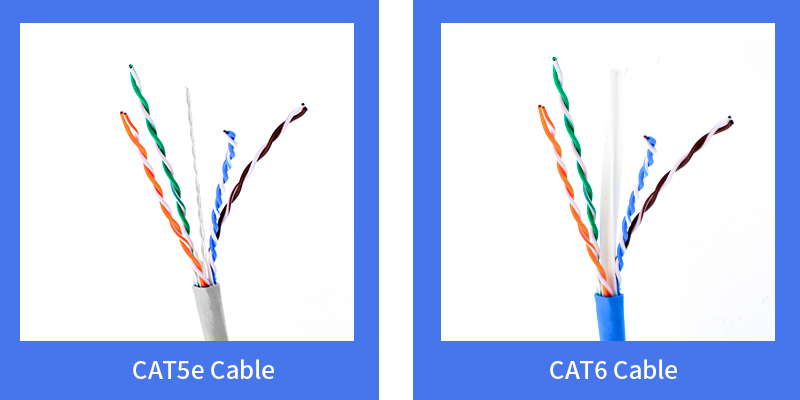
Understanding the distinction isn’t just about speed; it’s about ensuring network stability, minimizing interference, and future-proofing your infrastructure. Let’s break it down.
Quick Comparison: Cat5e vs. Cat6 at a Glance
For a fast overview, here is a direct comparison of the most important specifications for Cat5e and Cat6 cables.
| Feature | Cat5e (Category 5e) | Cat6 (Category 6) |
|---|---|---|
| Max Speed | 1 Gbps @ 100 meters | 10 Gbps @ up to 55 meters (1 Gbps @ 100 meters) |
| Bandwidth (Frequency) | Up to 100 MHz | Up to 250 MHz |
| Crosstalk (NEXT) | Standard performance | Significantly reduced due to stricter standards |
| Internal Construction | Twisted pairs | Tighter twisted pairs, often with a spline (plastic separator) |
| Best For | Home networks, small offices, budget-conscious 1 Gbps installations. | Commercial buildings, data centers, future-proofing, PoE, high-interference environments. |
What is Cat5e Cable? The Reliable Standard

Category 5e (the ‘e’ stands for ‘enhanced’) was an improvement upon the older Cat5 standard. For many years, it has been the go-to cable for residential and light commercial installations. It is designed to reliably support speeds up to 1 Gigabit per second (Gbps) over a distance of 100 meters.
Key Specifications of Cat5e
- Speed: 1000BASE-T or 1 Gbps.
- Bandwidth: 100 MHz. This refers to the data-carrying capacity of the cable. Think of it as a two-lane highway.
- Crosstalk: Cat5e has standards to reduce crosstalk (interference between wire pairs), but they are less stringent than those for Cat6.
Best Use Cases for Cat5e
Cat5e is still a very capable cable and is an excellent choice for:
- Standard Home Networks: Perfect for connecting your router to computers, gaming consoles, and smart TVs for streaming and browsing where 1 Gbps is sufficient.
- Small Office Setups: Adequately handles the data needs of small businesses for file sharing, printing, and internet access.
- Budget-Sensitive Projects: Cat5e is generally more affordable than Cat6, making it a cost-effective solution for large-scale deployments where 10 Gbps speeds are not a requirement.
At DLAY CABLE, our Cat5e cables are manufactured with 100% pure bare copper conductors, ensuring maximum performance and reliability that meets and exceeds industry standards.
What is Cat6 Cable? The Performance Upgrade

Category 6 is a significant step up from Cat5e, designed for environments that demand higher performance and a more robust connection. While it also supports 1 Gbps speeds at 100 meters, its true advantage lies in its ability to handle 10 Gbps speeds over shorter distances (up to 55 meters) and its drastically improved resistance to interference.
Key Specifications & Enhancements
- Speed: 10GBASE-T or 10 Gbps up to 55 meters.
- Bandwidth: 250 MHz. This is more than double the bandwidth of Cat5e. Think of it as a wider, four-lane highway, allowing more data to pass through simultaneously with less congestion.
- Reduced Crosstalk: Cat6 features significantly stricter specifications for Near-End Crosstalk (NEXT), resulting in a cleaner, more stable signal.
The Secret to Cat6 Performance: Construction
The superior performance of Cat6 is not magic; it’s engineering. It achieves this through:
- Tighter Twists: The pairs of copper wires inside a Cat6 cable are twisted more tightly than in Cat5e, which naturally helps guard against interference.
- Spline (Separator): Many Cat6 cables include a plastic spine that runs down the center, isolating each of the four twisted pairs. This physical barrier is a key reason for its excellent crosstalk performance.
Best Use Cases for Cat6
Cat6 is the recommended standard for most new installations due to its performance and future-proofing benefits. It excels in:
- Modern Businesses & Offices: Where high-speed data transfer and network reliability are critical.
- Future-Proofing: Installing Cat6 today ensures your network infrastructure is ready for the higher-speed demands of tomorrow.
- High-Interference Environments: Ideal for installations near power lines, fluorescent lights, or motors.
- Power over Ethernet (PoE): Cat6 cables often have slightly thicker conductors, which handle the heat from PoE applications more efficiently, making them a better choice for security cameras, VoIP phones, and wireless access points.
How to Choose: Making the Right Decision for Your Needs
So, which cable should you choose? The answer depends entirely on your specific application, budget, and future needs.
For Everyday Home & Small Office Use…
If you’re on a tight budget and your internet speed is 1 Gbps or less, Cat5e is a perfectly adequate choice. It will handle all your current needs without issue. However, for a small extra investment, Cat6 offers excellent future-proofing as internet speeds and internal network demands continue to grow.
For Future-Proofing & New Installations…
Always choose Cat6 (or higher, like Cat6A). The cost difference in cable is minimal compared to the cost of labor to re-run cables inside walls later. Installing Cat6 ensures your network can handle future technologies and higher bandwidth demands for years to come.
For Businesses & High-Density Environments…
Cat6 is the minimum standard. The superior crosstalk performance ensures a more stable network in an office environment with many cables running in close proximity. This reduces data errors and network downtime, which is critical for business operations.
The DLAY CABLE Advantage: Beyond the Specs
Choosing the right category is only half the battle. The quality of the cable itself is paramount. At DLAY CABLE, we provide more than just products; we deliver peace of mind.
- Guaranteed Performance: All our Cat6 and Cat5e patch cables are Fluke Tested to certify they meet and exceed TIA performance standards. You get a cable that performs exactly as advertised.
- Quality Materials: We use 100% pure bare copper conductors, not inferior Copper Clad Aluminum (CCA). This ensures better conductivity, reliability, and PoE performance.
- Expert Manufacturing: Our advanced production facilities and strict quality control mean you get a consistent, high-quality product every time.
- Custom Solutions (OEM/ODM): Need a specific length, color, or packaging for your project? As a direct manufacturer, we offer complete OEM/ODM services to create the perfect cabling solution for you, with low MOQs and fast delivery.
Whether you choose the reliable standard of Cat5e or the performance upgrade of Cat6, partnering with DLAY CABLE means you’re building your network on a foundation of quality and expertise. Browse our selection of Ethernet cables or contact our team today to discuss your project’s specific needs.