


In today’s connected world, the performance of your network is only as strong as its weakest link. Often, that link is the very cable that carries your data. Choosing between Cat5e and Cat6 Ethernet cables can seem like a minor detail, but it’s a critical decision that impacts speed, reliability, and future-readiness. As industry leaders in high-performance cabling, we at D-Lay Cable want to provide a clear, professional guide to help you make the right choice for your home or business.
Article Contents:
Quick Comparison: Cat5e vs. Cat6 at a Glance
For those who need a fast answer, this table breaks down the essential specifications of Cat5e and Cat6 cables.
| Feature | Cat5e (Category 5 Enhanced) | Cat6 (Category 6) |
|---|---|---|
| Max Speed | 1 Gbps at 100 meters (328 ft) | 1 Gbps at 100 meters (328 ft) 10 Gbps at 55 meters (180 ft) |
| Max Bandwidth (Frequency) | 100 MHz | 250 MHz |
| Crosstalk Reduction | Basic (twisted pairs) | Superior (tighter twists, central spline/divider) |
| Best For | Basic home networks, budget-conscious installations, existing 1 Gbps networks. | New installations, business networks, smart homes, PoE applications, future-proofing. |
| Cost | Lower | Slightly Higher |
Diving Deeper: The 4 Key Differences That Matter
While the table gives a great overview, understanding why these differences exist is key to appreciating the value Cat6 brings to a modern network.
1. Performance: Speed and Bandwidth
The most cited difference is performance. While both Cat5e and Cat6 can handle speeds up to 1 Gigabit per second (Gbps), that doesn’t tell the whole story. The real difference lies in bandwidth.
- Cat5e is rated for 100 MHz. Think of this as a two-lane highway. It gets the job done for standard traffic but can get congested.
- Cat6 is rated for 250 MHz. This is like upgrading to a four-lane highway. It has more than double the capacity to handle data, resulting in more stable performance, especially when multiple devices are communicating simultaneously. This higher bandwidth is what allows Cat6 to support 10 Gbps speeds over shorter distances.
2. Construction and Crosstalk Reduction
A cable’s physical design is crucial for performance. “Crosstalk” is unwanted signal interference between the wire pairs inside a cable, which can lead to errors, slower speeds, and dropped packets. Cat6 is specifically engineered to combat this.
- Tighter Twists: Cat6 cables feature more twists per inch in their copper wire pairs. This simple but effective design change naturally reduces interference.
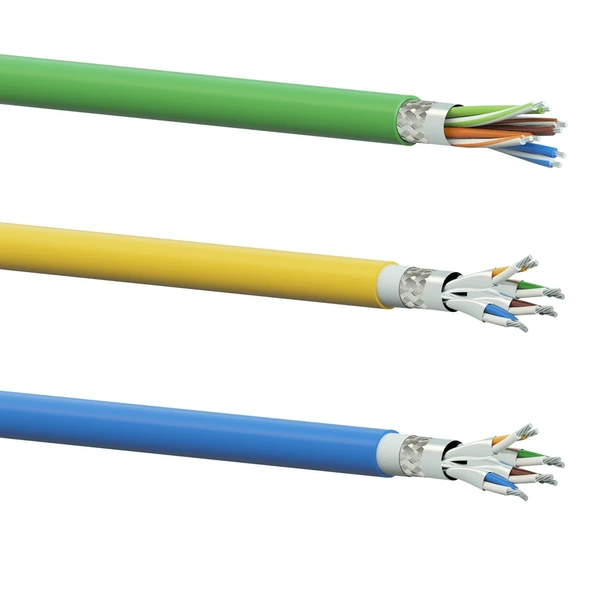
- Spline (Separator): Most Cat6 cables include a plastic divider, known as a spline, that runs down the center, keeping the wire pairs physically separated. This dramatically reduces crosstalk and is a key reason for Cat6’s superior reliability. At D-Lay Cable, our Cat6 cables are manufactured to strict specifications to ensure maximum signal integrity.
3. Future-Proofing and Application
Choosing a cable isn’t just about today’s needs; it’s an investment in your network’s future. The demand for bandwidth is constantly growing with 4K streaming, online gaming, smart home devices, and increasingly powerful Power over Ethernet (PoE) applications.
Cat6 is the clear choice for future-proofing. Its robust construction and higher bandwidth ensure your infrastructure can handle the next generation of network demands without needing a costly and disruptive replacement. For any new construction or major renovation, installing Cat6 is the professional standard.
4. Cost vs. Long-Term Value
While Cat5e cables are less expensive, the price difference is often minimal in the context of an entire project. When you factor in the labor costs of installation, the slight premium for Cat6 is a small price to pay for significantly better performance, reliability, and longevity. Opting for Cat5e to save a few dollars today could mean a full network overhaul in just a few years. Cat6 provides far greater long-term value.
How to Choose the Right Cable for Your Needs
So, which one is right for you? Here’s our expert recommendation.
When to Use Cat5e
Cat5e can still be a viable option in specific, limited scenarios:
- Strict Budget Constraints: If budget is the absolute primary concern and network demands are low.
- Temporary Installations: For short-term setups where future performance is not a factor.
- Non-Critical Applications: For connecting devices where consistent, high-speed performance isn’t essential.
Why Cat6 is the Recommended Standard for New Installations
For virtually all other cases, Cat6 is the superior choice and our professional recommendation.
- All New Installations: If you are running new cables, always choose Cat6 or higher.
- Business and Office Networks: Essential for ensuring productivity and reliable connections for employees.
- Smart Homes: Provides the necessary bandwidth for dozens of connected devices, from security cameras to smart TVs.
- PoE Devices: The thicker copper wires and better performance of Cat6 make it ideal for Power over Ethernet applications.
Identifying Your Cables: A Simple Visual Guide
Unsure what cables you already have? It’s easy to check. Simply look at the text printed on the outside jacket of the cable. It will be clearly labeled as “Category 5e” or “Category 6”, often along with other specifications like the manufacturer name—look for D-Lay Cable for guaranteed quality!
Beyond Cat6: A Glimpse into the Future
The world of cabling continues to evolve. While Cat6 is perfect for most current applications, categories like Cat6a (which supports 10 Gbps over the full 100 meters) and even Cat7 and Cat8 are available for high-demand data centers and enterprise environments. As a full-service supplier, we offer a complete range of these advanced solutions to meet any networking challenge.
The D-Lay Cable Advantage: Quality You Can Trust
Your network’s foundation should be built on quality. At D-Lay Cable, we are committed to providing professionally certified, high-performance cabling solutions that deliver on their promise. Our Cat6 cables are manufactured with premium materials and stringent quality control to ensure they reduce crosstalk, maximize bandwidth, and provide a reliable connection for years to come.
Don’t let substandard cabling compromise your network. Invest in the quality and performance that your home or business deserves. Explore our full range of Cat6 Ethernet cables or contact our team of experts today for personalized advice on your project.