


As a leading manufacturer of network cabling solutions, we at D-Lay Cable often get questions from customers planning their network infrastructure. One of the most common is: “I have a Cat6 network, but I found an old Cat5 cable. Can I use it?” or “Can I plug a new Cat6 cable into my older Cat5e system?”
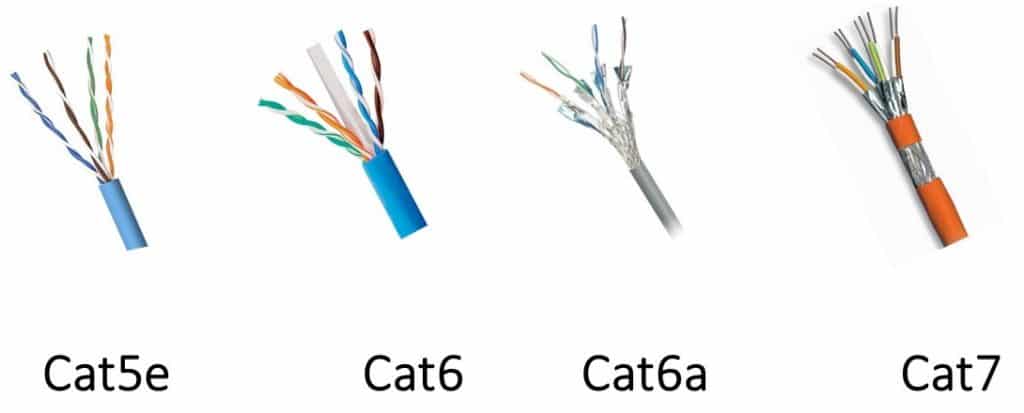
It’s a practical question that can impact everything from your home internet speed to the efficiency of your business operations. In this guide, we’ll leverage our expertise to give you a clear, definitive answer and help you understand the nuances of network cabling compatibility.
The Short Answer: Yes, But With a Catch
Let’s get straight to the point: Yes, a Cat5e cable will physically connect to a Cat6 port, and a Cat6 cable will connect to a Cat5e port. The RJ45 connectors are identical. However, the performance of that connection will be limited by the lowest category component in the chain. Your network is only as fast as its slowest part.
Think of it like connecting a garden hose (Cat5e) to a fire hydrant’s main pipe (Cat6). You can make the connection, but the water will only flow at the rate the garden hose can handle.
Understanding the Core Differences: Cat5e vs. Cat6
To understand why performance is limited, it’s crucial to know the technical differences between these cables. At D-Lay Cable, we manufacture both to rigorous international standards, and each is designed for a specific level of performance.
The higher bandwidth of Cat6 (250 MHz vs. 100 MHz) means it can process more data simultaneously, much like a wider highway can handle more cars at once. The superior construction of Cat6 reduces crosstalk, leading to a more stable and reliable signal, which is essential for achieving higher speeds.
How Backward Compatibility Works in Ethernet
The entire family of twisted-pair Ethernet cables (Cat5, Cat5e, Cat6, Cat6a, etc.) is designed to be backward compatible. This is an intentional design feature that ensures you can upgrade parts of your network over time without everything becoming obsolete at once.
When you connect a Cat5e cable to a Cat6 port, the network hardware automatically negotiates the highest speed that both components can reliably support. Since the Cat5e cable is the limiting factor, the connection will default to Cat5e standards (e.g., 1 Gbps speed, 100 MHz bandwidth).
The “Weakest Link” Principle: What Really Happens When You Mix Cables
This is the most critical concept to grasp. Your network data path isn’t just one cable. It’s a chain of components:
- The cable from your device (PC, gaming console) to the wall plate.
- The keystone jack in the wall plate.
- The cable running through the walls.
- The patch panel in your server room or network closet.
- The patch cable connecting the panel to your switch or router.
If any single one of these components is Cat5e while the rest are Cat6, the entire data path for that connection will perform at Cat5e levels. You’ve essentially created a bottleneck.
Example: You have a full Cat6 infrastructure capable of 10 Gbps speeds. If you connect your new, high-end PC to the wall using a spare Cat5e patch cord, that PC’s connection to the network will be capped at 1 Gbps, failing to take advantage of your faster network.
Practical Scenarios: When Mixing is (and isn’t) Okay
Scenario 1: Using a Cat5e patch cable in a full Cat6 network.
Is it okay? Temporarily, yes. But it’s not recommended for permanent use, especially for high-performance devices. You are actively downgrading your connection speed. This is a common bottleneck we see in many businesses and homes.
Scenario 2: Using a Cat6 patch cable in a full Cat5e network.
Is it okay? Absolutely. This is a great way to “future-proof.” The Cat6 cable will work perfectly at Cat5e speeds, and if you later upgrade your router, switch, and wall jacks, the cable will be ready for the higher performance.
Scenario 3: A home user with a 300 Mbps internet plan.
Does it matter? For most daily use, probably not. Cat5e is capable of up to 1000 Mbps (1 Gbps), which is more than enough for a 300 Mbps internet connection. In this case, mixing cables won’t affect your internet download or upload speeds.
Should You Upgrade to Cat6?
As your one-stop cabling solutions provider, we believe in providing the right product for the right job. Here’s our professional recommendation:
- Stick with Cat5e if: You have an internet plan under 1 Gbps, your primary use is web browsing and standard HD streaming, and your budget is the main concern. Our high-quality, Fluke-tested Cat5e cables offer incredible value and reliability for these applications.
- Upgrade to Cat6 if:
- You are installing new wiring. The cost difference is minimal, and the performance benefit is significant. Always install the best cable you can for new infrastructure.
- You have or plan to get a Gigabit+ internet connection (e.g., fiber).
- You frequently transfer large files between devices on your local network.
- You are a serious online gamer who needs the lowest possible latency and signal stability.
- You are running a business or setting up a professional environment where network speed and reliability are critical.
Our premium Cat6 cables are engineered with superior materials and construction to reduce interference and guarantee performance, ensuring your network is ready for the demands of today and tomorrow.
The D-Lay Cable Advantage: Choosing the Right Partner
Whether you decide on Cat5e or Cat6, choosing a quality manufacturer is paramount. At D-Lay Cable, we aren’t just a supplier; we are your partner in building robust network infrastructures. We provide:
- Guaranteed Performance: All our cables, from Cat5e to Cat8, undergo rigorous Fluke testing to ensure they meet or exceed TIA/ISO standards.
- One-Stop Solution: We offer a complete ecosystem of products, including patch cables, bulk cable, keystone jacks, patch panels, and tools, ensuring full compatibility and performance across your network.
- Unmatched Quality: With certifications like UL, ETL, CE, and RoHS, our commitment to quality is verifiable and trusted by clients worldwide.
- Expert Support: Our team is here to help you design the perfect OEM/ODM solution for your project, ensuring you get the performance you need without overspending.
Final Verdict
So, does Cat5 work with Cat6? Yes, it works, but it creates a performance bottleneck. While it’s acceptable for temporary connections or low-demand applications, for any permanent or performance-critical setup, it is crucial to match your components.
For a reliable, future-proof network, consistency is key. Using high-quality, certified Cat6 cables and components throughout your system will ensure you get the speed and stability you’re paying for. Ready to build a network without a weak link?
Explore our full range of certified Cat5e and Cat6 networking solutions or contact our expert team today for a personalized consultation.