


As a leading manufacturer of high-performance network cabling, this is a question we at Dlaycable address every day. When planning a network installation, understanding your cable’s construction is just as important as its performance category. So, is Cat6 cable shielded? The short answer is: not always.
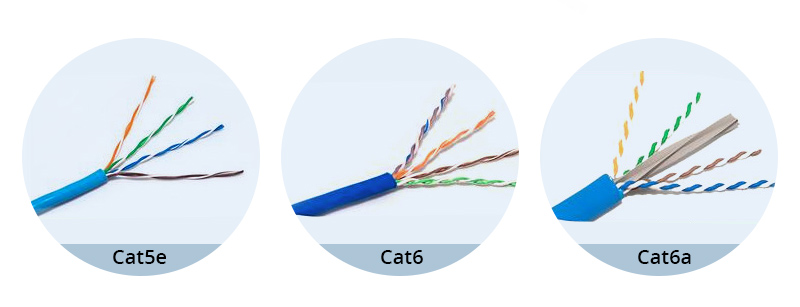
Cat6 cable comes in two primary forms: Unshielded Twisted Pair (UTP) and Shielded Twisted Pair (STP). The one you need depends entirely on your installation environment. Making the right choice is crucial for network stability, speed, and reliability. dlaycable will walk you through everything you need to know to select the perfect Cat6 cable for your project.
Table of Contents
- A Quick Refresher: What is Cat6?
- The Core Difference: Unshielded (UTP) vs. Shielded (STP)
- When Should You Absolutely Use Shielded Cat6?
- When is Unshielded Cat6 the Smarter Choice?
- The Critical Role of Grounding for Shielded Cables
- How to Tell if a Cat6 Cable is Shielded
- Choosing the Right Partner for Your Cabling Needs
A Quick Refresher: What is Cat6?
Before diving into shielding, let’s briefly recap what makes a cable “Cat6.” Category 6, or Cat6, is a standardized twisted pair cable for Ethernet and other network physical layers. It is defined by its performance capabilities:
- Bandwidth: Up to 250 MHz
- Data Rate: Supports 1 Gbps (Gigabit Ethernet) up to 100 meters and 10 Gbps up to 55 meters under ideal conditions.
These specifications make it a robust choice for modern office, home, and data center applications. But its performance can be compromised by a hidden enemy: electromagnetic interference (EMI).
The Core Difference: Unshielded (UTP) vs. Shielded (STP)
This is where the shielded vs. unshielded debate begins. Both types of Cat6 cables use twisted pairs of copper wires to naturally cancel out some level of interference, but STP takes protection a step further.
Unshielded Twisted Pair (UTP) Cat6
This is the most common and widely deployed type of Cat6 cable. The “unshielded” name says it all—it relies solely on the twisting of its wire pairs to prevent crosstalk and EMI. At Dlaycable, our UTP cables are manufactured with precise twists and high-quality materials to maximize this effect.
- Advantages: More affordable, thinner, more flexible, and easier to install and terminate.
- Best For: General-purpose use in homes, most office buildings, and environments with low potential for electronic “noise.”
Shielded Twisted Pair (STP) Cat6
STP Cat6 includes an additional layer of conductive material—typically a foil wrap (FTP) or a braided screen (STP), or both (S/FTP)—around the twisted pairs. This shield acts as a barrier, blocking external EMI from degrading the signal transmitted through the copper wires.
- Advantages: Superior protection against EMI and radio frequency interference (RFI), leading to better signal integrity and more reliable performance in harsh environments.
- Best For: Environments with high levels of electronic interference.
When Should You Absolutely Use Shielded Cat6?
While UTP is sufficient for many, choosing STP is non-negotiable in certain environments to ensure a stable, high-performance network. Opt for shielded Cat6 if your cables will be run in or near:
- Industrial Environments: Factories, manufacturing plants, and workshops with heavy machinery, motors, and generators produce significant EMI.
- Medical Facilities: Hospitals and clinics use sensitive diagnostic equipment (like MRIs) that can both generate and be susceptible to interference.
- Data Centers: While highly controlled, the sheer density of servers, power supplies, and network racks can create a noisy electronic environment.
- Proximity to Power Lines: Running network cables parallel to high-voltage electrical conduits is a classic scenario for EMI corruption.
- Fluorescent Lighting and HVAC Systems: The ballasts in older fluorescent lights and large HVAC motors are common sources of RFI/EMI in commercial buildings.
When is Unshielded Cat6 the Smarter Choice?
For the vast majority of applications, UTP Cat6 provides the perfect balance of performance and cost-effectiveness. It is the standard for a reason. Choose unshielded Cat6 for:
- Home Networks: Perfect for connecting routers, computers, smart TVs, and gaming consoles where EMI is typically not a concern.
- Standard Office Environments: Ideal for cubicle build-outs, conference rooms, and general office connectivity away from heavy electrical equipment.
- Budget-Sensitive Projects: The lower cost of the cable and the reduced labor time for installation make UTP a more economical choice.
The Critical Role of Grounding for Shielded Cables
This is a point we cannot stress enough: A shielded cable is only effective if it is properly grounded. The shield works by capturing interference and draining it away to the ground. If an STP cable is not grounded correctly at both ends using shielded connectors and patch panels, the shield can act like an antenna. It will attract noise and actually introduce it into the cable, making network performance worse than if you had used UTP. Proper installation is paramount.
How to Tell if a Cat6 Cable is Shielded
The easiest way to identify the cable type is by reading the text printed on the outer jacket. At Dlaycable, we clearly label all our products for easy identification.
- Unshielded: Look for markings like CAT6 U/UTP (Unshielded / Unshielded Twisted Pair).
- Shielded: Look for markings like CAT6 F/UTP (Foil / Unshielded Twisted Pair) or CAT6 S/FTP (Shielded / Foiled Twisted Pair). The letters before the slash indicate the type of overall cable shield, while the letters after indicate the shielding on the individual pairs.
Choosing the Right Partner for Your Cabling Needs
So, is Cat6 shielded? The answer depends on your needs. Whether your project calls for the simplicity of UTP or the robust protection of STP, the quality of the cable itself is what guarantees performance.
At Dlaycable, we are more than just a supplier; we are your partner in building reliable networks. We manufacture a complete range of both UTP and STP Cat6 cables, all built to exceed industry standards.
- Uncompromising Quality: Our cables are made from pure bare copper and are UL/ETL certified and RoHS compliant, ensuring safety and peak performance.
- Expert Guidance: Our team has the expertise to help you analyze your environment and choose the exact right cable for your application.
- Customization and Reliability: As a manufacturer, we offer custom lengths, colors, and configurations to meet the specific demands of your project, delivered with the reliability you expect.
Don’t let the wrong cable be the weak link in your network. Contact Dlaycable today to discuss your project, and we’ll ensure you get the high-performance cabling solution you deserve.