


As a leading network cable manufacturer, a question we frequently hear from clients is, “How far can I run my Ethernet cable?” Specifically, with the prevalence of terms like Cat6e, there’s confusion about its capabilities. Whether you’re planning a new office layout, a data center, or a home network, understanding cable distance limits is crucial for a stable and high-speed connection. Let’s clear up the confusion and give you the expert-backed answers you need.
The “Cat6e” Question: Clearing Up the Confusion
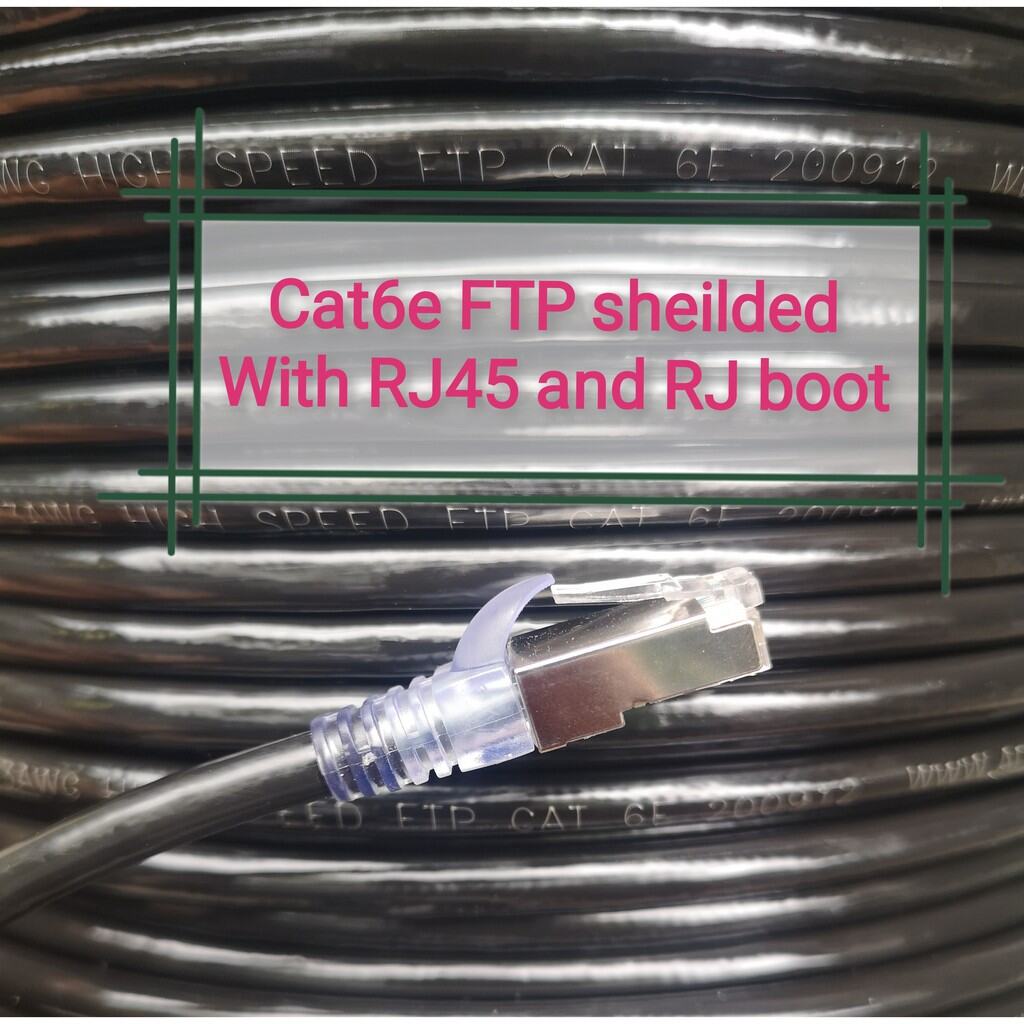
First, it’s essential to address the term “Cat6e”. You might be surprised to learn that Cat6e is not an official standard recognized by the Telecommunications Industry Association (TIA) or the International Organization for Standardization (ISO). Unlike Cat5e, Cat6, or Cat6a, which have clearly defined performance metrics, “Cat6e” (for ‘enhanced’) is primarily a marketing term used by some manufacturers to signify a Cat6 cable that may have slightly better-than-standard specifications, such as higher frequency performance.
While these enhancements are beneficial, for the purpose of maximum length, a Cat6e cable still adheres to the same fundamental rules as a standard, high-quality Cat6 cable. Therefore, the distance limits discussed here apply to any high-performance Cat6 or so-called “Cat6e” cable.
The Official Standard: The 100-Meter (328-Foot) Limit
The universal standard for a copper-based Ethernet network cable, including Cat6, is a total channel length of 100 meters (or 328 feet). This is the maximum distance a signal can travel before it starts to degrade significantly.
This 100-meter channel is typically broken down into two parts:
- 90 meters (295 feet) of solid core, permanent “horizontal” cabling. This is the cable that runs through walls, ceilings, and under floors.
- 10 meters (33 feet) total for patch cords. This usually means a 5-meter patch cord connecting the wall outlet to a computer and another 5-meter patch cord connecting the patch panel to a network switch in the server room.
This limit exists due to a physical property called signal attenuation—the gradual loss of signal strength as it travels down the cable. Beyond 100 meters, the signal becomes too weak for the receiving device to interpret reliably, leading to performance issues.
Key Factors That Can Reduce Your Maximum Cable Length
The 100-meter rule assumes ideal conditions. In the real world, several factors can compromise signal integrity and effectively shorten the maximum usable length of your cable. At Dlaycable, we emphasize quality to mitigate these risks.
- Cable Quality: This is the most critical factor. Cables using Copper Clad Aluminum (CCA) instead of 100% pure bare copper conductors will have significantly higher attenuation and fail to perform reliably even at shorter distances. All Dlaycable products use pure copper to guarantee performance and adherence to standards.
- Electromagnetic Interference (EMI): Running Ethernet cables parallel to high-voltage power lines, fluorescent lighting fixtures, or large motors can induce “noise” that corrupts the data signal. Using a Shielded Twisted Pair (STP) Cat6 cable can help protect against EMI in these environments.
- Power over Ethernet (PoE): When delivering power alongside data, the cable generates more heat. This increased temperature raises the cable’s resistance and, consequently, its attenuation. For heavy PoE applications, it’s wise to plan for slightly shorter runs or use a higher-quality, better-insulated cable like our premium Cat6a.
- Poor Terminations and Bends: Improperly crimped connectors or excessively sharp bends in the cable can create impedance mismatches and signal reflections, degrading performance. Always adhere to the cable’s specified minimum bend radius.
What Happens When You Exceed 100 Meters?
Pushing past the 100-meter limit isn’t like flipping a switch from on to off. Instead, you’ll experience a gradual and often frustrating decline in network performance. Symptoms include:
- Reduced Speeds: Your 10Gbps (over short distances) or 1Gbps connection may drop to 100Mbps or even 10Mbps as the equipment struggles to maintain a stable link.
- Packet Loss and Retransmissions: Data packets get lost or corrupted, forcing them to be resent. This drastically increases latency (ping) and makes applications like video conferencing, online gaming, and VoIP calls unreliable.
- Intermittent or Dropped Connections: The connection may flap up and down or fail to establish altogether.
Need to Go Further? Solutions for Runs Longer Than 100 Meters
If your project requires a network connection beyond 328 feet, you cannot simply use a longer Cat6 cable. Instead, you need to extend your network using active hardware or a different cabling technology. Fortunately, we provide solutions for exactly these scenarios.
- Add a Network Switch: Placing a network switch in the middle of a long run effectively creates two separate cable segments. Each segment can be up to 100 meters, as the switch receives the data, regenerates the signal to full strength, and sends it down the next leg of the journey.
- Use a Network Repeater: A dedicated Ethernet repeater serves the same function as a switch but is a simpler device designed solely to regenerate and re-transmit a signal.
- Upgrade to Fiber Optic Cable: This is the professional standard for long-distance network runs. Fiber optic cable is immune to EMI and can transmit data over many kilometers without any signal loss. It offers vastly superior bandwidth and security. We manufacture a comprehensive range of fiber optic solutions, perfect for connecting buildings or wiring large facilities. You would use a media converter at each end to switch between the copper Ethernet and fiber optic mediums.
Dlaycable: Your Partner for Reliable Network Connections
Understanding the limits of Cat6 cabling is the first step; choosing the right cable is the second. At Dlaycable, we are more than just a supplier—we are a manufacturer committed to excellence.
Our commitment to you includes:
- Guaranteed Quality: We use only 100% pure copper conductors and our cables are rigorously tested to meet and exceed TIA standards, ensuring you can confidently use the full 100-meter channel length.
- Expertise on Demand: Our team is here to help you design the perfect network infrastructure, whether it requires our high-performance Cat6a cables for maximum headroom, shielded cables for noisy environments, or a robust fiber optic backbone for long distances.
- OEM/ODM Customization: Need a specific length, color, or custom printing on your cables? Our factory-direct OEM and ODM services allow us to create the exact product for your project’s needs, reducing waste and simplifying installation.
Don’t let cable limitations become a bottleneck for your network. For a reliable, high-speed connection every time, trust the experts. Browse our selection of premium network cables or contact us today to discuss your project’s unique requirements.