


In today’s hyper-connected world, the demand for faster network speeds is relentless. From data centers and enterprise networks to advanced home setups, the jump from 1 Gigabit to 10 Gigabit Ethernet is becoming a necessity. This inevitably leads to a crucial question for anyone planning a network upgrade: Can my existing Cat6 cabling support 10Gbps speeds?
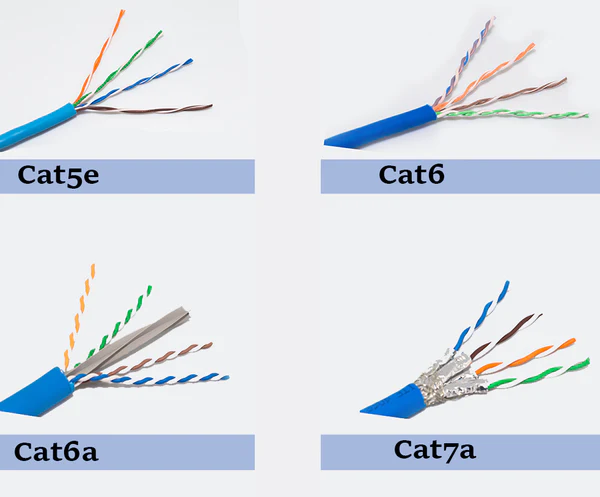
As a leading manufacturer of high-performance network cabling solutions, we at D-Lay Cable understand the importance of this question. The answer isn’t a simple yes or no. It’s a “yes, but…” that requires a deeper understanding of the technology, its limitations, and best practices. dlaycable will provide a clear, comprehensive answer, helping you make informed decisions for your network infrastructure.
The Quick Answer: Yes, But With a Catch
Yes, Category 6 (Cat6) cable can support 10 Gigabit Ethernet (10GBASE-T). However, it can only do so over a limited distance. While Cat6 is rated for 10Gbps, the maximum supported distance is officially between 37 and 55 meters (approximately 121 to 180 feet).
This is a significant reduction from the standard 100-meter (328-foot) channel length that Cat6 easily handles for 1 Gigabit speeds. The 55-meter limit is only achievable under ideal conditions with minimal external interference. In environments with heavy cable bundling or high electromagnetic interference (EMI), that distance can shrink even further.
The Technical Reason: Frequency and Alien Crosstalk
To understand why Cat6 has this distance limitation, we need to look at two key factors: frequency and a specific type of interference called Alien Crosstalk.
- Frequency: Standard Cat6 cable is designed and specified to perform at frequencies up to 250 MHz. The 10GBASE-T standard, however, requires signals to operate at frequencies up to 500 MHz. Pushing Cat6 to this higher frequency is what introduces performance limitations.
- Alien Crosstalk (ANEXT): This is the crucial factor. Crosstalk is the unwanted signal interference between adjacent wires within a single cable. Cat6 is well-designed to handle this internal “near-end crosstalk” (NEXT). However, Alien Crosstalk is interference that “leaks” from one cable to another nearby cable. At the higher 500 MHz frequency of 10Gbps, ANEXT becomes a major problem, corrupting the data signal over longer distances.
This is where Category 6A (Cat6A) comes in. Cat6A was specifically engineered to solve the ANEXT problem. It features more robust insulation, tighter twists, and often an overall shield or improved separation between pairs and adjacent cables, allowing it to maintain 10Gbps signal integrity over the full 100-meter distance.
Head-to-Head: Cat6 vs. Cat6a for 10Gb Ethernet
Choosing the right cable is critical. Here’s a direct comparison to help you visualize the differences when planning for a 10Gb network.
| Feature | Cat6 Cable | Cat6A Cable |
|---|---|---|
| 10Gbps Max Distance | Up to 55 meters (180 ft) | 100 meters (328 ft) |
| Bandwidth/Frequency | 250 MHz | 500 MHz |
| Alien Crosstalk Mitigation | Minimal | Superior by design |
| Best Use for 10Gb | Short runs in controlled environments (e.g., patching within a single rack, home lab). | New installations, data centers, future-proofing, any run over 37m. |
| Quality & Certification | Must be high-quality, certified cable. | The industry standard for 10Gb copper cabling. |
Practical Factors for Running 10Gb on Cat6
If you are considering using existing Cat6 for a 10Gb link, or planning a new short run, you must account for real-world conditions:
- Cable Quality is Non-Negotiable: Not all Cat6 cables are created equal. To have any chance of a stable 10Gb connection, you must use high-quality, certified Cat6 cables, like those we manufacture at D-Lay Cable. Cables that barely meet the minimum Cat6 standard will likely fail.
- Avoid Tight Bundles: Tightly bundling many Cat6 cables together significantly increases Alien Crosstalk. If running 10Gb, these cables should be laid loosely or separated from other high-speed cables.
- Installation Matters: Proper termination with high-quality Cat6 or Cat6A-rated keystone jacks and patch panels is essential. Poor terminations can ruin signal integrity. Adhering to bend radius standards is also crucial.
- Test, Don’t Guess: The only way to be certain your Cat6 run can handle 10Gbps is to test it with a network cable certifier capable of testing up to 500 MHz. This will confirm if the link passes the 10GBASE-T performance parameters.
Making the Right Choice: When to Use Cat6 vs. Cat6a
Choose Cat6 for 10Gbps if:
- You have existing high-quality Cat6 installed for a run you know is well under 37 meters (121 feet).
- You need a short patch cable to connect a switch to a server within the same rack.
- You are on a very tight budget for a non-critical, short-distance connection.
Choose Cat6A for 10Gbps if:
- You are doing any new permanent network installation. The marginal cost increase is a small price for guaranteed performance and future-proofing.
- Your cable run will be longer than 37 meters.
- The network is for a mission-critical or business application where stability and reliability are paramount.
- The cables will be run in dense bundles or in an environment with potential EMI.
Conclusion: Future-Proofing Your Network with D-Lay Cable
So, can Cat6 do 10Gb? Yes, it can—in short bursts and under the right conditions. It’s a viable solution for very specific, short-distance applications where high-quality cabling is already in place.
However, for any new installation or for anyone who values reliability and future-proofing, Cat6A is the undisputed champion for 10GBASE-T networking. It was designed from the ground up to handle the demands of 10Gbps over the full 100-meter channel length, giving you performance you can count on.
At D-Lay Cable, we pride ourselves on manufacturing a complete range of certified, high-performance cabling solutions, from reliable Cat6 to robust Cat6A and beyond. Whether you’re upgrading a data rack or wiring a new office, our products provide the quality foundation your network deserves. For expert advice and world-class cabling solutions, trust the professionals. Explore our certified Cat6 and Cat6A products today to build a faster, more reliable network for tomorrow.