


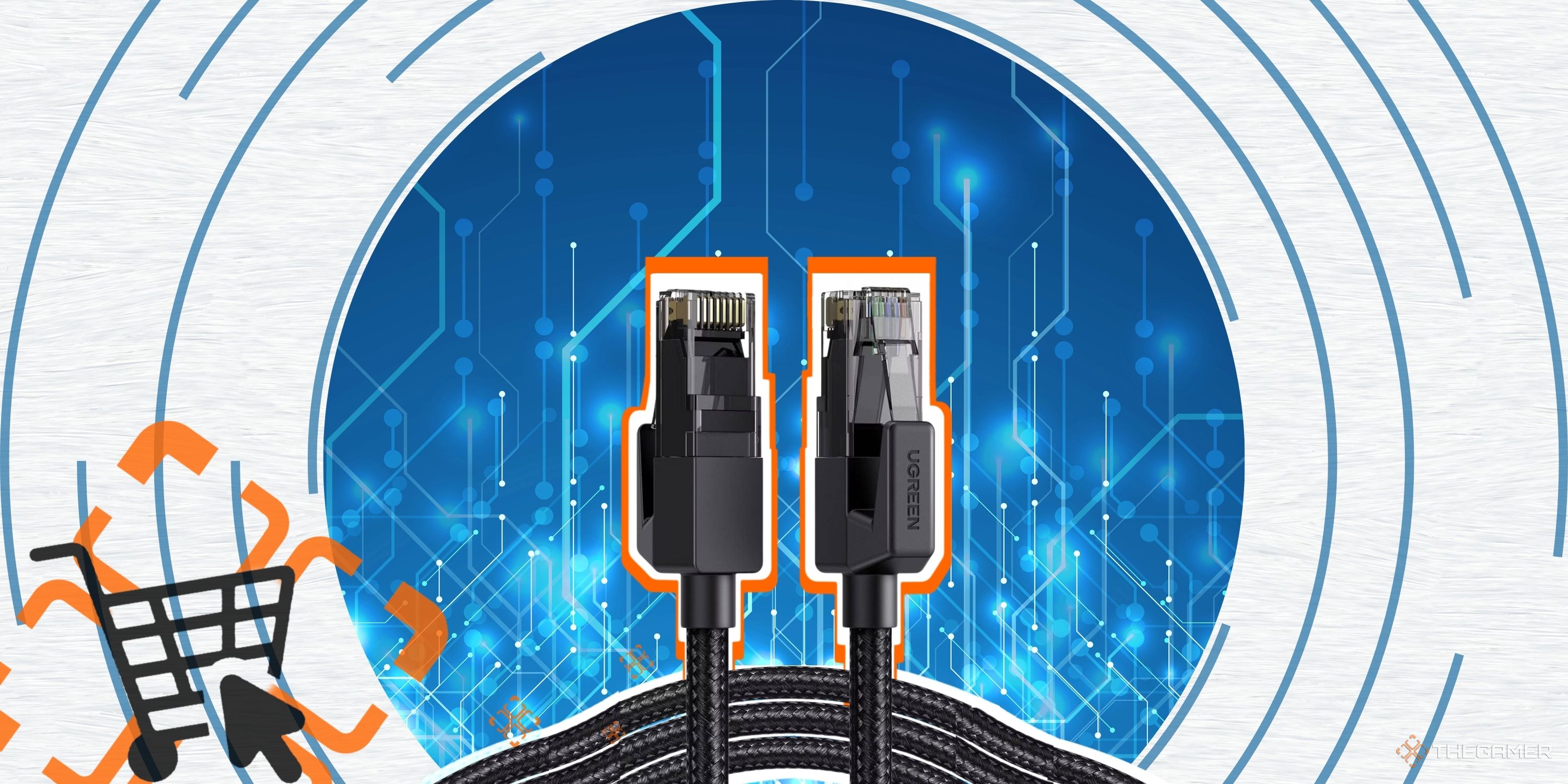
The best Ethernet cable for most users in 2024 is Cat6a, offering a powerful combination of 10 Gigabits per second (Gbps) speed and ample bandwidth that handles today’s demanding applications while future-proofing your network. However, the truly “best” cable depends entirely on your specific environment, internet plan, and performance needs. Choosing correctly means understanding the differences between categories and construction, a decision that can mean the difference between seamless connectivity and a frustrating bottleneck. As a leading manufacturer of network cables, we’re here to guide you through everything you need to know to make the perfect choice.
Understanding Ethernet Cable Categories: The “Cat” Explained
When you see “Cat” followed by a number (like Cat5e, Cat6, etc.), you’re looking at the cable’s category. Each category represents a TIA/EIA standard that defines the cable’s performance capabilities, primarily its maximum supported speed and bandwidth (measured in Megahertz, or MHz). Higher bandwidth allows more data to travel simultaneously, much like a wider highway allows for more cars. Let’s break down the most common categories you’ll encounter today.
Category 5e (Cat5e): The Baseline Standard
For many years, Category 5e (the ‘e’ stands for *enhanced*) was the workhorse of home and office networking. It’s designed to support speeds up to 1 Gbps (1,000 Mbps) at a bandwidth of 100 MHz. While it’s considered an older standard, it remains perfectly adequate for basic internet browsing, standard HD streaming, and email on internet plans up to 1 Gigabit.
Who is it for? Cat5e is a budget-friendly option for non-critical applications or for users with internet speeds below 1 Gbps. However, it offers no room for future growth and is more susceptible to “crosstalk” (interference between wires) than newer categories. For new installations, we almost always recommend starting with at least Cat6.
Category 6 (Cat6): The Popular Sweet Spot
Category 6 is a significant step up and one of the most popular cables available today. It can also handle speeds up to 10 Gbps, but only over shorter distances (up to 55 meters or 180 feet). For distances up to 100 meters, it reliably delivers 1 Gbps. With a higher bandwidth of 250 MHz, Cat6 features tighter wire twists and often a “spline” (a plastic divider in the core) that dramatically reduces crosstalk compared to Cat5e. This results in a more stable and reliable connection.
Who is it for? Cat6 is an excellent, cost-effective choice for most modern homes and small offices. It’s ideal for 4K streaming, online gaming, and large file transfers on Gigabit internet plans. If you are running cables less than 55 meters, it provides a taste of 10 Gbps performance without the full cost of Cat6a, making it our recommended choice for most budget-conscious users seeking high performance. Check out our reliable Cat6 patch cables for a perfect balance of price and performance.
Category 6a (Cat6a): The Future-Proof Performer
Category 6a (the ‘a’ stands for *augmented*) is the undisputed champion for modern, high-performance networking. It supports blazing-fast 10 Gbps speeds over the full maximum distance of 100 meters (328 feet). It achieves this with a robust bandwidth of 500 MHz and is typically built with thicker jacketing and improved shielding to virtually eliminate alien crosstalk, ensuring a rock-solid 10 Gbps signal.
Who is it for? We recommend Cat6a for anyone who wants to ensure their network infrastructure can handle future internet speed upgrades. It’s the go-to for serious gamers, content creators, media servers, and businesses running multi-Gigabit networks. Investing in our complete range of Cat6a patch cables means you won’t need to rewire your setup for many years to come.
Category 7 (Cat7) & Category 8 (Cat8): For Specialized, High-Demand Environments
Category 7 (600 MHz) and Category 8 (2000 MHz) are ultra-high-performance cables designed for specific, demanding environments. Cat7 and Cat8 always feature extensive shielding on each wire pair and the cable as a whole (S/FTP), making them excellent at resisting electromagnetic interference (EMI). Cat8 is a powerhouse, supporting speeds of 25 or 40 Gbps, but only over a short distance of 30 meters.
Who are they for? These cables are overkill for virtually all home and most office applications. Their primary use is in data centers and server rooms for short-distance connections between servers and switches. If you operate in these high-bandwidth, high-interference environments, specialized Cat8 Ethernet cables are the correct professional choice.
Quick Comparison Chart: Cat5e vs. Cat6 vs. Cat6a vs. Cat8
To visualize the differences, here is a clear breakdown of the key specifications for each main category.
| Category | Max Speed | Bandwidth | Ideal Use Case |
|---|---|---|---|
| Cat5e | 1 Gbps | 100 MHz | Basic Internet, VoIP, older networks |
| Cat6 | 10 Gbps (up to 55m) | 250 MHz | Home Gaming, 4K Streaming, Small Offices |
| Cat6a | 10 Gbps (up to 100m) | 500 MHz | Future-Proofing, Prosumers, Enterprise |
| Cat8 | 40 Gbps (up to 30m) | 2000 MHz | Data Centers, Server-to-Switch Links |
Beyond the Category: Critical Factors You Can’t Ignore
Choosing the right category is only half the battle. As manufacturers, we know that the cable’s physical construction is just as important for performance and safety. Here’s what else you need to check.
Shielded (STP/FTP) vs. Unshielded (UTP): Which is Right for You?
Unshielded Twisted Pair (UTP) cables are the most common type for home and office use. The twisted pairs of wires naturally cancel out most interference. For most environments, UTP is sufficient.
Shielded Twisted Pair (STP/FTP) cables include a layer of foil or braided metal shielding around the wires. This provides crucial protection against electromagnetic interference (EMI) from sources like power lines, large motors, and fluorescent lighting. You should choose a shielded cable if you are running it in a “noisy” electrical environment or alongside power cables for a long distance.
Solid vs. Stranded Core: The Inside Story
Solid Core cables use a single, solid copper wire for each conductor. They have lower signal loss and are ideal for long, permanent runs inside walls, ceilings, and conduit. If you’re wiring a building, you’ll use our selection of bulk Ethernet cables with a solid core.
Stranded Core cables use a bundle of smaller-gauge wire strands for each conductor. This makes the cable much more flexible and durable when bent repeatedly. Stranded cables are used for “patch cables”—the shorter cords that connect your computer to the wall outlet or your router to your modem.
Jacket Ratings (Plenum vs. Riser vs. CM): A Matter of Safety & Code Compliance
The cable’s outer jacket has a fire-resistance rating that is a critical safety requirement. Using the wrong type can be a fire hazard and violate building codes.
- CMP (Plenum): The highest fire rating. These cables are designed for use in plenum spaces—the areas used for air circulation, like drop ceilings and raised floors. They are made with low-smoke, low-flame materials.
- CMR (Riser): Designed for “riser” applications, meaning vertical runs between floors in non-plenum spaces. They are designed to prevent fire from spreading between floors. You can find options like D-Lay Cable’s bulk Cat6 CMR-rated cable for safe, multi-floor installations.
- CM/CMG: For general use. This is the standard jacket rating for patch cords and horizontal surface-level wiring in a single room with no chance of fire spreading.
Does Cable Length Really Matter?
Yes, absolutely. All standard Ethernet categories are designed to perform optimally up to a maximum channel length of 100 meters (328 feet), with the exception of Cat8 (30m) and Cat6 at 10 Gbps (55m). Beyond this, you will experience “attenuation,” which is the degradation of the signal, leading to reduced speeds and data loss. For best performance, always use a cable length that suits your need without excessive slack.
So, Which Ethernet Cable is Best *for Me*?
Now, let’s put it all together. Here are our direct recommendations based on common scenarios.
For Everyday Home Use & Streaming
Our Recommendation: Cat6. It provides more than enough speed and stability for 4K streaming, video calls, and multiple connected devices on any standard internet plan up to 1 Gbps. It’s affordable and a solid upgrade over Cat5e.
For Competitive Gaming & High-Performance PCs
Our Recommendation: Cat6a. Competitive gaming is all about low latency and a stable connection. Cat6a’s superior bandwidth and crosstalk resistance ensure the most consistent signal, reducing lag and packet loss. It also prepares your setup for future multi-gigabit internet plans.
For Office Setups & Small Businesses
Our Recommendation: Cat6a. Your business network supports multiple users, VoIP phones, printers, and large file transfers. Investing in a Cat6a infrastructure ensures your network won’t be a bottleneck as your business grows and data needs increase. For structured cabling, a solid-core CMR or CMP rated Cat6a cable is the professional standard.
For Data Centers & Enterprise Networks
Our Recommendation: Cat8 (for short runs) and Shielded Cat6a/Cat7 (for longer runs). In these high-density, high-EMI environments, shielded cables are non-negotiable. Cat8 is the ultimate choice for high-speed switch-to-server connections, while shielded Cat6a or Cat7 provides robust 10 Gbps performance for infrastructure links.
Why Choose D-Lay Cable for Your Networking Needs?
In a market flooded with options, choosing a cable from a true manufacturer makes a tangible difference. At D-Lay Cable, we aren’t just resellers; we are the experts behind the product. Our commitment to quality is built into every step of our process, from research and development to final production.
Every cable we produce, from our versatile Cat6 to our future-proof Cat6a, is made with 100% pure bare copper conductors for maximum performance and reliability—unlike cheaper Copper Clad Aluminum (CCA) alternatives that suffer from higher signal loss and are not compliant with TIA standards. Our products meet rigorous international standards and hold certifications like UL, ETL, CE, and RoHS. This means you are investing in a product that is not only high-performing but also safe and built to last. When you choose D-Lay Cable, you’re choosing the expertise and trust that comes directly from the source.
Frequently Asked Questions (FAQ)
- Can I use a Cat8 cable for my home internet? Will it make it faster?
- You can, but it won’t make your internet connection faster. Your speed is determined by your internet plan and your networking hardware (router, modem). A Cat8 cable won’t provide any benefit over Cat6a in a home setting and will be unnecessarily expensive and rigid.
- Are gold-plated connectors on an Ethernet cable better?
- Yes, gold-plated connectors offer superior corrosion resistance, which ensures a longer-lasting, reliable physical connection. All high-quality Ethernet cables, including those from D-Lay Cable, use gold-plated contacts for this very reason.
- What’s the difference between a flat Ethernet cable and a round one?
- Flat cables are great for running under carpets or in tight spaces due to their profile. However, round cables generally offer better protection against crosstalk because the wires can maintain their precise, uniform twists, which is crucial for higher-category performance. For critical, high-speed applications, we recommend round cables.
- Do I need to upgrade all my cables at once?
- Not necessarily. Your network will operate at the speed of its slowest component. If you have a Cat6a router and a PC with a 10 Gbps port, but you connect them with a Cat5e cable, your connection will be limited to 1 Gbps. Upgrade the cables critical for high-speed devices first, like the link from your router to your main PC or gaming console.