


Does Cat 10 Cable Exist? The Definitive Answer for 2024
To put it simply, no, Cat 10 cable does not exist as a recognized standard by any official telecommunications organization, such as the Telecommunications Industry Association (TIA) or the International Organization for Standardization (ISO). Any product marketed as “Cat 10” is not based on an official, ratified standard and should be viewed with skepticism. The highest and most current ratified standard for twisted-pair copper Ethernet cabling is Category 8 (Cat 8). dlaycable will delve into why the Cat 10 myth persists, detail the real standards that govern network cabling, and help you choose the correct cable for your needs.
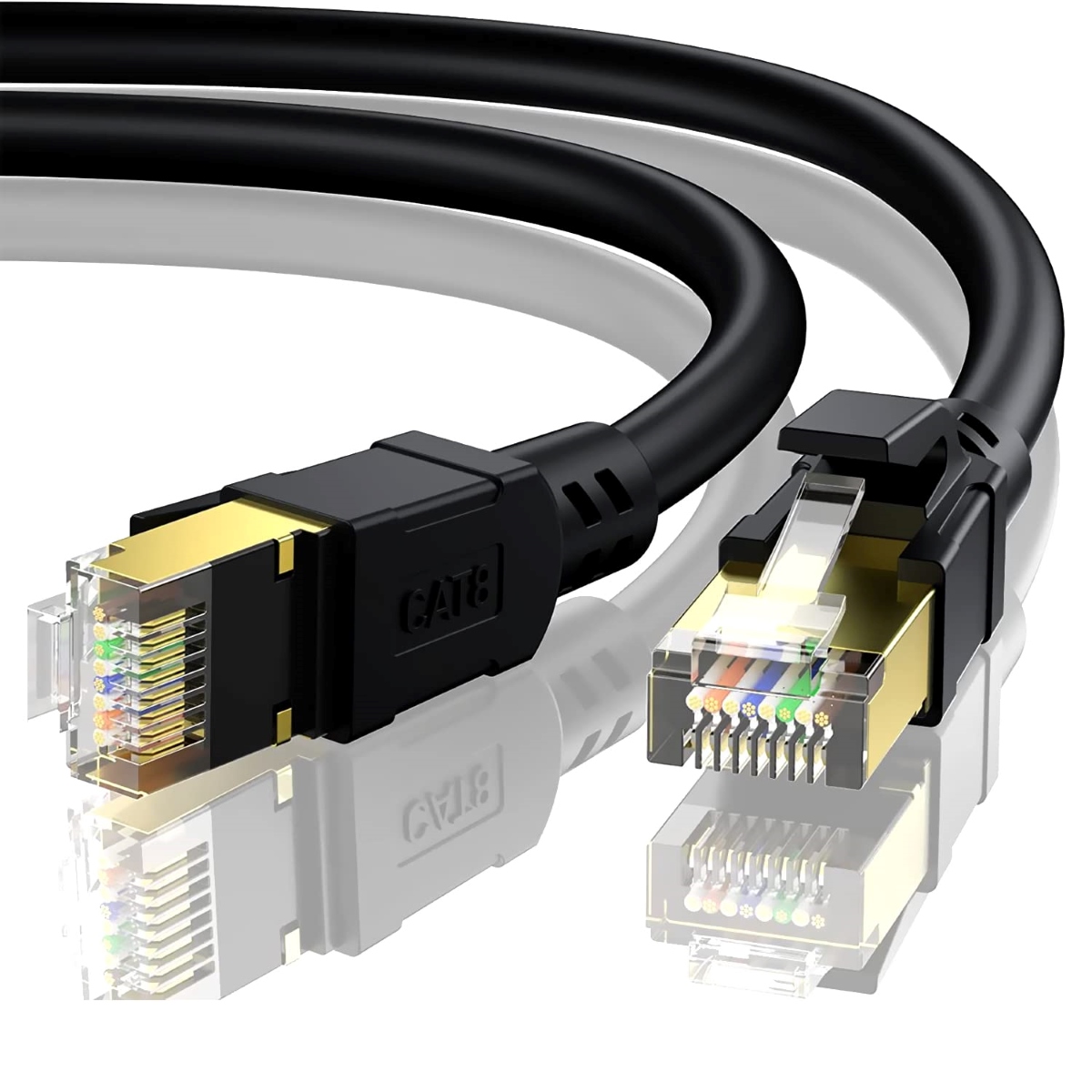
Table of Contents
- What is “Cat 10” and Why Does it Cause Confusion?
- Understanding Ethernet Cable Standards: Who Makes the Rules?
- The Current King: Unveiling the Real Top-Tier Cable, Category 8
- A Clear Comparison: Cat 8 vs. The Mythical Cat 10 and Other Categories
- What About Category 9? Why Was It Skipped?
- The Future of Copper Cabling: Will We Ever See Cat 10?
- Practical Advice: Which Ethernet Cable Should You Choose Today?
- Conclusion: Stick to the Standards for Guaranteed Performance
What is “Cat 10” and Why Does it Cause Confusion?
The term “Cat 10” often appears on online marketplaces and in forums, leading many to believe it’s the next step in the evolution of Ethernet technology. The confusion is understandable; since cable standards have progressed numerically (Cat 5, Cat 5e, Cat 6, Cat 6a, Cat 7, Cat 8), it seems logical that Cat 9 and Cat 10 would follow. However, this is a misconception driven by savvy but misleading marketing.
Sellers may brand a cable as “Cat 10” to suggest superior performance beyond the official standards. In reality, these are often just rebranded Cat 7 or Cat 8 cables, or in some cases, lower-quality cables that don’t even meet those specifications. Because there is no “Cat 10” standard, there are no performance benchmarks to meet, no testing procedures to follow, and no guarantee of interoperability. Buying a non-standard cable means you are purchasing a product with unverifiable claims, which can lead to network instability and a waste of money.
Understanding Ethernet Cable Standards: Who Makes the Rules?
To appreciate why “Cat 10” isn’t real, it’s crucial to understand who sets the standards. The performance characteristics of network cables are meticulously defined by engineering bodies to ensure reliability and compatibility across all compliant hardware worldwide. Without these standards, a cable from one manufacturer might not work with a switch or router from another.
The two primary standards bodies are:
- TIA (Telecommunications Industry Association): A U.S.-based organization that sets the ANSI/TIA-568 standards, which are the most commonly followed in North America. They are responsible for defining categories like Cat 6, Cat 6a, and Cat 8.
- ISO/IEC: The International Organization for Standardization and the International Electrotechnical Commission collaborate to set global standards, such as ISO/IEC 11801. Their classifications, like Class E, F, and I, often correspond to the TIA’s categories.
These organizations conduct extensive research and testing to develop new standards that meet emerging technological demands for higher speeds and greater bandwidth. A new category is only introduced when a significant, verifiable leap in performance is achieved and agreed upon by industry experts. “Cat 10” has not gone through this rigorous, official process.
The Current King: Unveiling the Real Top-Tier Cable, Category 8
The actual pinnacle of standardized copper Ethernet cabling is Category 8. Ratified under the ANSI/TIA-568.C.2-1 standard, Cat 8 represents a monumental jump in performance, specifically designed for short-distance, high-speed connections typical in data centers.
Key Specifications of Cat 8 Cable
Cat 8 cable is an engineering marvel, built to handle immense data throughput. Its key features include:
- Max Speed: Up to 40 Gbps (Gigabits per second). This is four times faster than Cat 6a and forty times faster than standard Cat 6.
- Max Bandwidth (Frequency): Up to 2000 MHz. This extremely high frequency allows more data to be transmitted simultaneously and is a crucial factor in achieving 40 Gbps speeds.
- Distance Limitation: The 40 Gbps speed is supported over a maximum channel length of 30 meters (98 feet). This shorter distance is a trade-off for its incredible speed.
- Shielding: Cat 8 cables are exclusively S/FTP (Screened/Foiled Twisted Pair), meaning each of the four twisted pairs is wrapped in foil, and an overall braided screen encases all four pairs. This robust shielding is essential to mitigate crosstalk and interference at such high frequencies.
- Connectors: It uses the standard RJ45 connector, making it backward compatible with previous category hardware (though performance will be limited by the weakest component).
Where is Cat 8 Cable Actually Used?
Due to its high cost and distance limitations, Cat 8 is not intended for typical home or office deployments. Its primary application is in data centers for high-speed switch-to-server connections. For instance, it’s perfect for linking top-of-rack (ToR) switches to servers within the same rack or connecting switches in adjacent racks (end-of-row, MoR). For these short, high-bandwidth links, our certified Category 8 cables provide the performance and reliability that modern data centers demand.
A Clear Comparison: Cat 8 vs. The Mythical Cat 10 and Other Categories
To put the capabilities of real, standardized cables into perspective, here is a breakdown of the most common Ethernet categories.
| Category | Max Speed | Max Bandwidth | Typical Application |
|---|---|---|---|
| Cat 6 | 10 Gbps up to 55m | 250 MHz | Home networks, small businesses |
| Cat 6a | 10 Gbps up to 100m | 500 MHz | Future-proofed home/office, PoE |
| Category 7 | 10 Gbps up to 100m | 600 MHz | Data centers, heavily shielded environments |
| Category 8 | 40 Gbps up to 30m | 2000 MHz | Data centers (Switch-to-Server) |
| “Cat 10” (Myth) | Not Applicable (Not a Standard) | Not Applicable | Not Recommended for any use |
What About Category 9? Why Was It Skipped?
Another common question is about the existence of Cat 9. Much like Cat 10, Category 9 is not a recognized TIA or ISO standard. The development of cabling standards is not strictly sequential; it is based on achieving specific performance goals. The working groups developing the next-generation standard after Cat 6a/Cat 7 focused on a 40 Gbps target for data center applications. This resulted in the Cat 8 standard. There was no intermediate technological step that warranted the creation and ratification of a “Cat 9” standard.
The Future of Copper Cabling: Will We Ever See Cat 10?
While it’s impossible to predict the future with certainty, the path forward for speeds beyond 40 Gbps appears to be heading toward fiber optics. Copper cabling faces significant physical limitations. As frequencies increase to push more data, the problems of signal attenuation (loss of signal strength over distance) and crosstalk (interference between wire pairs) become exponentially more difficult to solve. Cat 8’s heavy shielding and 30-meter distance limit are indicative of these challenges.
For longer-distance connections requiring speeds of 100 Gbps, 400 Gbps, and beyond, fiber optic cabling is already the dominant solution. It is immune to electromagnetic interference and can carry massive amounts of data over kilometers. Therefore, while a future “Category 10” standard for copper is theoretically possible for very specialized, ultra-short-distance applications, the industry is largely looking to fiber for the next leap in network-backbone performance.
Practical Advice: Which Ethernet Cable Should You Choose Today?
As cabling experts at D-Lay Cable, we advise customers to choose certified cables that match their real-world needs. Ignore the “Cat 10” hype and select from established, reliable standards.
For Home Users and Gamers
For most homes, a Cat 6a cable is the perfect sweet spot. It comfortably handles Gigabit internet speeds with plenty of headroom, supports 10 Gbps for future-proofing your home network, and provides excellent performance for streaming 4K video and online gaming. It offers the best balance of price and performance for residential use.
For Office and Business Networks
Most modern offices should deploy Cat 6a as a minimum to ensure robust performance for workstations, VoIP phones, and access points. For environments that require additional shielding against interference or are planning for technology upgrades in the next 5-10 years, choosing a certified Cat 7 ethernet cable can also be a viable, high-performance option. Both reliably support 10 Gbps networking over the full 100-meter channel length.
For High-Demand Data Centers
This is the exclusive domain of Cat 8. If you are building or upgrading a data center and need to support 25GBASE-T or 40GBASE-T connections between servers and switches over short distances, Cat 8 is the correct and only standardized copper choice. D-Lay Cable provides fully certified Cat 8 patch cords that meet all TIA specifications for these demanding environments.
Conclusion: Stick to the Standards for Guaranteed Performance
The verdict is clear: Cat 10 cable does not exist in any official capacity. It is a marketing term, not an engineering standard. Relying on such products is a gamble that can compromise your network’s stability and performance. The true leader in standardized copper cabling is Category 8, designed for specialized data center use.
For reliable, predictable, and high-performance networking, always choose cables that are certified to meet official TIA or ISO standards. By selecting the right category for your application—whether it’s Cat 6a for your office or Cat 8 for your servers—you are investing in a network built on a foundation of proven technology. At D-Lay Cable, we are committed to providing only fully compliant, high-quality cabling solutions to ensure your network runs flawlessly.