


How Far Can Cat8 Cable Really Go? Unpacking the 40Gbps Distance Limit
A Cat8 Ethernet cable can transmit data at a staggering 40Gbps up to a maximum distance of 30 meters (approximately 98 feet). This specific length limitation is a fundamental characteristic of the standard, designed for high-speed, short-distance connections primarily found within data centers. Understanding this 30-meter rule is crucial for network architects and IT professionals aiming to leverage the immense power of 40GBASE-T networking. At D-Lay Cable, we specialize in deploying high-performance structured cabling, and this article will delve into the technical reasons behind this distance limit, what happens when you exceed it, and where Cat8 truly shines.
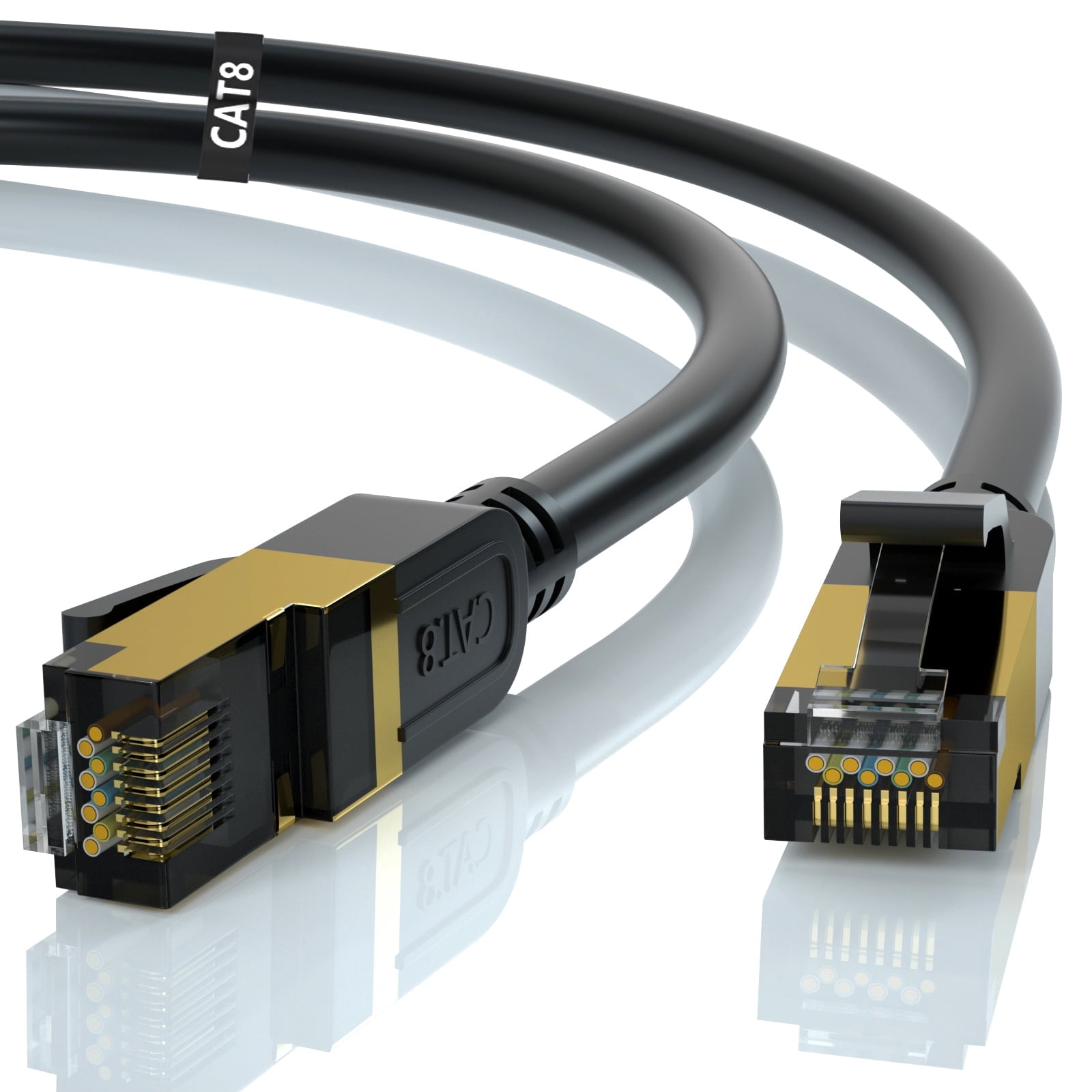
What is the Exact Distance Limitation of Cat8 Cable?
The standard for Category 8 cabling, as defined by the Telecommunications Industry Association (TIA) in the TIA-568-C.2-1 standard, specifies a maximum channel length of 30 meters. It’s important to understand that this “channel” isn’t just one single, uninterrupted cable. Instead, the 30-meter channel is typically composed of:
- Up to 24 meters (79 feet) of solid, permanent link cable. This is the main cable run installed within walls, ceilings, or conduits.
- A combined total of 6 meters (20 feet) for patch cords at both ends of the channel. This could be a 3-meter cord connecting a server to a wall plate and another 3-meter cord connecting the patch panel to a network switch.
This component-based structure is designed to replicate real-world scenarios in a data center, where structured cabling provides flexibility. The key takeaway, however, remains the same: for a Cat8 cable to be certified and guaranteed to deliver 40Gbps performance, the total length from the network switch to the end device must not exceed 30 meters. This is a hard limit dictated by the physics of data transmission at extremely high frequencies.
Why Does Cat8 Have a 30-Meter Limit? The Science Behind the Speed
Reaching 40Gbps over twisted-pair copper cabling is an incredible feat of engineering. Cat8 achieves this by supporting a massive bandwidth of up to 2000 MHz—four times that of Cat6A. However, pushing such high frequencies through copper introduces significant physical challenges, which are the direct cause of the 30-meter distance limitation.
Signal Attenuation: The Inevitable Power Loss
Signal attenuation is the natural weakening of a signal as it travels through a medium. Think of it like shouting across a large field; the farther away the listener is, the fainter your voice becomes. In copper cables, this happens as the electrical energy of the signal dissipates into heat. At the 2000 MHz frequency used by Cat8, this attenuation is far more severe than at the lower frequencies of Cat6A (500 MHz) or Cat6 (250 MHz). After 30 meters, the 40Gbps signal becomes too weak for the receiving equipment to accurately interpret, leading to data errors and a loss of connection at that speed.
Crosstalk (ANEXT): The Enemy of High Frequencies
Crosstalk is the unwanted interference or “noise” that occurs when the signal from one twisted pair bleeds over and affects an adjacent pair. For high-frequency applications, the most problematic type is Alien Crosstalk (ANEXT), which is interference between cables in the same bundle. To achieve 40Gbps, the signal must be exceptionally clean. Cat8 cabling is meticulously engineered to combat this:
- Superior Shielding: Cat8 cables are typically constructed as S/FTP (Screened/Foiled Twisted Pair). Each individual pair of wires is wrapped in foil, and then all four pairs are wrapped together in an overall braided screen. This robust shielding acts as a barrier, preventing external noise and alien crosstalk from corrupting the signal.
- Tighter Twists: The individual wire pairs within a Cat8 cable are twisted more tightly than in any previous category. This helps to cancel out electromagnetic interference from within the pair itself.
Despite this incredible engineering, the laws of physics still apply. Over longer distances, the cumulative effect of even minuscule amounts of crosstalk can become enough to disrupt the sensitive 2000 MHz signal, making the 30-meter limit a necessary design constraint.
What Happens if You Exceed the 30-Meter Cat8 Limit?
A common misconception is that running a Cat8 cable to 40 or 50 meters will simply result in a slightly slower speed, like 35Gbps. This is not how Ethernet technology works. Modern networking equipment uses a process called auto-negotiation to establish the fastest possible stable link.
If you connect two 40GBASE-T devices with a Cat8 cable that is longer than 30 meters, the equipment will attempt to establish a 40Gbps link. However, due to the excessive signal attenuation and crosstalk, the bit error rate will be too high. The devices will fail the link test at that speed and then automatically “downshift” to the next supported standard. This means your connection will likely negotiate down to:
- 25Gbps (25GBASE-T) if the hardware supports it and the cable quality is sufficient over that extra distance.
- 10Gbps (10GBASE-T), which is the most common result. In this scenario, your expensive Cat8 cable is now performing exactly like a standard Cat6A cable.
- 1Gbps or even 100Mbps in cases of very long runs or poor-quality cable.
Therefore, exceeding the 30-meter limit doesn’t give you a degraded 40Gbps connection; it gives you a connection at a completely different, lower-speed standard. You effectively lose the primary benefit of using Cat8 in the first place.
Cat8 vs. Other Categories: A Distance and Performance Showdown
Choosing the right cable is about matching the technology to the application. The primary trade-off is typically between speed and distance. Here’s how Cat8 compares to its predecessors:
| Cable Category | Max Speed | Bandwidth (Frequency) | Max Distance at Top Speed | Primary Use Case |
|---|---|---|---|---|
| Cat6 | 10Gbps | 250 MHz | Up to 55 meters | General Office, Home (1Gbps) |
| Cat6A | 10Gbps | 500 MHz | 100 meters | Future-Proof Office, Data Center Access Layer |
| Cat7 | 10Gbps | 600 MHz | 100 meters | (Not a TIA standard, proprietary connectors) |
| Cat8 | 40Gbps | 2000 MHz | 30 meters | Data Center (Server-to-Switch) |
As the table clearly shows, the immense speed and bandwidth of Cat8 come at the direct cost of distance. For any network run extending beyond 30 meters that requires speeds greater than 10Gbps, fiber optic cabling becomes the necessary solution. For general-purpose office or home installations that need to be future-proofed for 10Gbps, Cat6A remains the gold standard, offering full 10Gbps performance over the standard 100-meter channel length.
Where Should You Use Cat8 Cable? Ideal Applications
Given its specific characteristics, Cat8 is a specialized cable, not a general-purpose replacement for Cat6A. Its use is almost exclusively reserved for data centers and high-density server rooms.
The Data Center Core
The primary application for Cat8 cabling is for server-to-switch connections inside a single server rack or between adjacent racks. This is often referred to as Top-of-Rack (ToR) or End-of-Row (EoR) network architecture. In these scenarios, the physical distances are very short—typically just a few meters—making the 30-meter limit a non-issue. Here, Cat8 allows data centers to upgrade their core infrastructure to 40Gbps using familiar RJ45 copper connections, which can be simpler and more cost-effective than deploying fiber for these short hops.
Is Cat8 Suitable for Home or Office Use?
In short, no. For nearly all residential and commercial office applications, Cat8 is expensive overkill. There are several reasons for this:
- No 40Gbps Home Internet: Internet Service Providers do not offer 40Gbps speeds to homes, and it’s unlikely they will for the foreseeable future.
- Device Limitation: Most consumer and office devices (PCs, laptops, printers, smart TVs) have network ports limited to 1Gbps, with some high-end devices offering 2.5Gbps or 10Gbps. None currently come with 40Gbps ports.
- Cost and Complexity: Cat8 cable is thicker, stiffer, and more expensive than Cat6A. It also requires specialized, properly grounded termination, making installation more difficult and costly.
For future-proofing a home or office, Cat6A is the far more practical and cost-effective choice, providing a robust pathway for 10Gbps speeds that will serve the needs of most users for many years to come.
The D-Lay Cable Perspective: Installing Cat8 for Peak Performance
At D-Lay Cable, we understand that unlocking the full potential of Cat8 goes beyond just buying the right cable. The performance of a 40Gbps link is just as dependent on the quality of the installation as it is on the cable itself.
The Importance of Professional Installation
To meet the strict 2000 MHz performance standard, Cat8 installations must be flawless. This includes precise termination of the shielded connectors, respecting the cable’s minimum bend radius to avoid damaging the internal structure, and ensuring all components—from the patch panel to the RJ45 plugs—are Cat8 rated. After installation, the channel must be tested and certified with a network cable analyzer capable of testing up to 2000 MHz to guarantee performance.
Shielding and Grounding are Non-Negotiable
The S/FTP shielding on Cat8 cable is its primary defense against noise. However, this shield is only effective if it is properly grounded. An ungrounded or improperly grounded shield can actually act as an antenna, attracting noise and degrading performance. Our certified technicians ensure that a continuous ground is maintained from the patch panel through the cable to the end device, a critical step for a stable 40Gbps link.
Conclusion: The 30-Meter Rule for a 40Gbps Future
So, how far can Cat8 40Gbps go? The definitive answer is 30 meters. This limitation is a direct result of the high-frequency signals required to achieve 40Gbps speeds over copper. Cat8 is a powerful, specialized solution designed for short-distance, high-bandwidth connections within the data center, acting as a copper-based alternative to fiber for server-to-switch links. For all other applications, Cat6A remains the superior choice for balancing performance, distance, and cost.
Choosing the right cabling infrastructure is a critical decision. If you’re planning a network upgrade and need expert guidance on whether Cat8, Cat6A, or fiber is the right choice for your needs, contact the experts at D-Lay Cable today for a comprehensive consultation.