


The best Ethernet cable for most high-speed internet plans up to 10 Gbps is Cat6a. For standard gigabit speeds, a Cat6 cable is a highly effective and budget-friendly choice.
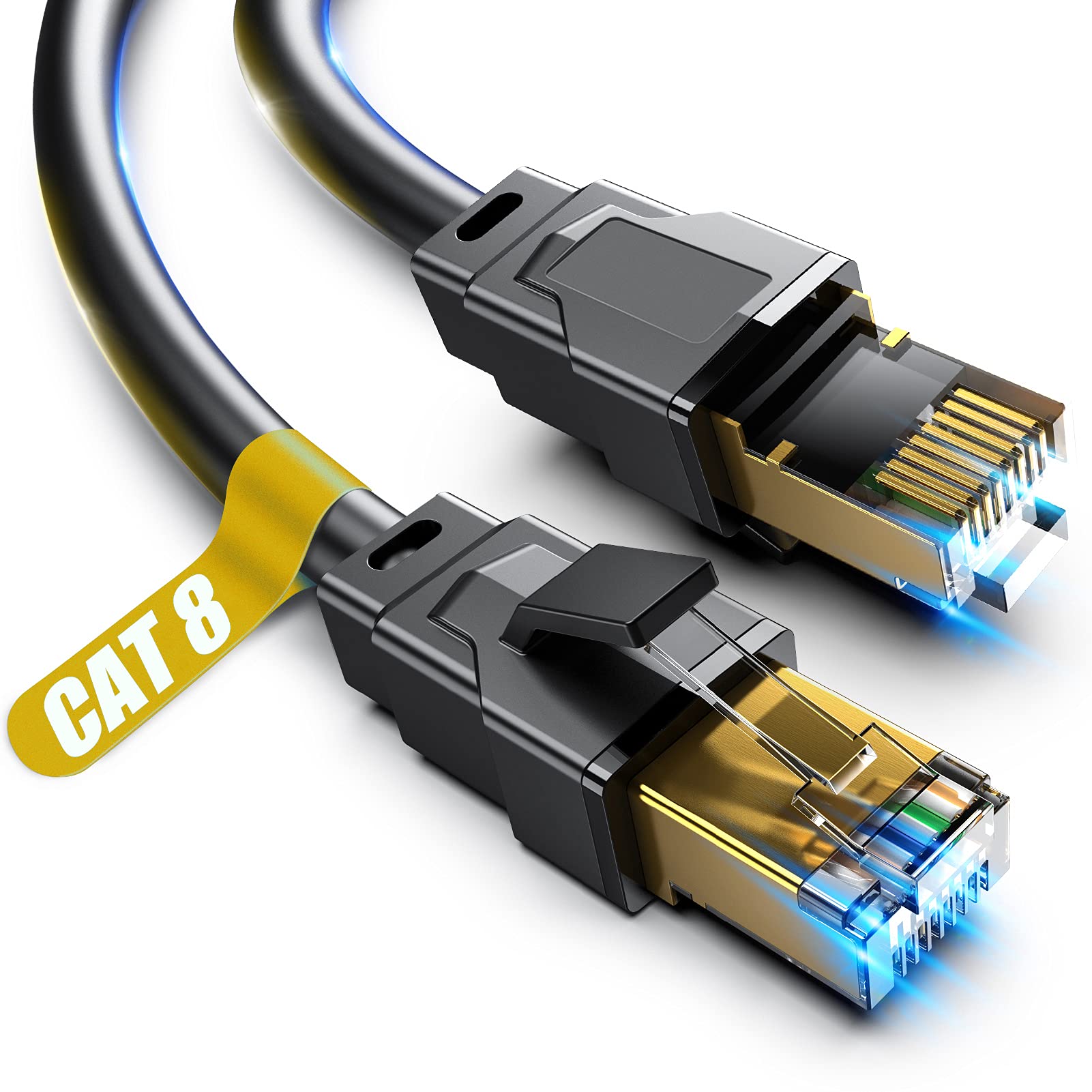
Table of Contents
- Understanding Ethernet Cable Categories: A Speed and Bandwidth Comparison
- Cat5e: The Baseline Standard
- Cat6: The Gigabit Sweet Spot
- Cat6a: Enhanced Performance for Future-Proofing
- Cat7: A Shielded, High-Frequency Option
- Cat8: The Data Center Powerhouse
- How to Choose the Right Ethernet Cable for Your Needs
- Your Internet Plan Speed
- Network Environment: Shielding (STP vs. UTP)
- Cable Length and Signal Integrity
- Use Case: Gaming, Streaming, or Home Office?
- Key Features to Look for in a High-Quality Ethernet Cable
- Conductor Material: Solid vs. Stranded Copper
- Connector Quality (Gold-Plated Connectors)
- Jacket Rating (CM, CMR, CMP)
- Answering Your Common Questions
Understanding Ethernet Cable Categories: A Speed and Bandwidth Comparison
Selecting the right network cable depends entirely on matching its capabilities with your internet speed and network demands. Ethernet cables are categorized by “Cat” numbers, which signify their performance standards. Higher numbers generally indicate faster speeds and greater bandwidth, which is the capacity to handle data traffic. Understanding these differences is the first step toward optimizing your connection.
| Category | Max Speed | Max Bandwidth | Ideal For |
|---|---|---|---|
| Cat5e | 1 Gbps | 100 MHz | Basic home internet, light streaming |
| Cat6 | 1 Gbps (up to 10 Gbps at shorter distances) | 250 MHz | Gigabit internet, HD streaming, online gaming |
| Cat6a | 10 Gbps | 500 MHz | Multi-gigabit internet, 4K/8K streaming, future-proofing |
| Cat7 | 10 Gbps | 600 MHz | High-interference environments, smart homes |
| Cat8 | 25-40 Gbps | 2000 MHz | Data centers, professional server rooms |
Cat5e: The Baseline Standard
Category 5e (enhanced) has long been the entry-level standard for Ethernet. It supports speeds up to 1 Gigabit per second (Gbps) with a bandwidth of 100 MHz. While it can handle basic high-speed internet plans, its lower bandwidth makes it more susceptible to crosstalk—interference between wires. For new installations, Cat5e is largely considered outdated, as more advanced options offer significantly better performance for a minimal price difference.
Cat6: The Gigabit Sweet Spot
For the majority of homes and small offices, Cat6 is the perfect balance of performance and cost. It reliably supports 1 Gbps speeds over long distances (up to 100 meters) and can even achieve 10 Gbps at shorter lengths (under 55 meters). With a bandwidth of 250 MHz and tighter wire twisting, it offers a more stable and faster connection than Cat5e, making it ideal for HD streaming, competitive online gaming, and efficient file transfers. It is a substantial upgrade that meets the demands of most modern internet plans.
Cat6a: Enhanced Performance for Future-Proofing
Category 6a (augmented) is a significant step up, designed to handle 10 Gbps speeds over the full 100-meter distance. It doubles the bandwidth to 500 MHz and often includes better shielding to drastically reduce interference. If you have an internet plan faster than 1 Gbps or want to ensure your network infrastructure can handle future speed increases, Cat6a is the best choice. It is perfectly suited for demanding applications like 4K/8K video streaming, running a home server, or transferring massive files.
Cat7: A Shielded, High-Frequency Option
Category 7 cables also support 10 Gbps speeds but increase the bandwidth to 600 MHz. A key feature of Cat7 is that it is always shielded (STP), meaning each pair of wires is wrapped in foil to combat crosstalk and external electromagnetic interference (EMI). While its performance is similar to Cat6a for most users, it can be beneficial in electrically “noisy” environments, such as near power lines or heavy machinery. It uses a proprietary GigaGate45 (GG45) connector, though it remains backward compatible with standard RJ45 ports.
Cat8: The Data Center Powerhouse
Cat8 is the pinnacle of copper Ethernet technology, engineered for extremely high-speed, short-distance connections. It supports staggering speeds of 25 Gbps or even 40 Gbps over distances up to 30 meters, with a massive bandwidth of 2000 MHz. This level of performance is far beyond the needs of any residential network. Cat8 is designed specifically for data centers and professional IT environments to connect servers, switches, and storage equipment. For top-tier performance in these critical applications, D-Lay Cable’s certified Cat8 patch cords provide the unmatched speed and reliability required.
How to Choose the Right Ethernet Cable for Your Needs
Beyond the “Cat” number, several practical factors determine which Ethernet cable is best for your specific situation. Matching the cable to your internet speed, environment, and intended use ensures you get the performance you are paying for without overspending on unnecessary features.
Your Internet Plan Speed
The most important factor is your internet subscription speed. Using a Cat5e cable on a 2 Gbps fiber connection will create a bottleneck, preventing you from reaching your maximum speeds. Conversely, using a Cat8 cable for a 500 Mbps plan offers no benefit.
- For plans up to 1 Gbps: A Cat6 cable is ideal.
- For plans between 1 Gbps and 10 Gbps: A Cat6a cable is necessary to achieve full speed.
- For plans over 10 Gbps: This is primarily in commercial settings, where Cat8 is appropriate.
Network Environment: Shielding (STP vs. UTP)
Ethernet cables come in two main types: Unshielded Twisted Pair (UTP) and Shielded Twisted Pair (STP).
- UTP (Unshielded Twisted Pair): This is the most common type for homes and offices. The wire pairs are twisted to help prevent interference, which is sufficient for most environments.
- STP (Shielded Twisted Pair): These cables include an additional foil or braided shield around the wires. This shielding provides extra protection against electromagnetic interference (EMI) from sources like power lines, fluorescent lights, and large motors. STP cables are best for factories, commercial buildings, or any location with high electrical noise.
Cable Length and Signal Integrity
While Ethernet cables can run up to 100 meters (328 feet), signal strength can degrade over longer distances, a phenomenon known as attenuation. For very long runs, especially those pushing the speed limits of their category (like 10 Gbps on Cat6), it is crucial to use a high-quality cable made with pure copper conductors. Shorter cables generally provide a more reliable signal. Always choose a length that is just long enough for your needs with a little slack, avoiding excessive coils which can sometimes cause interference.
Use Case: Gaming, Streaming, or Home Office?
Your primary activities also influence the best choice. For a competitive gamer, low latency and a stable connection are paramount, making a Cat6 or Cat6a cable a smart investment to eliminate lag. For streaming 4K or 8K content, the high bandwidth of Cat6a ensures a smooth, buffer-free experience. A dedicated home office that relies on fast file transfers and clear video calls will also benefit from the reliability of at least a Cat6 cable.
Key Features to Look for in a High-Quality Ethernet Cable
Not all cables are created equal, even within the same category. The materials and construction quality directly impact performance and durability. Paying attention to these details ensures you purchase a product that will last and perform reliably.
Conductor Material: Solid vs. Stranded Copper
The wires inside the cable are made of copper, but there are important distinctions.
- Pure Bare Copper: This is the highest quality standard. It offers the best conductivity and ensures the cable meets its stated performance specifications. Products from reputable suppliers like D-Lay Cable are constructed with 100% pure copper to guarantee optimal signal transmission.
- Copper-Clad Aluminum (CCA): These cables use an aluminum core coated with a thin layer of copper. They are cheaper but have higher resistance, are more prone to breaking, and often fail to meet certified performance standards. It is best to avoid CCA cables for any critical network connection.
Connector Quality (Gold-Plated Connectors)
The RJ45 connector at each end of the cable is a critical component. Look for connectors with gold-plated contacts. Gold is highly resistant to corrosion and oxidation, ensuring a clean and durable connection point over time. A poor-quality connector can degrade signal quality just as much as a poorly made cable.
Jacket Rating (CM, CMR, CMP)
The outer sheathing, or jacket, is rated for fire safety. This is especially important for cables installed inside walls or ceilings.
- CM (Communications Multipurpose): The standard jacket for patch cords and general use.
- CMR (Communications Multipurpose, Riser): “Riser” rated for in-wall vertical runs between floors, as it is more flame-retardant.
- CMP (Communications Multipurpose, Plenum): “Plenum” rated for use in plenum spaces (areas with air circulation for heating and air conditioning, like drop ceilings). It is the most fire-resistant and emits low smoke.
Answering Your Common Questions
Navigating the technical specifications of network cables can raise several questions. Here are clear answers to some of the most frequent inquiries.
Is a more expensive Ethernet cable really better?
Price often reflects quality. More expensive cables typically use superior materials like pure copper conductors, better shielding, and more durable connectors. While you may not need the most expensive cable, investing in a well-constructed cable from a reputable brand ensures it performs to its certified specifications and lasts longer.
Can an Ethernet cable be too long?
Yes. The maximum specified length for most Ethernet categories is 100 meters (328 feet). Beyond this, you will experience significant signal degradation, leading to slower speeds and connection drops. For shorter distances, Cat6 can support 10 Gbps speeds, but this capability drops off as the cable gets longer.
What is the difference between Cat6 and Cat6a?
The primary difference is performance over distance. Cat6 supports 10 Gbps up to 55 meters, while Cat6a supports 10 Gbps up to the full 100 meters. Cat6a also has double the bandwidth (500 MHz vs. 250 MHz) and generally better shielding, making it more robust against interference and a better choice for future-proofing a network.
Do I need a Cat8 cable for my home network?
No, a Cat8 cable is complete overkill for a home network. Residential internet plans and network hardware do not come close to saturating the 25/40 Gbps speeds that Cat8 offers. A Cat6 or Cat6a cable is more than sufficient for even the fastest home internet connections and will deliver exceptional performance for all your needs.