


Yes, flat Cat 8 Ethernet cables exist and are widely available for purchase. However, the critical question isn’t whether they exist, but whether they can truly perform to the demanding Category 8 standard. In the vast majority of cases, due to fundamental design compromises in their construction, flat Cat 8 cables fail to meet the strict performance and shielding requirements needed for 40Gbps speeds, making certified, high-quality round cables the only reliable choice for true Cat 8 applications. dlaycable will explore the technical reasons behind this, compare flat vs. round construction, and help you understand why choosing the right cable shape is crucial for your high-speed network’s integrity.
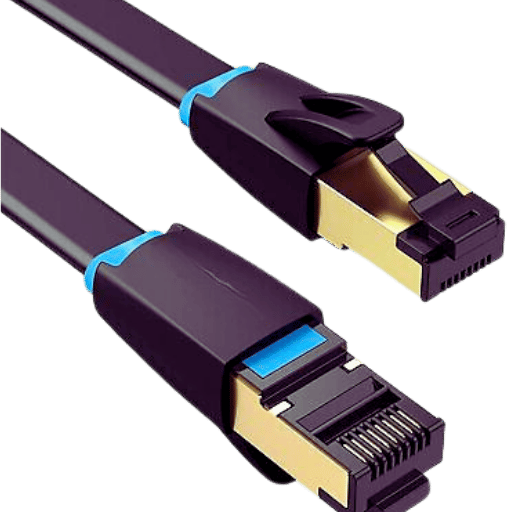
Table of Contents
- What Truly Defines a Category 8 Cable?
- The Core Difference: Round vs. Flat Cable Construction
- Do Flat Cat 8 Cables Meet Performance Standards? A Reality Check
- When to Use a Flat Cable (and When to Absolutely Avoid It)
- How to Choose the Right Cat 8 Cable for Guaranteed Performance
- Conclusion: The Verdict on Flat Cat 8 Cables
- Frequently Asked Questions (FAQ)
What Truly Defines a Category 8 Cable?
Before we can assess the viability of a flat design, we must first understand what makes a cable “Category 8.” Defined by the ANSI/TIA-568-C.2-1 standard, Cat 8 is a powerhouse of networking technology designed specifically for short-distance, high-bandwidth applications, primarily in data centers and server rooms. It’s not just a label; it’s a stringent set of performance specifications.
A true Cat 8 cable must meet these criteria:
- Frequency: It must support a bandwidth of up to 2000 MHz. This is four times the bandwidth of Cat 6A (500 MHz) and double that of Cat 7A (1000 MHz). This massive frequency range is what allows it to carry so much data.
- Data Rate: It is designed to support 25GBASE-T and 40GBASE-T Ethernet, meaning it can transmit data at speeds of 25 Gigabits per second (Gbps) or 40 Gbps.
- Reach: Its maximum channel length is limited to 30 meters (98 feet), consisting of up to 24 meters of solid horizontal cable and 6 meters of patch cords. This short distance is a trade-off for its incredible speed.
- Shielding: The standard mandates that Cat 8 cables must be shielded to protect against high-frequency noise and interference. The most common and effective construction is S/FTP (Screened/Foiled Twisted Pair), which we will explore in detail.
These specifications are not suggestions; they are requirements. Failing to meet even one of these, particularly the shielding and frequency performance, means a cable cannot legitimately be called a Category 8 cable. This forms the basis of our investigation into the flat vs. round Cat 8 cable debate.
The Core Difference: Round vs. Flat Cable Construction
The shape of an Ethernet cable is not an aesthetic choice—it’s a direct result of the engineering required to meet performance standards. The profound difference between round and flat cables lies in their internal geometry, which dictates their ability to handle high frequencies and resist interference.
The Anatomy of a Standard (Round) Cat 8 Cable
A certified round Cat 8 cable is a marvel of precise engineering. Its structure is purpose-built to combat the physical challenges of transmitting data at 2000 MHz.
- Tightly Twisted Pairs: The cable contains four pairs of copper conductors. Each pair is twisted together with a specific, carefully calculated number of twists per inch. This twisting is the first line of defense against crosstalk—the unwanted signal transfer between adjacent pairs. The varying twist rates help to cancel out magnetic fields, keeping the signals clean.
- Individual Foil Shielding: In an S/FTP cable, each of the four twisted pairs is wrapped in its own foil shield. This isolates each pair, providing robust protection against both internal crosstalk (from other pairs) and external high-frequency noise.
- Overall Braided Screen: After the individual pairs are shielded, they are all encased together in an overall braided or foil screen. This provides a final, heavy-duty layer of protection against electromagnetic interference (EMI) and radio-frequency interference (RFI) from power lines, motors, and other sources.
- Consistent Geometry: The round shape allows these shielded, twisted pairs to maintain a consistent distance and orientation to each other throughout the length of the cable, ensuring predictable and stable performance.
How Flat “Cat 8” Cables are Typically Made
Flat Ethernet cables achieve their low profile by altering this fundamental design, leading to significant performance compromises.
- Parallel Conductors: Instead of being tightly twisted, the copper conductors in a flat cable lie parallel to each other in a flat, ribbon-like arrangement. This immediately eliminates the primary method of crosstalk cancellation. The conductors are essentially un-twisted pairs.
- Compromised or Absent Shielding: To maintain the thin and flexible form factor, robust S/FTP shielding is almost impossible to implement effectively. Many flat cables have minimal, ineffective shielding, or in some low-quality versions, no shielding at all, despite being marketed as “STP” or “FTP”.
- Inconsistent Spacing: The parallel conductors can easily shift and move within the thin jacket, especially when bent or routed around corners. This changes the cable’s impedance and electrical characteristics, leading to signal reflections and degradation.
This fundamental difference in construction is why the question of flat Cat 8 cable performance is so contentious. The very design choices that make a cable flat are those that contradict the engineering principles required for Cat 8 speeds.
Do Flat Cat 8 Cables Meet Performance Standards? A Reality Check
Given the construction differences, it’s clear that a flat design presents major hurdles. But do these theoretical problems translate to real-world performance failures? The answer is an unequivocal yes. Flat Cat 8 cables systematically fail to meet the standard’s requirements for signal integrity.
The Inherent Problem with Crosstalk (NEXT) and EMI
At the 2000 MHz frequency Cat 8 operates at, signals are extremely sensitive to interference. Crosstalk, specifically Near-End Crosstalk (NEXT), becomes a dominant issue. Without the tight, varied twists of a round cable, the parallel conductors in a flat cable act like tiny antennas, readily leaking their signals into adjacent conductors. This “noise” corrupts the data stream, leading to a high Bit Error Rate (BER), retransmissions, and ultimately, a drastic reduction in actual throughput. What you thought was a 40 Gbps link may struggle to deliver even 10 Gbps reliably.
The Insurmountable Shielding Challenge
True S/FTP shielding adds significant bulk and rigidity, something that is antithetical to a flat, flexible design. While some flat cables may claim to be “shielded,” this often amounts to a single, thin layer of foil that is easily compromised and offers minimal protection against the aggressive EMI present in high-frequency environments. It cannot replicate the multi-layered, pair-isolating shielding of a certified round Cat 8 cable. This makes them highly susceptible to interference from power cables, fluorescent lights, and other network cables, further degrading the signal.
The Certification Gap: A Major Red Flag
Perhaps the most damning evidence is the lack of
certified flat Cat 8 cable options from major, reputable testing bodies like Underwriters Laboratories (UL) or Intertek (ETL). To be certified, a cable must pass a rigorous battery of tests with specialized equipment that measures crosstalk, return loss, shielding effectiveness, and more, all the way up to 2000 MHz. The simple truth is that flat cables, due to their design, cannot pass these tests. Any product marketed as “Cat 8 Flat” is almost certainly using the label without having met the certifiable performance standard. They may use Cat 8 compatible RJ45 connectors, but the cable itself is the weak link.
When to Use a Flat Cable (and When to Absolutely Avoid It)
While flat Cat 8 cables are not suitable for their stated purpose, this doesn’t mean all flat cables are useless. Their value is in aesthetics and convenience for low-speed applications. The key is matching the cable type to the use case and not over-provisioning with a mislabeled product.
| Application | Recommended Cable | Why? |
|---|---|---|
| Data Center / Server Rack | Certified Round Cat 8 S/FTP | Essential. This is the environment Cat 8 was designed for. Maximum performance, reliability, and shielding are non-negotiable. |
| Pro A/V or 10G+ Home Lab | Certified Round Cat 6A or Cat 7 | You need reliable 10 Gbps and excellent shielding. A quality round Cat 6A cable is certified for this and more cost-effective than a non-performing flat “Cat 8”. |
| High-Performance PC Gaming | Certified Round Cat 6A | Provides more than enough bandwidth (10Gbps/500MHz) for any current or future gaming needs with superior reliability and noise rejection compared to any flat cable. |
| Hiding a Cable Under a Rug for Basic Web Browsing (1Gbps or less) | Flat Cat 6 Cable | This is the ideal use case for a flat cable. The low profile is perfect, and for basic 1 Gbps internet, the performance compromises are less likely to be noticeable over short distances. |
How to Choose the Right Cat 8 Cable for Guaranteed Performance
When your application genuinely requires 40 Gbps networking, you cannot afford to compromise. Buying the right cable means looking beyond marketing claims and focusing on verifiable specifications. As experts in high-performance cabling, we at D-Lay Cable recommend a three-point checklist.
Prioritize Certified Cables
Don’t just take the manufacturer’s word for it. Look for cables that are ETL or UL verified to meet the ANSI/TIA-568 Category 8 standard. This certification is your guarantee that the cable has been independently tested and proven to perform as specified. The certification mark should be printed directly on the cable jacket.
Insist on Round, S/FTP Construction
For true Cat 8 performance, the choice is clear: you must use a round S/FTP cable. Inspect the product description and specifications to confirm this construction. The individual foil shielding and overall braid are critical for achieving the noise immunity required for 2000 MHz frequencies. Any other construction type simply won’t meet the standard.
Trust Reputable Suppliers
Purchase your high-performance cabling from a specialist supplier who understands the technical nuances and stakes their reputation on quality. At D-Lay Cable, we focus on providing professionally graded, standards-compliant cabling solutions. A knowledgeable vendor can provide test reports and ensure you’re getting a product that delivers on its promises, not just a label.
Conclusion: The Verdict on Flat Cat 8 Cables
While you can certainly buy a cable labeled “Flat Cat 8,” you are not buying a cable that delivers true Category 8 performance. The flat design, by its very nature, sacrifices the two most critical elements of Cat 8 engineering: the precise twisting of conductor pairs and the robust S/FTP shielding.
As a result, these cables are highly susceptible to crosstalk and EMI, cannot pass certification testing, and will fail to support reliable 40 Gbps data transmission. They are Cat 8 in name only. For applications that require the immense power of Cat 8—such as in data centers, for server-to-server connections, and in professional high-bandwidth environments—a certified, round, S/FTP shielded Cat 8 cable is the only correct and reliable choice. For aesthetic needs like running a cable under a carpet, a more appropriate and cost-effective flat Cat 6 cable is a far better solution.
Frequently Asked Questions (FAQ)
1. Are flat Cat 8 cables faster than round Cat 7 cables?
No. A properly constructed and certified round Cat 7 or Cat 6A cable will almost certainly offer superior and more reliable performance (up to 10 Gbps) than a non-certified flat Cat 8 cable, which will struggle with signal integrity and will not reliably achieve its target speed of 40 Gbps.
2. Why are flat Cat 8 cables sold if they don’t work?
They are sold to meet a consumer demand for cables that are easy to hide. Unscrupulous manufacturers capitalize on the “Cat 8” label as a marketing term for “highest speed,” even if the product’s physical construction makes it impossible to achieve that speed. The buyer is essentially purchasing a product that doesn’t live up to its name.
3. Can you use a flat Cat 8 cable for a PS5 or Xbox Series X?
You could, but it would be extreme overkill and a poor choice. A console’s network port is typically 1 Gbps, with some high-end PCs moving to 2.5 or 5 Gbps. A high-quality certified Cat 6 or Cat 6A cable is more than sufficient and will provide a more reliable, interference-free connection than a non-standard flat “Cat 8” cable.