


Yes, you can absolutely plug a Cat8 Ethernet cable into a Cat6 port. The physical RJ45 connector is the same for both categories, making them physically compatible. This means the Cat8 cable will fit perfectly into a Cat6 wall jack, router port, or computer’s network interface card (NIC). However, while it works, your network speed will not magically upgrade to Cat8 performance. The entire connection will be limited by the lowest-rated component in the chain, which, in this case, is the Cat6 port and its associated infrastructure. Understanding this “bottleneck effect” is crucial to making an informed and cost-effective decision for your network setup.
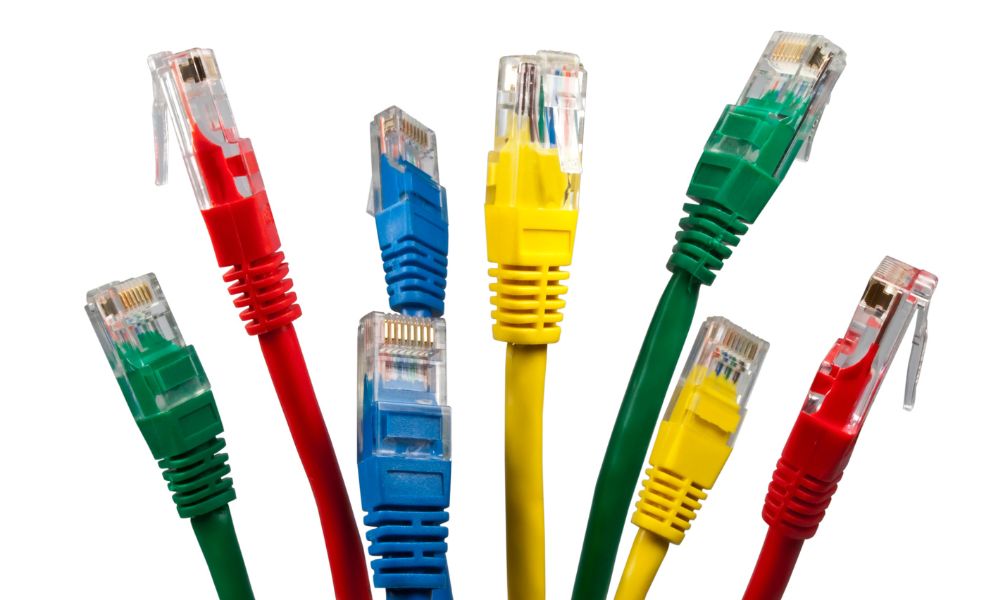
At Dlaycable, we’re experts in network infrastructure, and a common question we receive is about mixing and matching Ethernet cable categories. dlaycable will provide an in-depth explanation of what happens when you connect a Cat8 cable to a Cat6 system, why it works the way it does, and how to choose the right cable for your specific needs to ensure optimal performance without overspending. We’ll dive deep into the technical specifications, practical applications, and the critical concept of backwards compatibility to give you a complete picture.
Table of Contents
- Understanding Backwards Compatibility: How Do Ethernet Cables Work Together?
- What Happens to Performance When You Mix Cat8 and Cat6?
- Cat8 vs. Cat6: A Head-to-Head Technical Comparison
- So, When Should You Actually Use a Cat8 Cable?
- Why Cat6 or Cat6A is Still the Best Choice for Most Users
- Your Questions Answered: FAQs About Mixing Ethernet Cables
- The Final Verdict: Making the Smart Choice for Your Network
Understanding Backwards Compatibility: How Do Ethernet Cables Work Together?
The principle that allows you to plug a state-of-the-art Cat8 cable into an older Cat6 port is called backwards compatibility. This is a fundamental design feature of Ethernet standards. Network devices, such as routers, switches, and network cards, are designed to perform a process called auto-negotiation when a connection is established. During this digital handshake, the two devices communicate their capabilities and agree to operate at the highest speed and standard that they both support.
Imagine your network connection as a conversation. A Cat8 cable and port can “speak” at 40 Gigabits per second (Gbps). A Cat6 port can only “speak” at a maximum of 10 Gbps (over shorter distances) or 1 Gbps (the most common standard). When the Cat8 cable is connected to the Cat6 port, the system negotiates and determines that the highest shared language is the one spoken by Cat6. Therefore, the entire data link will operate at Cat6 speeds. It’s like having a super-highway (Cat8) that leads directly into a 55-mph local road (Cat6); your travel speed is dictated by the slowest part of your journey.
What Happens to Performance When You Mix Cat8 and Cat6?
While physically compatible, the performance implications of this combination are significant. Using a Cat8 cable will not boost a Cat6 network’s speed. Instead, you’ll be constrained by the limitations of the older standard. Let’s break down exactly what that means for your network’s speed and stability.
The Bottleneck Effect Explained
The term “bottleneck” is the most important concept to grasp. Your network data path is only as fast as its slowest component. This chain includes everything from your Internet Service Provider (ISP) plan, modem, router, network switches, wall jacks, patch panels, and the network cards in your devices, in addition to the cables themselves. Plugging a Cat8 cable (rated for 2000 MHz and 40 Gbps) into a network built on Cat6 infrastructure (rated for 250 MHz and 1-10 Gbps) means the performance will cap out at Cat6 levels. You will get a stable 1 Gbps connection up to 100 meters or, in some ideal cases with compatible equipment, a 10 Gbps connection up to 55 meters. You’ve essentially purchased a Ferrari to drive it in a school zone—it works fine, but you’re paying for performance you cannot access.
Does the Shielding of Cat8 Offer Any Benefit in a Cat6 System?
One potential, albeit minor, advantage is shielding. Cat8 cables are, by definition, always shielded. They use a high-grade S/FTP (Screened/Foiled Twisted Pair) construction, where each individual pair of wires is wrapped in foil, and a master braid screen surrounds all four pairs. This provides exceptional protection against electromagnetic interference (EMI) and crosstalk from nearby power lines, fluorescent lights, or other data cables.
Standard Cat6 cables are often UTP (Unshielded Twisted Pair). By introducing a shielded Cat8 cable into this environment, you might see a marginal improvement in signal stability, especially in an area with high electronic noise. However, to fully leverage the benefits of shielding, the entire channel—including jacks, patch panels, and connectors—should also be shielded and properly grounded. If you plug a shielded Cat8 cable into an unshielded Cat6 jack, the shielding is not grounded and its effectiveness is drastically reduced.
Cat8 vs. Cat6: A Head-to-Head Technical Comparison
To truly understand why you won’t get Cat8 speeds, it helps to see the specifications side-by-side. The differences in bandwidth, data rate, and construction are stark and highlight the distinct purposes for which these cables were designed.
| Feature | Cat6 Cable | Cat8 Cable |
|---|---|---|
| Maximum Data Rate | 1 Gbps (up to 100m) / 10 Gbps (up to 55m) | 25 Gbps / 40 Gbps (up to 30m) |
| Maximum Bandwidth (Frequency) | 250 MHz | 2000 MHz |
| Maximum Channel Length | 100 meters (328 feet) | 30 meters (98 feet) |
| Shielding | Typically Unshielded (UTP), Shielded (FTP) available | Always Shielded (S/FTP) |
| Typical Application | Home networks, offices, Gigabit Ethernet | Data centers, server rooms, switch-to-switch links |
| Relative Cost | Standard | High / Premium |
As the table clearly illustrates, Cat8 is a specialist cable built for incredible speed over very short distances. Its 2000 MHz bandwidth is eight times greater than Cat6’s 250 MHz. This massive capacity is what allows it to handle 40 Gbps data rates, but it’s specifically engineered for the high-density, short-run environment of a modern data center, not for wiring an entire home or office building.
So, When Should You Actually Use a Cat8 Cable?
Given its high cost and specific limitations, Cat8 is not a universal upgrade. It’s a precision tool for a specific job. You should only consider using our selection of Cat8 patch cords in the following scenarios:
- Data Centers: This is the primary use case. Cat8 is designed for top-of-rack (ToR) or end-of-row (EoR) configurations, connecting servers, high-speed network switches, and storage area networks (SANs) that operate on 25GBASE-T or 40GBASE-T standards.
- Professional High-Bandwidth Environments: A video production studio or scientific research facility transferring massive multi-terabyte files between workstations and a central server could benefit from a point-to-point Cat8 connection.
- Extreme Future-Proofing (with a caveat): If you are certain you will be upgrading your core network switches and servers to 25/40 Gbps within the next year or two, using Cat8 for the short, critical links between that new hardware could make sense. For general-purpose wiring, this is considered overkill.
Why Cat6 or Cat6A is Still the Best Choice for Most Users
For the vast majority of home, office, and even commercial applications, Cat6 and its enhanced sibling, Cat6A, offer the perfect combination of performance, distance, and value. They are more than capable of handling today’s and tomorrow’s networking demands.
The Perfect Balance of Price and Performance
A high-quality Cat6 cable reliably delivers 1 Gbps, which is faster than the majority of residential internet plans currently available. It’s the workhorse of modern networking, perfect for streaming 4K video, online gaming, and everyday office work. For those looking to build a more robust 10 Gigabit Ethernet network, Cat6A is the true sweet spot. It supports 10 Gbps speeds over the full 100-meter distance, providing a significant performance upgrade that is both achievable and affordable for prosumers and small businesses, without the extreme cost and distance limitations of Cat8.
Is It Ever Worth “Future-Proofing” with Cat8?
The idea of “future-proofing” with Cat8 is tempting, but often misguided for horizontal, in-wall cabling. The technological leap from 10 Gbps (Cat6A) to 40 Gbps (Cat8) is substantial, and the hardware required to utilize it is still enterprise-grade and prohibitively expensive for most. By the time 40 Gbps networking becomes a consumer-level standard, it is highly likely that fiber optic technology will be the preferred medium, or a new, more efficient copper standard (like Cat9) may have emerged. A smarter future-proofing strategy is to install high-quality Cat6A cables, which provides a clear and cost-effective upgrade path to 10 Gbps networking that will remain relevant for many years to come.
Your Questions Answered: FAQs About Mixing Ethernet Cables
What happens if I plug a Cat6 cable into a Cat8 port?
The same principle applies in reverse. The connection will auto-negotiate down to the capabilities of the Cat6 cable, resulting in a 1 Gbps or 10 Gbps link, depending on the cable length and quality.
Will a Cat8 cable increase my internet speed from my ISP?
No. Your internet speed is determined by the plan you purchase from your Internet Service Provider. A Cat8 cable cannot make your internet faster than the speed being delivered to your modem. It only ensures the connection from your router to your devices is not a bottleneck.
If my internet is only 500 Mbps, does any of this matter?
For your internet connection, a Cat5e cable is technically sufficient. However, for your *local* network (transferring files between computers, streaming from a local media server), a Cat6 or Cat6A cable provides a much faster and more robust internal network, which is a significant quality-of-life improvement.
The Final Verdict: Making the Smart Choice for Your Network
To conclude, while you can plug a Cat8 cable into a Cat6 port thanks to the universal RJ45 connector and the principle of backwards compatibility, it offers no performance benefit and is not a wise financial investment for most situations. Your network will operate at the speed of the Cat6 components, making the advanced capabilities of the Cat8 cable dormant.
The expert recommendation from us at Dlaycable is clear: match your cable to your infrastructure.
- For standard Gigabit networks in homes and offices, Cat6 is the reliable and affordable standard.
- For new installations and those aiming for 10 Gbps speeds, Cat6A is the intelligent, future-forward choice.
- Reserve Cat8 for its intended purpose: short-distance, ultra-high-speed connections in data centers and specialized professional environments.
By choosing the correct cable category for your needs, you ensure a stable, high-performance network that delivers exceptional value. Browse our full range of certified network cables to find the perfect solution for your project.