


When choosing copper cabling for a data center, the debate between Cat6A and Cat7 often arises. However, for modern data centers in North America and regions following TIA standards, the choice is clear: Category 6A (Cat6A) is the superior and recommended solution for 10GBASE-T applicationsCat6A vs. Cat7 Guide. This preference stems from Cat6A’s official recognition and standardization by the Telecommunications Industry Association (TIA), ensuring interoperability, reliability, and a clear future-proof path. In contrast, Cat7, an ISO/IEC standard not recognized by the TIA, introduces proprietary connector issues and compatibility risks without offering tangible performance benefits for standard 10 Gbps networking, making it a non-standard choice for enterprise data center environments.
Understanding the Core Differences: Cat6A vs. Cat7 at a Glance
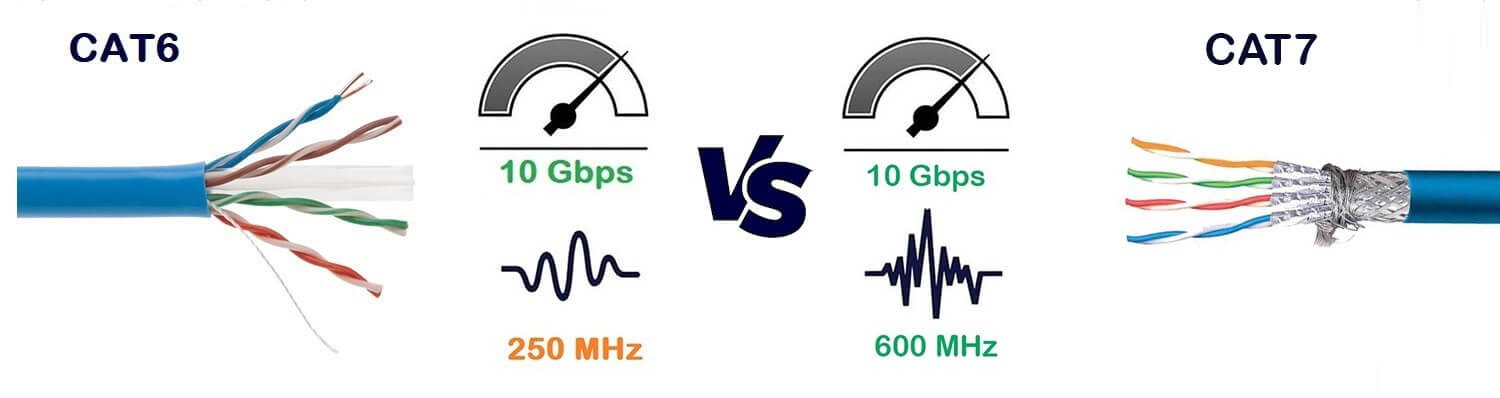
At first glance, Cat6A and Cat7 cables seem to target similar performance goals, but their underlying specifications, industry acceptance, and practical applications are vastly different. Understanding these distinctions is fundamental to making an informed decision for mission-critical data center infrastructure. The primary difference lies not in advertised speed but in the standardization body that recognizes them and the components required to meet their respective specifications. This single factor has massive implications for cost, installation, and long-term viability.
The following table provides a clear, side-by-side comparison of the most critical attributes for Cat6A and Cat7 cabling, highlighting the factors that are most important for data center planners and IT managers. Pay close attention to the standardization and connector type, as these are the most significant differentiators.
| Feature | Category 6A (Cat6A) | Category 7 (Cat7) |
|---|---|---|
| Governing Standard | ANSI/TIA-568-C.2 | ISO/IEC 11801 Class F (Not recognized by TIA) |
| Max Data Rate | 10 Gbps | 10 Gbps |
| Max Distance | 100 meters (328 feet) | 100 meters (328 feet) |
| Frequency/Bandwidth | 500 MHz | 600 MHz |
| Standard Connector | RJ45 | GG45 or TERA (Proprietary, not RJ45) |
| Shielding | U/UTP, F/UTP, or S/FTP | S/FTP (Individually shielded pairs) is required |
| Data Center Adoption | Widespread, industry standard | Very Low / Niche, not a standard choice |
| Backward Compatibility | Fully backward compatible with Cat6, Cat5e | Limited by proprietary connectors; requires adapters |
What is Cat6A? The Gold Standard for 10G Ethernet
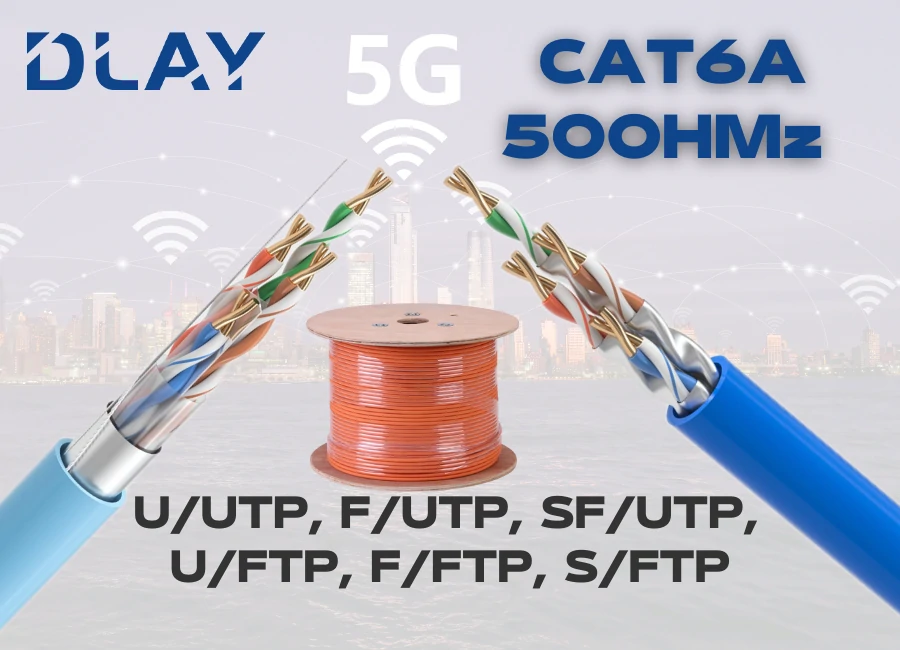
Category 6A, where ‘A’ stands for “Augmented,” is the established and trusted standard for supporting 10 Gigabit Ethernet (10GBASE-T) over 100 meters of copper cabling. It was specifically developed to address the limitations of Cat6, most notably by mitigating the significant issue of alien crosstalk. Since its ratification, Cat6A has become the de facto copper cabling solution for new horizontal cabling installations in data centers and enterprise networks that require a robust, reliable, and future-ready infrastructure for 10GbE speeds. Its widespread adoption is a testament to its balanced performance, cost-effectiveness, and, most importantly, its backing by the TIA.
The Power of TIA Standardization
The most compelling reason data centers standardize on Cat6A is its official status under ANSI/TIA-568-C.2. The Telecommunications Industry Association (TIA) is the leading standards development organization for information and communications technology (ICT) in North America. TIA standards ensure a multi-vendor ecosystem where components from different manufacturers are guaranteed to be interoperable. When you purchase TIA-compliant Cat6A cables, patch panels, and connectors, you are buying into a system of guaranteed performance. This eliminates guesswork and the risk of a “Frankenstein” network built from components that don’t truly work together, a significant risk with non-TIA recognized standards like Cat7. This standardization is the bedrock of reliability that data centers, which demand 99.999% uptime, are built upon.
Performance Deep Dive: 10GBASE-T and Alien Crosstalk (ANEXT)
While Cat6 can theoretically support 10GBASE-T, it is limited to very short distances (around 37-55 meters) and is highly susceptible to alien crosstalk (ANEXT). ANEXT is the noise or interference induced on one cable from adjacent, parallel cables in a bundle. Cat6A was engineered specifically to solve this problem. It achieves this through a combination of design improvements, including increased cable diameter, tighter pair twists, and, in shielded versions (F/UTP), an overall foil shield. These enhancements ensure that Cat6A can reliably deliver 10 Gbps performance over the full 100-meter channel length, even in dense data center environments where cable trays are packed tightly. This robust performance makes it ideal for supporting high-bandwidth applications and Power over Ethernet (PoE, PoE+, PoE++) devices like wireless access points and security cameras without performance degradation.
The Universal RJ45 Advantage
Cat6A uses the ubiquitous and universally accepted RJ45 connector. This is a massive advantage in terms of practicality, cost, and skill availability. Every network switch, server, and NIC in the world is equipped with an RJ45 port. This means Cat6A cabling provides seamless, direct connectivity to all standard networking equipment. Installation and termination are straightforward processes for any certified technician, minimizing labor costs and deployment time. The RJ45 ecosystem is mature, with a vast array of affordable and high-quality patch panels, jacks, and testing equipment readily available. This contrasts sharply with the proprietary and cumbersome connectors required by Cat7.
What is Cat7? Unpacking the ISO Standard and its Limitations
Category 7 cabling, defined by the ISO/IEC 11801 Class F standard, is often marketed as a superior alternative to Cat6A. On paper, it boasts a higher frequency of 600 MHz compared to Cat6A’s 500 MHz and features a more robust shielding design (S/FTP – Shielded/Foiled Twisted Pair), where each individual pair is foil-wrapped, and an overall braid shield protects the entire bundle. While these specifications seem impressive, they fail to translate into a tangible benefit for 10GBASE-T applications and introduce significant practical and logistical challenges, primarily because Cat7 is not a recognized standard by the TIA.
The Standardization Dilemma: TIA vs. ISO
The core issue with Cat7 in a North American data center context is its lack of TIA recognition. The data center industry relies on strict adherence to standards to ensure system-wide performance and reliability. Because the TIA does not have a standard for Cat7, there is no TIA-governed specification for Cat7 connectors, cables, or patch panels. This means there is no guarantee of interoperability between “Cat7” components from different vendors. One manufacturer’s Cat7 plug may not deliver specified performance with another’s Cat7 jack. This lack of a unified standard creates a proprietary environment, which is the antithesis of modern data center design principles that emphasize open standards and vendor neutrality.
The Connector Conundrum: GG45, TERA, and the RJ45 Downgrade
To achieve its full Class F specification, Cat7 cabling requires a specific, non-RJ45 connector. The two main types are the GG45 and TERA connectors. These are proprietary, more expensive, and much larger than the RJ45, making them impractical for high-density patching in a data center. More importantly, no mainstream networking equipment from major vendors like Cisco, Arista, or Juniper comes with GG45 or TERA ports. To connect a Cat7 cable to a standard switch or server, you would need a hybrid patch cord with a proprietary connector on one end and an RJ45 on the other. This immediately bottlenecks the entire channel to the performance level of the RJ45 connector, completely negating any theoretical advantage of the Cat7 cable and connector. Many vendors sell “Cat7” cables terminated with standard RJ45 plugs, which is misleading; a channel with an RJ45 connector can, by definition, only meet Cat6A specifications at best.
Is the Higher Frequency of Cat7 Truly a Benefit?
Proponents of Cat7 often point to its 600 MHz bandwidth versus Cat6A’s 500 MHz. However, the 10GBASE-T application was specifically designed and standardized to operate perfectly within the 500 MHz bandwidth provided by Cat6A. The additional 100 MHz offered by Cat7 provides zero performance improvement for 10 Gbps data rates. It’s essentially “headroom” that no current, widely adopted Ethernet standard can utilize. Data centers invest in performance that can be actively used and measured, not in theoretical overhead that provides no practical return. Therefore, the extra cost and complexity of Cat7 yield no tangible benefit over a properly installed Cat6A system for 10G networks.
Why Do Data Centers Prioritize TIA Standards?
The decision to exclusively use TIA-standardized solutions like Cat6A is not arbitrary; it is a strategic business decision rooted in the core operational requirements of a data center: uptime, scalability, and manageable total cost of ownership (TCO).
Interoperability and Vendor Neutrality
A data center is a complex ecosystem of hardware from dozens, if not hundreds, of different vendors. TIA standards act as the common language that allows all these components to communicate flawlessly. By choosing Cat6A, a data center manager ensures that the cabling infrastructure will work seamlessly with any TIA-compliant switch, server, storage array, or patch panel they choose to deploy now or in the future. This vendor neutrality prevents lock-in, encourages competitive pricing, and simplifies procurement and maintenance.
Long-Term Reliability and a Clear Upgrade Path
TIA standards are developed through a rigorous, consensus-based process involving engineers and experts from across the industry. This results in robust standards that guarantee performance over the projected lifespan of the infrastructure. Furthermore, the TIA provides a clear and logical upgrade path. The path is Cat5e -> Cat6 -> Cat6A (for 10G) -> Cat8 (for 40G). Cat7 is a dead-end branch on this evolutionary tree. Investing in Cat7 means investing in a non-standard technology with no TIA-defined future, creating a significant risk for an infrastructure designed to last 10-20 years.
Total Cost of Ownership: Beyond the Cable Price
While the per-foot cost of Cat7 cable might be comparable to shielded Cat6A in some cases, the Total Cost of Ownership (TCO) is significantly higher. This is due to the expensive proprietary connectors, the need for special termination tools and training, and the increased labor time due to the cable’s bulkiness and rigidity. Furthermore, the risk of compatibility issues and the lack of a clear upgrade path can lead to costly rip-and-replace scenarios down the line. Cat6A, with its use of affordable RJ45 components and streamlined installation processes, offers a much lower and more predictable TCO.
The Real Next Step for Copper: Where Does Cat8 Fit In?
For data centers planning for speeds beyond 10 Gbps on copper, the true, TIA-standardized successor is Category 8 (Cat8). Standardized as ANSI/TIA-568-C.2-1, Cat8 is designed specifically for data center environments to support 25GBASE-T and 40GBASE-T applications over a distance of up to 30 meters. This makes it ideal for top-of-rack (ToR) or end-of-row (EoR) architectures, connecting servers to access switches. Cat8 uses standard RJ45 connectors and operates at a frequency of 2000 MHz. The development and standardization of Cat8 by the TIA further solidifies the argument against Cat7. It demonstrates that the industry’s path forward for higher-speed copper is a TIA-governed standard, skipping over the non-recognized Cat7 entirely.
Final Verdict: Why Cat6A is the Unquestionable Choice for Your Data Center
In the debate of Cat6A vs. Cat7 for data center applications, the verdict is overwhelmingly in favor of Cat6A. It is the TIA-standardized, industry-accepted, and cost-effective solution for deploying robust 10GBASE-T networks. It offers guaranteed interoperability, uses the universal RJ45 connector, and fits perfectly into a clear, long-term infrastructure strategy that leads to Cat8 for future 40G needs. Cat7, despite its marketing claims, is a non-standard, proprietary solution within the TIA framework. Its use of non-standard connectors, lack of guaranteed interoperability, and higher total cost of ownership make it an unnecessary risk and a technological dead-end for any modern data center. For reliability, performance, and future-proofing, stick with the standard: choose Cat6A.
Pingback: hello world