


The main difference between Cat6 and Cat7 Ethernet cables lies in their speed, frequency, and shielding, with Cat7 offering higher theoretical performance (10 Gbps over 100 meters at 600 MHz) compared to Cat6 (1 Gbps over 100 meters at 250 MHz). However, for most home and office users, Cat6 or its enhanced version, Cat6a, is the superior and more practical choice. This is due to better industry standardization, lower cost, and performance that already exceeds the needs of most modern internet connections, making the purported benefits of Cat7 largely unnecessary and often mis-marketed.
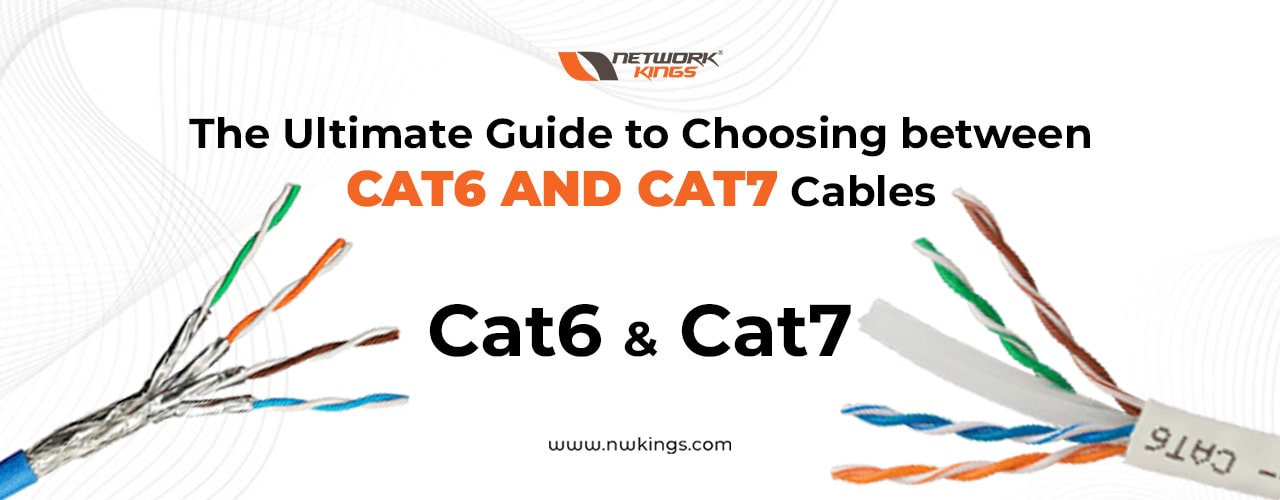
Table of Contents
- At a Glance: Cat6 vs Cat7 Comparison Table
- What is Cat6 Ethernet Cable?
- What is Cat7 Ethernet Cable?
- Key Differences Analyzed: Cat6 vs Cat7 Head-to-Head
- Which Cable Should You Choose? A Practical Guide
- Beyond Cat7: A Glimpse at Cat8
- Frequently Asked Questions (FAQ)
- Final Verdict: The Clear Winner for Most Users
At a Glance: Cat6 vs Cat7 Comparison Table
Before diving deep into the technical nuances, here is a straightforward comparison table that highlights the primary differences between Cat6, its successor Cat6a, and Cat7 cables. This provides a quick reference for their core capabilities.
| Feature | Cat6 | Cat6a (Augmented Cat6) | Cat7 |
|---|---|---|---|
| Max Speed (Data Rate) | 1 Gbps at 100m | 10 Gbps at ~37-55m | 10 Gbps at 100m | 10 Gbps at 100m |
| Max Bandwidth (Frequency) | 250 MHz | 500 MHz | 600 MHz |
| Shielding | UTP (Unshielded) or STP (Shielded) | Often Shielded (F/UTP) to achieve spec | Always Shielded (S/FTP) |
| Standard Connector | RJ45 | RJ45 | GG45, TERA (RJ45 for compatibility) |
| TIA/EIA Approval | Yes | Yes | No |
| Best For | Standard home/office networks up to 1 Gbps | Future-proofed home/office, 10G networks | Specialized industrial/data center use (often superseded by Cat6a or Cat8) |
What is Cat6 Ethernet Cable?
Category 6 (Cat6) cabling is the sixth generation of twisted-pair Ethernet cabling, designed to be backward compatible with previous standards like Cat5e and Cat5. It was introduced as a significant upgrade to provide more reliable gigabit speeds and reduce crosstalk. For years, Cat6 has been the go-to standard for new installations in both residential and commercial buildings, offering a fantastic balance of price and performance that satisfies the needs of most internet users.
Key Specifications of Cat6
The defining characteristic of a Cat6 cable is its performance standard. It is rated for a bandwidth of 250 MHz, which allows it to comfortably support data transfer speeds of 1 Gigabit per second (Gbps) over a maximum distance of 100 meters (328 feet). While Cat6 can technically handle 10 Gbps speeds, it can only do so over much shorter distances, typically between 37 and 55 meters, depending on the level of alien crosstalk in the environment. Internally, Cat6 cables have tighter twists in the copper wire pairs and often include a plastic spline that separates the pairs, both of which help to minimize interference and signal degradation.
Common Applications and Use Cases
Due to its reliability and affordability, Cat6 is incredibly versatile. It is the workhorse cable for modern local area networks (LANs). For home users, it’s perfect for connecting routers, computers, smart TVs, and gaming consoles to achieve stable, high-speed internet connections, especially where Wi-Fi is unreliable. In an office setting, Cat6 is used to build the entire network infrastructure, connecting workstations, printers, servers, and VoIP phones. Its ability to handle 1 Gbps speeds is more than sufficient for the vast majority of current internet service plans and internal data transfer needs.
The Rise of Cat6a: The Real Competitor
When discussing the progression beyond Cat6, it’s crucial to introduce Category 6a (Augmented Cat6). Standardized in 2008, Cat6a is the true and officially recognized successor to Cat6. It improves upon the original by doubling the bandwidth to 500 MHz, which allows it to support a full 10 Gbps data rate over the entire 100-meter distance. Cat6a cables are more robust and typically feature better shielding to mitigate alien crosstalk, which is a major limiting factor for 10G speeds on Cat6. For anyone considering an upgrade or future-proofing their network, Cat6a, not Cat7, is often the most logical and cost-effective choice that adheres to established industry standards.
What is Cat7 Ethernet Cable?
Category 7 (Cat7) is an Ethernet cable standard that promises even higher performance than Cat6a. On paper, it boasts impressive specifications designed for the most demanding networking environments. However, its real-world application and value are subject to significant debate, primarily due to issues with standardization and proprietary connectors. While marketed as a superior cable, it exists in a strange limbo within the networking world.
Key Specifications of Cat7
Cat7 is specified to support a bandwidth of up to 600 MHz and is designed to deliver 10 Gbps speeds over a 100-meter distance, similar to Cat6a. Its primary architectural difference is its mandatory and extensive shielding. A Cat7 cable is always a Screened/Foiled Twisted Pair (S/FTP) cable. This means that each of the four individual wire pairs is wrapped in foil, and then an overall braided screen is wrapped around all four pairs. This dual-layer of shielding provides exceptional protection against electromagnetic interference (EMI) and crosstalk, making it theoretically ideal for electronically “noisy” environments like data centers or industrial facilities.
The Connector Controversy: RJ45 vs. GG45/TERA
A major point of confusion and criticism surrounding Cat7 is its connector. The official standard for Cat7, as defined by the International Organization for Standardization (ISO), calls for a modified GigaGate45 (GG45) or TERA connector. These connectors are designed to leverage the higher frequency and performance of the cable. However, the ubiquitous RJ45 connector, used for every other common Ethernet category (Cat5e, Cat6, Cat6a), does not meet the full Cat7 specification. The problem is that almost all consumer and prosumer networking equipment uses RJ45 ports. Consequently, most “Cat7” cables sold on the market are terminated with standard RJ45 heads to ensure compatibility. When you use an RJ45 connector on a Cat7 cable, you are effectively downgrading its performance to Cat6a levels, as the connector itself becomes the bottleneck. This negates the primary theoretical advantage of the Cat7 standard.
The Standardization Problem: Why Cat7 Lacks TIA/EIA Approval
Perhaps the most significant issue with Cat7 is its lack of official recognition by the Telecommunications Industry Association (TIA) and Electronic Industries Alliance (EIA), the primary standards bodies for networking in North America. The TIA/EIA chose to skip Cat7 entirely and instead moved from Cat6a directly to the development of Cat8. This means that Cat7 is not a recognized standard for commercial cabling in the United States. For businesses and professional installers who must adhere to TIA/EIA standards for certification and compliance, Cat7 is a non-starter. This lack of adoption by a major standards body has relegated Cat7 to a niche and often confusing market position.
Key Differences Analyzed: Cat6 vs Cat7 Head-to-Head
Understanding the on-paper specifications is one thing, but a practical comparison reveals why one cable is a smart investment and the other is often not. Let’s break down the critical differences that impact your decision.
Performance: Speed and Bandwidth
While Cat7 boasts a higher frequency of 600 MHz compared to Cat6’s 250 MHz, this doesn’t translate to a real-world speed advantage for most users. Both Cat6a and Cat7 are rated for 10 Gbps speeds at 100 meters. Standard Cat6 can only achieve 10 Gbps at a much shorter range. The key takeaway is that for achieving 10G Ethernet, Cat6a offers the exact same speed and distance as Cat7. The higher bandwidth of Cat7 might offer slightly more headroom, but unless you are running multiple 10G applications simultaneously in a highly congested data center, this additional bandwidth provides no tangible benefit for a home or office network.
Shielding and Crosstalk Immunity
This is the most significant structural difference. Cat7’s mandatory S/FTP shielding is far more robust than the unshielded (UTP) design of most Cat6 cables. This makes Cat7 exceptionally resistant to interference. However, this level of shielding is overkill for the vast majority of applications. Modern Cat6a cables also employ effective shielding that is more than capable of mitigating interference in a typical office or home environment to deliver stable 10G performance. The extreme shielding on Cat7 also makes the cable thicker, stiffer, and much more difficult to install and terminate, adding to labor costs and complexity.
Connectors and Compatibility
As mentioned, this is Cat7’s Achilles’ heel. To achieve its full potential, Cat7 requires proprietary GG45 or TERA connectors. Since your router, PC, and other devices all use RJ45 ports, any Cat7 cable you buy will almost certainly have RJ45 ends. Using these connectors instantly limits the cable’s performance to Cat6a standards, making the extra investment in the Cat7 cable itself pointless. Cat6 and Cat6a, on the other hand, are natively designed for the RJ45 connector, ensuring you get the full performance that the standard promises without any compatibility headaches.
Cost and Value Proposition
Cat7 cables are consistently more expensive than both Cat6 and Cat6a cables. This is due to the complex shielding and thicker copper conductors required by the standard. Given that a Cat7 cable with RJ45 connectors offers no performance benefit over a cheaper, fully standardized Cat6a cable, its value proposition is extremely poor. You are paying a premium for theoretical specifications that cannot be realized with your existing equipment. Cat6a provides the same 10 Gbps performance at a lower cost and with guaranteed standards compliance.
Future-Proofing: Is Cat7 a Wise Investment?
Many sellers market Cat7 as the “future-proof” option. This is misleading. Because it’s not a TIA/EIA-recognized standard, it’s a dead-end technology. The true path for future networks beyond 10 Gbps is towards Cat8 (for 25G/40G in data centers) and fiber optics. Investing in Cat7 is like buying a Betamax tape in the age of VHS; a technically competent but ultimately abandoned format. The smart way to future-proof your network for the next 5-10 years is to install Cat6a, which provides 10 Gbps capability that will remain relevant for the foreseeable future for consumer and prosumer applications.
Which Cable Should You Choose? A Practical Guide
The choice between Cat6 and Cat7 (and the highly relevant Cat6a) depends entirely on your specific needs, budget, and environment. Here’s a simple breakdown.
For Home Users and Gamers
Recommendation: Cat6 or Cat6a.
For the vast majority of home networks, a Cat6 cable is perfectly adequate. Most internet service providers offer plans up to 1 Gbps, a speed that Cat6 handles flawlessly. For gamers, the stability and low latency of a wired Cat6 connection will provide a superior experience to Wi-Fi. If you are building a new home, have a 10G-capable home server (NAS), or simply want to ensure your wiring is ready for the next decade, installing Cat6a is the wisest move. It gives you 10 Gbps capability for a modest price increase over Cat6. There is no reason for a home user or gamer to purchase a Cat7 cable.
For Small to Medium Businesses
Recommendation: Cat6a.
For any new commercial office installation, Cat6a is the industry standard and the best choice. It provides the 10 Gbps backbone needed to support high-speed servers, data-intensive applications, and a growing number of connected devices. Crucially, it is a TIA/EIA-recognized standard, meaning your installation can be properly certified, ensuring reliability and compliance. Cat7 should be avoided entirely in this context due to its non-standard status, which could lead to network certification failures and support issues down the line.
For Data Centers and High-Demand Environments
Recommendation: Cat6a, Cat8, or Fiber Optic.
While Cat7’s heavy shielding was initially conceived for these environments, it has been largely superseded. For top-of-rack or short-distance 10G connections, Cat6a remains a cost-effective and reliable option. For higher speeds like 25 Gbps or 40 Gbps over copper, the official standard is Cat8. Cat8 is designed specifically for these short-distance, high-speed data center links. For longer runs or even higher bandwidth requirements, fiber optic cabling is the undisputed king. Cat7 does not have a logical place in the modern data center ecosystem.
Beyond Cat7: A Glimpse at Cat8
To understand why Cat7 is a dead-end, it helps to look at its official successor: Category 8 (Cat8). Approved as a TIA/EIA standard, Cat8 is a powerhouse cable designed exclusively for data center applications. It supports a staggering bandwidth of 2000 MHz and is designed for 25 Gbps (25GBASE-T) and 40 Gbps (40GBASE-T) speeds, but only over a short distance of up to 30 meters. Like Cat7, it is fully shielded (S/FTP) and uses RJ45 connectors. The existence and adoption of Cat8 as the true next-generation copper standard by the TIA/EIA solidifies Cat7’s position as a non-standard, skipped-over technology.
Frequently Asked Questions (FAQ)
Can I use a Cat7 cable with a Cat6 network?
Yes. Ethernet cables are backward compatible. You can plug a Cat7 cable into any device with a standard RJ45 Ethernet port. However, the network will only run at the speed of its slowest component. The Cat7 cable will simply perform like a Cat6 or Cat6a cable.
Is Cat7 faster than Cat6 for gaming?
No. For gaming, a stable, low-latency connection is more important than raw bandwidth. A standard Cat6 cable can handle speeds far greater than any online game requires. Both Cat6 and Cat7 will provide an identical, excellent gaming experience compared to Wi-Fi. You will not see any performance difference between them.
Why do so many companies sell “Cat7” with RJ45 connectors?
This is primarily a marketing tactic. Sellers leverage the higher “7” to imply it’s better than “6”. They know consumers need RJ45 connectors for their devices, so they terminate the cable with them, even though it invalidates the Cat7 specification. These cables are, for all practical purposes, just more expensive and often stiffer Cat6a cables.
Final Verdict: The Clear Winner for Most Users
When choosing an Ethernet cable, it’s easy to get caught up in a numbers game, but the practical realities are what matter most. While Cat7 boasts impressive specifications on paper, its lack of TIA/EIA standardization, reliance on proprietary connectors that are rarely used, and the fact that its performance is bottlenecked to Cat6a levels by standard equipment make it a poor investment.
The clear winner for performance, value, and future-proofing is Cat6a. It delivers the same 10 Gbps speed as Cat7 over the full 100-meter distance, is an officially recognized industry standard, uses the ubiquitous RJ45 connector you already have, and costs less. For basic 1 Gbps needs, Cat6 remains a perfectly viable and budget-friendly option. But for anyone looking to build a robust and future-ready network, Cat6a is the undisputed champion.