


Defining Cat6: The Gold Standard for Modern Networking
In today’s digitally-driven world, a fast and stable internet connection is no longer a luxury—it’s a necessity. From streaming high-definition media and competitive online gaming to running a business and powering smart home devices, the backbone of this connectivity is often a physical wire: the Ethernet cable. Among the various options, the Category 6 (Cat6) networking cable has emerged as a popular and powerful standard, offering a significant performance leap over its predecessors.
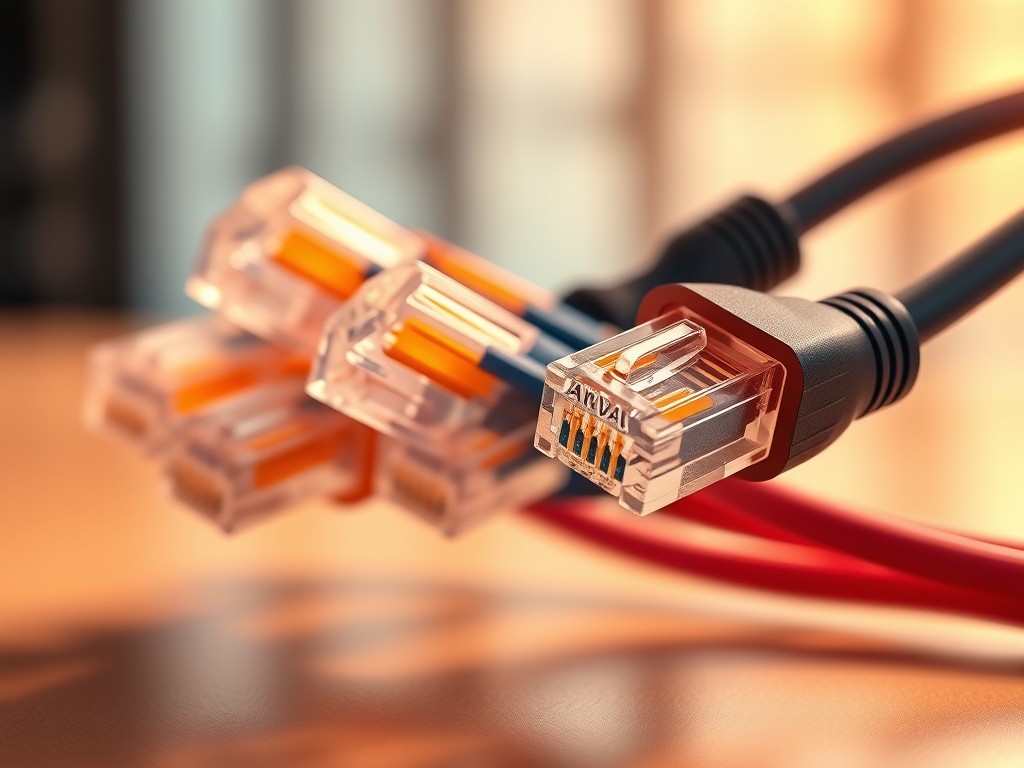
So, what exactly is a Cat6 cable? Simply put, Cat6 is a standardized twisted pair cable for Ethernet and other network physical layers that is backward compatible with the Category 5/5e and Category 3 cable standards. It is designed to deliver higher performance, providing a more reliable and faster connection for demanding applications.
Unpacking the Key Specifications of Cat6 Cables
To truly understand the capabilities of Cat6, it’s essential to look at its technical specifications. These numbers define its performance and suitability for different environments.
- Speed and Throughput: Cat6 cables support data transfer speeds of up to 10 Gigabits per second (Gbps). However, this top speed is generally achievable only over shorter distances (typically up to 55 meters or 180 feet). For longer runs, up to 100 meters (328 feet), it reliably delivers 1 Gbps, which is still more than sufficient for most home and office applications.
- Bandwidth: Cat6 cables are specified for a bandwidth of 250 MHz. This is double the bandwidth of Cat5e (100 MHz). Think of bandwidth as a highway: a higher MHz means a wider highway, allowing more data to travel simultaneously without causing a traffic jam. This increased bandwidth is crucial for reducing latency and supporting multiple data-intensive tasks at once.
- Reduced Crosstalk: One of the most significant improvements in Cat6 is its stringent specification for system noise and crosstalk. Crosstalk is the unwanted interference that occurs between adjacent wires. Cat6 cables are built to minimize this interference, resulting in fewer data errors and a more stable signal.
The Upgrade: Cat6 vs. Cat5e
For years, Cat5e was the go-to cable for most installations. While still capable, Cat6 offers clear advantages that make it the superior choice for new installations and future-proofing.
- Performance: The most obvious difference is performance. With 2.5 times the bandwidth (250 MHz vs. 100 MHz) and the potential for 10 Gbps speeds, Cat6 can handle more data, more reliably, than Cat5e.
- Construction: Cat6 cables are wound more tightly than Cat5e cables. Many also include a nylon spline, a plastic divider that runs down the center of the cable to isolate the four twisted pairs of wires. This physical separation is a key reason for the reduced crosstalk and improved performance.
- Cost: While Cat6 cables are slightly more expensive than Cat5e, the price difference has narrowed significantly. The performance boost and future-proofing benefits often make the minimal extra investment worthwhile.
Looking Ahead: Cat6 vs. Cat6a
If Cat6 is an upgrade, Category 6 Augmented (Cat6a) is the next step up. Understanding the difference helps in choosing the right cable for high-demand environments.
- Sustained 10 Gbps Speed: The primary advantage of Cat6a is its ability to support 10 Gbps data speeds over the full 100-meter (328-foot) distance, unlike the shorter distance limitation of Cat6.
- Higher Bandwidth: Cat6a doubles the bandwidth again, supporting up to 500 MHz. This makes it even more robust against interference and ideal for demanding data center and enterprise applications.
- Shielding: Cat6a cables are often thicker and more frequently shielded (STP) to achieve their higher performance standards, making them less flexible but more resilient in environments with high electromagnetic interference (EMI).
For most home and small business networks, Cat6 provides a perfect balance of performance and cost. Cat6a is typically reserved for environments where maximum performance over long distances is non-negotiable.
Inside the Cable: Cat6 Construction Explained
Not all Cat6 cables are created equal. The main distinction lies in their shielding, which protects the signal from external noise.
- UTP (Unshielded Twisted Pair): This is the most common and affordable type of Cat6 cable. The wires are twisted into pairs to help cancel out interference, and many high-quality UTP Cat6 cables include the aforementioned spline for additional isolation. They are perfect for standard home and office installations where EMI is not a major concern.
- STP/FTP (Shielded/Foiled Twisted Pair): These cables include an additional layer of protection—either a foil shield around each pair (FTP) or a braided shield around the entire bundle of wires (STP). This shielding provides excellent protection against EMI from sources like motors, fluorescent lights, and other power cables. STP cables are ideal for industrial settings, data centers, or anywhere signal integrity is paramount.
Practical Applications: When Should You Use Cat6?
Cat6 is a versatile and robust cable suitable for a wide range of applications. You should choose Cat6 for:
- Modern Home Networks: To support 4K streaming, online gaming, and multiple connected devices without bottlenecks.
- Office and Business LANs: To ensure fast, reliable connections for workstations, servers, and network-attached storage (NAS) devices.
- Power over Ethernet (PoE): To provide both data and power to devices like VoIP phones, IP security cameras, and wireless access points with a single cable.
- Future-Proofing Installations: When wiring a new home or office, using Cat6 ensures your network infrastructure can handle the increasing data demands of the future.
Why Choose D-Lay Cable for Your Cat6 Needs?
As a leading manufacturer and supplier of communication cables, we at D-Lay Cable understand that a network is only as strong as its weakest link. That’s why we are committed to producing Cat6 cables that not only meet but exceed industry standards.
- Manufacturing Excellence: We are not just resellers; we are the manufacturer. This gives us complete control over the production process, from sourcing high-quality copper conductors to precision-twisting and jacketing.
- Unwavering Commitment to Quality: Our Cat6 cables undergo rigorous testing to ensure they deliver on their promise of speed and reliability. We adhere to international quality certifications, including UL, ETL, CE, and RoHS, guaranteeing a product that is safe, durable, and environmentally responsible.
- A Comprehensive Product Line: We offer a full range of Cat6 solutions, including UTP and STP variants in various colors and lengths, to meet the specific demands of your project. We also provide a complete ecosystem of networking products, including patch panels, connectors, and tools.
- Customized Solutions (OEM/ODM): Have a unique requirement? Our expert team can work with you to design and manufacture custom Cat6 cables tailored to your exact specifications, ensuring a perfect fit for your infrastructure.
Conclusion: Is Cat6 the Right Choice for You?
For the vast majority of networking needs today, the answer is a resounding yes. Cat6 networking cable hits the sweet spot of performance, affordability, and future-readiness. It provides a tangible upgrade over Cat5e and is more than capable of handling the demands of modern homes and businesses. By ensuring a stable, high-bandwidth connection, a quality Cat6 cable is a fundamental investment in your digital infrastructure.
When you choose a Cat6 cable from D-Lay Cable, you are choosing a product built on expertise, quality, and a commitment to seamless connectivity. Explore our range of networking solutions or contact our team today to build a faster, more reliable network for tomorrow.