


As a leading manufacturer of network cabling solutions at Dlaycable, one of the most frequent questions our clients ask is whether they can use the same connectors for both Cat5e and Cat6 cables. It’s an understandable point of confusion. They look almost identical, they both fit into the same Ethernet port, and the name “RJ45” is used for both. However, while they share a physical shape, they are not the same in the ways that matter for network speed and reliability.
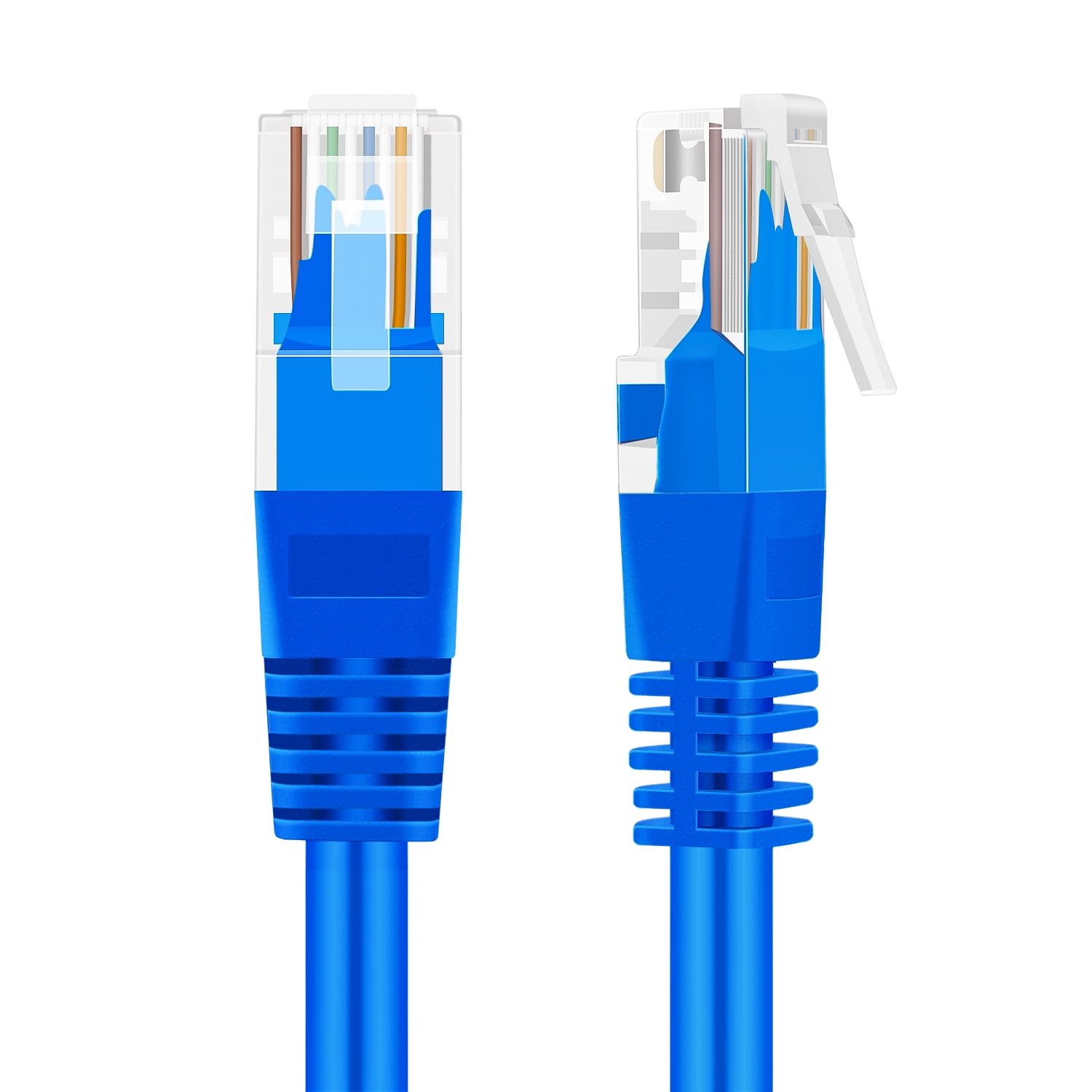
The short answer is: No, for optimal performance, Cat5e and Cat6 connectors are not the same and should not be used interchangeably. Using the wrong connector can undermine your entire network installation. Let’s dive into the critical differences and why matching your components is essential for the performance you expect.
The RJ45 Form Factor: The Source of the Confusion
Both Cat5e and Cat6 connectors use the 8 Position, 8 Contact (8P8C) modular plug design, which is universally known as the RJ45 connector. This is why they are physically compatible—a Cat5e plug will fit into a Cat6 keystone jack, and vice-versa. This physical similarity is the primary reason for the confusion.
However, the category rating (e.g., “Cat6”) refers to a TIA/EIA standard that specifies performance capabilities, not just physical shape. To meet these higher standards, the internal engineering of the connector must be different.
The Critical Differences That Impact Performance
Think of it like two cars that have the same size tires but vastly different engines. While the tires fit on both, only one is built for high performance. The same principle applies here. The differences in Cat5e and Cat6 connectors are all internal and engineered to handle different performance levels.
1. Conductor Wire Gauge (AWG)
One of the most significant physical differences in the cables themselves is the thickness of the copper conductors.
- Cat5e Cable: Typically uses 24 AWG (American Wire Gauge) conductors.
- Cat6 Cable: Often uses thicker 23 AWG conductors to reduce signal loss (attenuation) and support higher frequencies.
Because Cat6 wires are thicker, a proper Cat6 connector is designed with slightly larger channels to accommodate them. Forcing a thicker 23 AWG Cat6 wire into a Cat5e connector designed for 24 AWG can be difficult, potentially damaging the wire’s insulation or leading to a poor connection. This compromises the signal integrity from the very start.
2. Pin Arrangement and Crosstalk Mitigation
This is the most crucial performance difference. Crosstalk is unwanted signal interference between adjacent wire pairs. As data transmission speeds and frequencies increase, so does the potential for crosstalk.
- Cat5e Connectors: Usually feature a simple, single-row design where the wires are aligned flat next to each other. This is sufficient for the 100 MHz frequencies of Cat5e.
- Cat6 Connectors: Are specifically engineered to minimize crosstalk at frequencies up to 250 MHz. They achieve this with a staggered or offset pin layout. By separating the wire pairs into two rows, the distance between them is increased, drastically reducing interference (specifically Near-End Crosstalk, or NEXT).
3. The Use of a Load Bar (Spline)
Many high-quality Cat6 connectors come with a component called a “load bar” or “spline.” This is a small plastic piece that you thread the individual wires into before inserting them into the main connector housing. The load bar serves two key purposes:
- Maintains Twist Rate: It helps keep the twisted pairs twisted as close to the termination point as possible, which is critical for performance.
- Ensures Proper Alignment: It guides the thicker, stiffer Cat6 wires into the correct staggered pin channels, guaranteeing a precise and reliable termination.
Cat5e connectors do not require this component because the performance requirements are less stringent.
What Happens When You Mix and Match? The “Weakest Link” Problem
A network channel is only as strong as its weakest component. If you spend money on high-performance Cat6 bulk cable but terminate it with cheaper Cat5e connectors, your entire cable run will be bottlenecked and perform only to the Cat5e standard.
You effectively downgrade your entire installation.
You lose out on the benefits you paid for: the higher bandwidth, better data rates, and improved resistance to interference. For demanding applications like 10 Gigabit Ethernet (over shorter distances), high-definition video streaming, or in environments with high electromagnetic interference (EMI), this performance drop is not just theoretical—it can lead to packet loss, slow speeds, and network instability.
How to Visually Identify Cat5e vs. Cat6 Connectors
While it can be tricky, here are a few tips to tell them apart:
- Check for Staggered Pins: Look closely at the end of the connector where the wires are inserted. If you see the channels are offset in an up-and-down pattern, it’s almost certainly a Cat6 (or higher) connector. If they are in one flat row, it’s likely a Cat5e.
- Look for Markings: Reputable manufacturers like Dlaycable often stamp the category number (e.g., “CAT.6”) onto the plastic housing of the connector itself.
- Presence of a Load Bar: If your connector came in a bag with separate small plastic guides, it is a Cat6 or higher connector.
The Dlaycable Commitment: Why Quality Components Matter
At Dlaycable, we don’t just sell products; we manufacture complete, end-to-end cabling systems. We understand that network reliability is built on the quality and compatibility of every single component, from the bulk cable in the walls to the patch cords and, most importantly, the connectors that bring it all together.
We manufacture both Cat5e and Cat6 connectors to the strictest TIA/EIA-568 standards. Our components are precision-engineered to work together flawlessly:
- Our Cat6 connectors are designed to perfectly accommodate our 23 AWG Cat6 cables.
- Our commitment to quality is verified through rigorous Fluke channel testing, ensuring that a Dlaycable system delivers the performance you expect.
By choosing a certified system from a single, expert manufacturer, you eliminate the guesswork and guarantee that your network is built on a foundation of quality, from end to end.
Frequently Asked Questions (FAQ)
Can I use a Cat6 connector on a Cat5e cable?
Technically, you can. However, it’s not ideal. The channels in the Cat6 connector are larger to fit thicker wires. Using them with thinner Cat5e wires can result in a loose fit and a less secure connection, potentially leading to signal issues over time. It’s also more expensive and provides no performance benefit. The best practice is always to match the components.
What about Cat6A or Cat7 connectors?
Cat6A connectors are even more robust, designed for frequencies up to 500 MHz and often feature metal shielding to combat Alien Crosstalk (AXT) in 10 Gigabit Ethernet applications. Cat7 and Cat8 connectors often use entirely different form factors (like GG45 or TERA) and are not standard RJ45 plugs, requiring fully shielded components throughout.
Does any of this matter for my simple home network?
For just browsing the internet on a basic connection, you might not notice the performance difference between a properly and improperly terminated cable. However, as home networks handle more—4K streaming, online gaming, large file transfers, and multiple smart devices—the demand for stable, high-speed connections grows. Using the correct components is a simple and inexpensive way to future-proof your network and ensure it runs reliably for years to come.