


As industry-leading manufacturers of high-performance network cabling, a question we frequently encounter at DlayCable is: “Can I use a Cat6 cable where I have a Cat5, or vice-versa?” It’s a great question that gets to the heart of network performance, future-proofing, and smart investment.
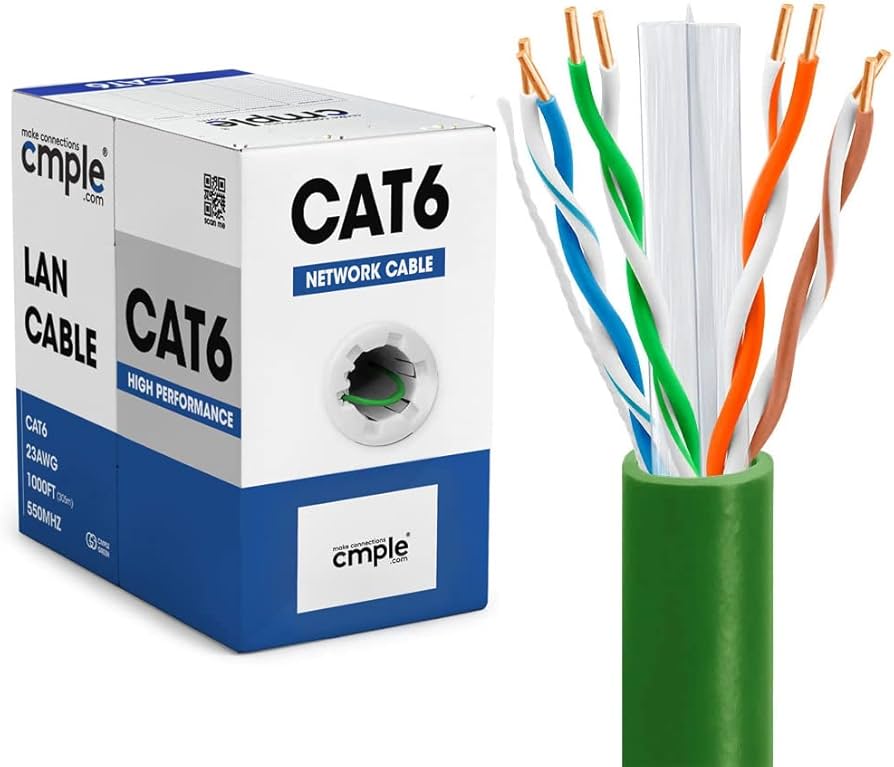
The short answer is **yes, they are physically interchangeable.** Both Cat5e and Cat6 cables use the same RJ45 connector, meaning you can plug a Cat6 cable into a device with a Cat5e port, and it will work. However, the story doesn’t end there. While they are physically compatible, their performance capabilities are very different. Understanding these differences is key to building a reliable and efficient network.
Article Contents:
- Understanding the Basics: What are Cat5e and Cat6?
- The Physical Connection: Why They Are Interchangeable
- The Performance Gap: The Crucial Differences
- Practical Scenarios: When to Use Cat5e vs. Cat6
- The “Weakest Link” Rule: Mixing Cat5e and Cat6 Components
- Quick Comparison: Cat5e vs. Cat6 At a Glance
- The DlayCable Verdict: Our Recommendation
- Your Trusted Partner in Connectivity
Understanding the Basics: What are Cat5e and Cat6?
Before diving into the differences, let’s briefly define each cable type. Both are “twisted pair” cables used for Ethernet networking.
- Cat5e (Category 5 Enhanced): For years, Cat5e was the gold standard for home and office networking. It’s designed to support speeds up to 1 Gigabit per second (Gbps) at a bandwidth of 100 MHz. It offered significant improvements over its predecessor, Cat5, particularly in reducing crosstalk (unwanted signal interference between wires).
- Cat6 (Category 6): This is a more advanced standard built for higher performance. Cat6 supports speeds up to 10 Gbps over shorter distances (up to 55 meters) and maintains 1 Gbps over longer distances (up to 100 meters). Its key advantage is a much higher bandwidth of 250 MHz, allowing it to handle more data simultaneously.
The Physical Connection: Why They Are Interchangeable
The reason you can plug a Cat6 cable into a Cat5e jack (and vice versa) is simple: they both terminate with the same RJ45 connector. This universal connector has been the standard for Ethernet for decades, ensuring backward and forward physical compatibility between different cable generations. So, if you’re in a pinch and only have a Cat6 cable for your Cat5e-rated laptop, you can plug it in without any fear of damaging your equipment.
The Performance Gap: The Crucial Differences
Physical compatibility is one thing; performance is another. This is where the choice matters. At DlayCable, we emphasize quality construction because it directly impacts these performance metrics.
Speed and Bandwidth
This is the most significant difference. While Cat5e caps out at 1 Gbps, a Cat6 cable can handle up to 10 Gbps. Think of it like a highway: Cat5e is a 1-lane highway, while Cat6 is a 10-lane superhighway. The bandwidth (100 MHz for Cat5e vs. 250 MHz for Cat6) dictates how much traffic the highway can handle at once. More bandwidth means less congestion, which is crucial for data-intensive tasks like 4K video streaming, online gaming, and large file transfers.
Construction and Crosstalk
To achieve higher speeds and bandwidth, Cat6 cables are built to more stringent specifications:
- Tighter Twists: The internal wire pairs in a Cat6 cable are twisted more tightly than in a Cat5e cable.
- Spline (Separator): Most Cat6 cables include a plastic spine, or “spline,” that runs down the center, keeping the four twisted pairs isolated from each other.
These construction enhancements drastically reduce “crosstalk”—the signal noise or interference between the wire pairs. Less crosstalk means a cleaner, more stable, and faster signal, which is essential for high-speed data integrity.
Cost and Value
Due to their more robust construction and superior materials, Cat6 cables are typically more expensive than Cat5e cables. However, the marginal extra cost often represents a significant long-term value, providing a network backbone that can support future technology and higher internet speeds.
Practical Scenarios: When to Use Cat5e vs. Cat6
Choosing the right cable depends entirely on your needs:
- For Standard Home Use (Email, Web Browsing, HD Streaming): If your internet plan is 1 Gbps or less and you don’t have demanding network needs, Cat5e cable is often perfectly adequate and cost-effective.
- For Future-Proofing & Power Users (Gaming, 4K/8K Streaming, Home Office): If you are running a new installation, have an internet plan faster than 1 Gbps, or are a gamer, streamer, or work-from-home professional transferring large files, Cat6 is the clear choice. It provides the headroom your network needs to grow.
- For Business and New Commercial Installations: We exclusively recommend Cat6 or higher (like Cat6a) for any new business installation. The demands of a commercial network with multiple users, servers, and VoIP systems require the stability and speed that Cat6 provides.
The “Weakest Link” Rule: Mixing Cat5e and Cat6 Components
This is a critical point. Your network’s speed is determined by its slowest component. If you use a high-performance Cat6 cable but plug it into a Cat5e wall jack or use a Cat5e patch panel, your entire connection will be limited to Cat5e speeds (1 Gbps). To achieve true Cat6 performance, every component in the chain—from the router to the patch panel to the wall jacks and the patch cables—must be Cat6-rated.
Quick Comparison: Cat5e vs. Cat6 At a Glance
| Feature | Cat5e | Cat6 |
|---|---|---|
| Max Speed | 1 Gbps | 10 Gbps (up to 55m) |
| Bandwidth | 100 MHz | 250 MHz |
| Connector | RJ45 | RJ45 |
| Crosstalk Reduction | Good | Excellent (often with spline) |
| Best For | Standard Home/Office (≤ 1 Gbps) | New Installs, Future-Proofing, High-Demand Networks |
The DlayCable Verdict: Our Recommendation
So, are Cat5e and Cat6 cables interchangeable?
Yes, for physical connection. No, for performance potential.
Our professional recommendation is clear:
- For any new installation, whether in a home or office, use Cat6 cable. The minor increase in cost is a small price to pay for a vastly more capable and future-proof network.
- If you have an existing Cat5e installation that is meeting your current needs, there is no urgent reason to replace it. But when it’s time to upgrade a component or run a new line, choose Cat6.
Your Trusted Partner in Connectivity
At DlayCable, we pride ourselves on manufacturing cables that don’t just meet industry standards but exceed them. Our commitment to using high-quality materials like pure copper conductors and rigorous quality control ensures that when you choose our Cat6 cables, you are getting the full performance and reliability you expect.
Whether you need bulk cable for a large installation or custom-length patch cords, we have the solutions to power your network. Browse our complete range of network cabling products or contact our team of experts today to discuss your specific requirements. We are here to help you build a better, faster network.