


Yes, Category 6 (Cat6) cabling can absolutely support PoE++ (Power over Ethernet++), which includes both Type 3 (60W) and Type 4 (up to 100W) applications. However, the success and reliability of using Cat6 for these high-power demands depend critically on the cable’s quality, conductor material, installation length, and environmental conditions. While Cat6 is technically compliant with the IEEE 802.3bt standard for PoE++, using a high-quality, pure copper cable is non-negotiable to ensure safety and performance by effectively managing heat buildup and minimizing power loss over distance.
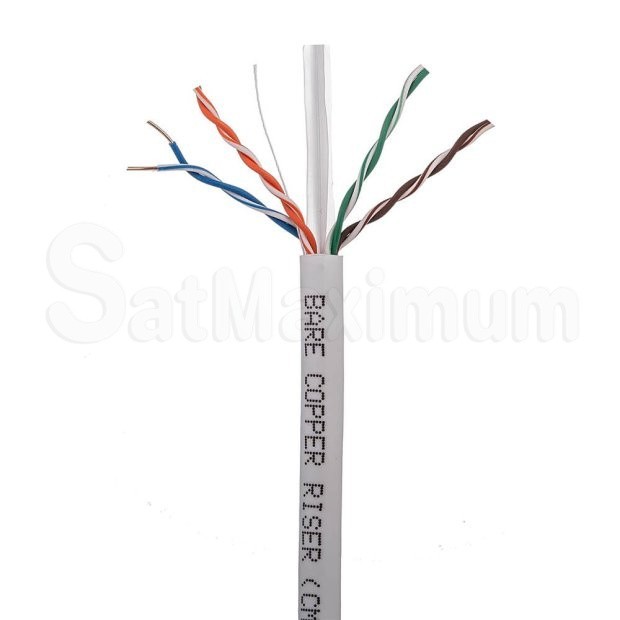
As businesses and smart homes increasingly deploy power-hungry devices like 4K PTZ security cameras, advanced Wi-Fi 6/7 access points, and digital signage, understanding the capabilities and limitations of your network infrastructure is crucial. dlaycable, drawing on our expertise at DlayCable, will provide a comprehensive breakdown of using Cat6 for PoE++, compare it to its successor Cat6A, and offer best practices to power your devices with confidence.
Table of Contents
- Understanding the Evolution of Power over Ethernet (PoE)
- The Critical Role of Cat6 Cable in PoE++ Applications
- Key Factors Determining Cat6 Success with PoE++
- Cat6 vs. Cat6A for PoE++: Which Is the Right Choice?
- Practical Applications and Installation Best Practices
- The DlayCable Commitment: Powering Your Network with Confidence
- Frequently Asked Questions (FAQ)
Understanding the Evolution of Power over Ethernet (PoE)
Power over Ethernet (PoE) is a transformative technology that allows a single Ethernet cable to transmit both data and electrical power to connected devices. This revolutionizes installations by eliminating the need for a separate power cable and AC outlet for each device, simplifying deployment, reducing costs, and offering greater flexibility in placing equipment like cameras, phones, and wireless access points.
From Standard PoE to High-Power PoE++
The technology has evolved significantly since its inception to meet the demands of increasingly powerful devices. The Institute of Electrical and Electronics Engineers (IEEE) has ratified several standards, each increasing the amount of power that can be delivered. PoE++ refers to the latest IEEE 802.3bt standard, which encompasses Type 3 and Type 4 power levels.
| Standard | IEEE Standard | PoE Type | Power to Device (Max) | Pairs Used for Power |
|---|---|---|---|---|
| PoE | 802.3af | Type 1 | 12.95 W | 2-pair |
| PoE+ | 802.3at | Type 2 | 25.5 W | 2-pair |
| PoE++ | 802.3bt | Type 3 | 51 W | 4-pair |
| PoE++ | 802.3bt | Type 4 | 71.3 W – 90 W | 4-pair |
The key advancement with PoE++ is its use of all four twisted pairs within the Ethernet cable to transmit power, essentially doubling the capacity compared to older PoE and PoE+ standards. This is what enables it to power high-wattage devices effectively.
The Critical Role of Cat6 Cable in PoE++ Applications
Cat6 cable was designed to deliver superior data performance, supporting speeds up to 10 Gbps over shorter distances (up to 55 meters) and operating at a bandwidth of 250 MHz. Its construction, which typically features tighter twists and sometimes a central spline to reduce crosstalk, also makes it a capable medium for power delivery. The IEEE 802.3bt standard was developed with existing cabling infrastructures in mind, and Cat6 was confirmed as a suitable candidate for handling PoE++ power levels, provided the cable meets quality specifications.
Key Factors Determining Cat6 Success with PoE++
Simply stating that Cat6 “works” with PoE++ is an oversimplification. To ensure a stable, safe, and efficient power delivery system, you must consider several critical factors. Skimping on any of these can lead to performance degradation, equipment damage, or even a fire hazard.
Cable Construction: Pure Copper vs. Copper Clad Aluminum (CCA)
This is the single most important factor. For any PoE application, especially high-power PoE++, you must use cables with 100% solid pure copper conductors. Cheaper Copper Clad Aluminum (CCA) cables have an aluminum core coated with a thin layer of copper. CCA has significantly higher DC resistance than pure copper, which causes three major problems:
- Excessive Heat Buildup: Higher resistance generates more heat as power passes through the cable, increasing fire risk and degrading the cable’s data-carrying capacity.
- Greater Power Loss: More power is lost as heat along the cable’s length, meaning less power reaches the end device. A device requiring 51W might not receive enough power to function correctly over a long CCA run.
- Brittleness: CCA wires are brittle and can break easily during installation, leading to connection failures.
At DlayCable, we only offer pure solid copper cables because we believe safety and reliability are paramount. Using CCA for PoE++ is not only a performance risk but a serious safety liability.
Conductor Gauge (AWG): Why Thicker is Better
Ethernet cable conductors are measured in American Wire Gauge (AWG). It’s a counter-intuitive scale: a lower AWG number means a thicker wire. Most standard Cat6 cables use 23 AWG or 24 AWG conductors. For PoE++, a 23 AWG cable is preferable to a 24 AWG one. The thicker conductor has lower resistance, which directly translates to less heat generation and less voltage drop over the length of the cable, ensuring more reliable power delivery to your device.
The Impact of Cable Length and Power Loss
All cables experience power loss (or voltage drop) over distance. The IEEE standard for Ethernet cabling allows for a maximum channel length of 100 meters (328 feet). While Cat6 can transmit data and power over this distance, the amount of power lost increases with length. For a high-draw PoE++ device, a 90-meter run will deliver noticeably less power than a 20-meter run. When planning your installation, it’s wise to keep high-power PoE++ runs as short as practical to ensure the device receives sufficient power.
Managing Heat: The Hidden Enemy of PoE
Delivering 60W or 90W through a thin cable naturally generates heat. While a single cable in open air can dissipate this heat effectively, the real challenge arises when multiple PoE cables are bundled together, a common practice in server rooms and wiring closets. Heat becomes trapped within the bundle, and the temperature can rise significantly. This elevated temperature increases the cable’s insertion loss, which can degrade data signals and potentially cause connection dropouts. To mitigate this:
- Avoid large, tight bundles: Keep cable bundles smaller and allow for airflow around them.
- Ensure proper ventilation: Install cables in areas with good airflow, such as ventilated trays, rather than enclosed conduits where possible.
- Consider higher-category cables: As we’ll see next, Cat6A is inherently better at managing heat.
Cat6 vs. Cat6A for PoE++: Which Is the Right Choice?
While Cat6 is capable, its successor, Category 6A (Cat6A), is widely considered the superior choice for new PoE++ installations, especially those intended to be future-proof.
The Cat6A Advantage: Superior Heat Dissipation and Performance
Cat6A offers several key benefits for high-power PoE:
- Thicker Conductors: Cat6A cables are typically manufactured with 23 AWG or even thicker conductors, leading to lower DC resistance and less heat generation from the start.
- Improved Construction: The overall cable diameter of Cat6A is larger, and it features more robust insulation and separation between pairs. This design is inherently better at dissipating heat than the more compact Cat6 design.
- Guaranteed 10G Performance: Cat6A is designed to support 10 Gbps data rates over the full 100-meter channel, a feat Cat6 cannot guarantee. Its superior noise immunity and heat management ensure that data performance doesn’t suffer even when delivering maximum PoE++ power.
For any new construction or major network overhaul where high-power devices are a consideration, investing in Cat6A is the most robust and forward-thinking decision.
When Is Cat6 “Good Enough” for PoE++?
Using your existing, high-quality Cat6 infrastructure for PoE++ is often perfectly acceptable. Cat6 can be considered “good enough” in scenarios such as:
- Existing Installations: If you already have a network wired with quality, pure copper Cat6, there is no need to rip and replace it to deploy PoE++ devices.
- Shorter Cable Runs: For runs under 50 meters, the effects of power loss and heat buildup are less pronounced.
- Unbundled Cables: When powering a single device where the cable is not tightly bundled with many other PoE cables.
- Well-Ventilated Environments: If the cabling is installed in trays or areas with excellent airflow, mitigating heat concerns.
Practical Applications and Installation Best Practices
Proper planning and installation are key to a successful high-power PoE deployment. By following best practices, you can ensure your network is both reliable and safe.
Common Devices Powered by PoE++
The list of devices leveraging PoE++ is growing rapidly. It includes:
- High-performance Pan-Tilt-Zoom (PTZ) security cameras with heaters/blowers
- Multi-radio Wi-Fi 6/7 wireless access points
- Small network switches powered by an upstream switch
- Digital signage and video conferencing systems
- Laptops and thin clients (via PoE-enabled docks)
- Advanced VoIP video phones
Installation Tips for High-Power PoE
To summarize, when deploying PoE++ over Cat6, always remember:
- Use 100% Pure Copper Cable: Never use CCA. Verify your cable source.
- Prefer 23 AWG: Choose cables with thicker conductors for better performance.
- Respect Length Limits: Keep runs as short as practical to minimize power loss.
- Promote Airflow: Avoid excessively large or tight cable bundles and use ventilated pathways.
- Test Your Installation: Use a network cable tester that can certify both data performance and PoE load delivery.
The DlayCable Commitment: Powering Your Network with Confidence
At DlayCable, we have over a decade of experience providing networking professionals and enthusiasts with infrastructure they can trust. We understand that the integrity of a network is only as strong as its weakest link. That’s why all our Ethernet cables, including our Cat6 cables and Cat6A cables, are made with 100% pure solid copper conductors. Our cables are engineered to meet and exceed TIA standards, ensuring they can reliably handle the data and power demands of modern technologies like PoE++.
When you choose DlayCable, you’re not just buying a cable; you’re investing in the peace of mind that comes from knowing your network is built on a foundation of quality, safety, and performance.
Frequently Asked Questions (FAQ)
What is the maximum wattage for PoE over Cat6?
The maximum wattage is determined by the PoE standard, not the cable category itself. A quality pure copper Cat6 cable can support the full power of PoE++, delivering up to 90 watts from the power sourcing equipment (PSE), with at least 71.3 watts guaranteed to reach the powered device (PD) over a 100m run.
Can I use Cat5e for PoE++?
It is highly discouraged to use Cat5e for PoE++ (Type 3 or Type 4). Cat5e cables typically use thinner 24 AWG conductors and are not designed to manage the significant heat generated by 60W-100W of power. While it might work for very short distances in open air, it poses a significant performance and safety risk, especially in bundles. Stick to Cat6 at a minimum, with Cat6A being the recommended choice.
Does PoE++ damage devices that don’t need it?
No. PoE-enabled switches and injectors are intelligent. Before sending any significant power, the power sourcing equipment (PSE) performs a “handshake” process with the connected device (PD). It sends a low, harmless voltage to detect if the device is PoE-compatible and, if so, which PoE class it requires. If the device does not respond as a PoE device, the PSE will only send data, preventing any risk of damage.