


Yes, you can absolutely plug a Cat 8 Ethernet cable into a Cat 6 jack. Both Category 8 and Category 6 cables use the same standard RJ45 connector, making them physically compatible. However, it is crucial to understand that your network’s performance will be limited by the lowest-rated component in the chain. In this scenario, the entire connection will operate at Cat 6 performance standards, not the superior speeds that Cat 8 is designed for. This means you are essentially using a high-performance sports car on a slow-speed local road.
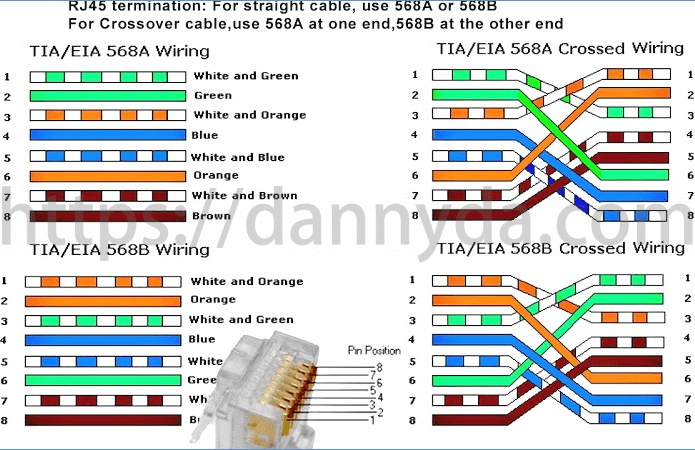
Table of Contents
- The Short Answer: Yes, But with a Major Caveat
- Understanding the Technology: Why Does It Work?
- The Real-World Impact: What Performance Should You Expect?
- So, Should You Use a Cat 8 Cable with a Cat 6 Jack?
- Frequently Asked Questions (FAQ)
- The D-Lay Cable Verdict: Making the Right Choice for Your Network
The Short Answer: Yes, But with a Major Caveat
To put it simply, plugging a Cat 8 cable into a Cat 6 jack is perfectly fine. It will establish a network connection, and data will flow without any risk of damage to your equipment. The physical design of the plugs and jacks (known as RJ45) has remained consistent across many generations of Ethernet technology, ensuring this interoperability.
The critical caveat, however, lies in performance. A network connection’s speed and bandwidth are determined by the entire channel—which includes the cable, the jacks at both ends, the patch panel, and the ports on your switch and computer. When you introduce a component with lower specifications, like a Cat 6 jack, the entire channel’s performance is capped at that lower level. You will get Cat 6 performance, not Cat 8 speed.
Understanding the Technology: Why Does It Work?
The compatibility between different Ethernet categories isn’t accidental; it’s a core feature designed into networking standards. This is achieved through two key elements: a universal physical connector and a protocol of backward compatibility.
The Universal RJ45 Connector: A Shared Standard
The RJ45 connector is the familiar rectangular plug you see at the end of virtually every Ethernet cable. This 8-pin, 8-conductor (8P8C) modular connector is the industry standard for twisted-pair Ethernet cabling. Because both Cat 6 and Cat 8 cables are terminated with RJ45 plugs, they can physically connect to any standard RJ45 jack, regardless of its category rating. This unified physical interface is the foundation of their interoperability.
The Principle of Backward Compatibility in Ethernet
Networking standards, set by organizations like the Telecommunications Industry Association (TIA), are designed to be backward compatible. This means that newer, higher-specification equipment can work seamlessly with older, lower-specification systems. When a Cat 8 cable connects a device to a port via a Cat 6 jack, the network devices at each end automatically negotiate the highest possible speed that all components in the channel can support. Since the Cat 6 jack is the limiting factor, the devices will agree to communicate at Cat 6 speeds (typically 1 Gbps or, on shorter runs, up to 10 Gbps).
The Real-World Impact: What Performance Should You Expect?
While the connection works, the performance you receive will be a direct reflection of your network’s weakest link. It’s essential to have realistic expectations about what this mixed-category setup can deliver.
The Bottleneck Effect: Your Network is Only as Fast as Its Slowest Part
Imagine you’ve purchased a high-performance race car capable of 200 mph (like a Cat 8 cable), but the only road available is a small street with a 30 mph speed limit (your Cat 6 jack). No matter how powerful the car’s engine is, you can only travel at 30 mph. This is the bottleneck effect in action. Your Cat 8 cable, designed for 2000 MHz bandwidth and 25/40 Gbps speeds, will be forced to operate at the Cat 6 standard of 250 MHz bandwidth and 1 Gbps speed. The advanced shielding and tightly twisted pairs within the Cat 8 cable will be underutilized.
Cat 8 vs. Cat 6: A Quick Performance Comparison
To fully grasp what you’re leaving on the table, it’s helpful to see a direct comparison between the two categories. This highlights the significant leap in performance that Cat 8 offers over Cat 6 when used in a fully compliant infrastructure.
| Feature | Category 6 (Cat 6) | Category 8 (Cat 8) |
|---|---|---|
| Max. Bandwidth | 250 MHz | 2000 MHz (8x more than Cat 6) |
| Max. Data Rate | 1 Gbps @ 100m / 10 Gbps @ <55m | 25/40 Gbps @ <30m |
| Shielding | Often Unshielded (UTP), but Shielded (FTP/STP) is available | Always Shielded (S/FTP or F/FTP) for robust crosstalk prevention |
| Typical Application | Home networks, office LANs, general-purpose installations | Data centers, server rooms, short-distance switch-to-server links |
| Relative Cost | Economical | Premium |
So, Should You Use a Cat 8 Cable with a Cat 6 Jack?
Knowing that performance will be limited, the decision to use a Cat 8 cable in a Cat 6 system becomes a strategic one. It’s not about immediate performance gains, but about balancing future needs with present costs.
The Argument for Future-Proofing
Using a Cat 8 cable in a Cat 6 jack makes the most sense as a long-term investment. Consider these scenarios:
- New Construction or Major Renovations: If you are running cables through walls, ceilings, or conduits, the biggest cost is the labor, not the cable itself. Installing a higher-spec cable like Cat 8 now means you won’t have to re-run cables when you eventually upgrade your jacks, switches, and network devices to support 25GBASE-T or 40GBASE-T speeds.
- Hard-to-Access Locations: For any cable run that is difficult or disruptive to access later, installing the best possible cable today is a wise decision.
- Clear Upgrade Path: If your organization has a definite roadmap to upgrade its core network infrastructure within the next few years, pre-installing Cat 8 cabling is smart planning.
The Argument for Cost-Effectiveness
For many users, using a Cat 8 cable is simply overkill and not a good use of resources. If you have no plans to upgrade your network beyond 1 Gbps or 10 Gbps, you are paying a premium for performance you will never use. In these common situations, a high-quality Cat 6a cable is often the best choice, providing excellent 10 Gbps performance at a much more reasonable price point. For standard 1 Gbps home and office networks, a reliable Cat 6 cable remains the most cost-effective and practical solution.
Physical Considerations: Cable Thickness and Flexibility
It’s also important to consider the physical properties of the cable. Cat 8 cables are significantly thicker and more rigid than their Cat 6 counterparts. This is due to their mandatory, heavy-duty S/FTP (Screened/Foiled Twisted Pair) shielding and thicker copper conductors. This rigidity can make them more difficult to install, especially when navigating tight corners, conduits, or crowded wall boxes. For straightforward residential or office installations, the greater flexibility of a Cat 6 UTP cable is often a significant practical advantage.
Frequently Asked Questions (FAQ)
Will a Cat 8 cable damage a Cat 6 jack or my devices?
Absolutely not. The connection is electrically safe. The standards for voltage and power delivery (like Power over Ethernet or PoE) are consistent across these categories. You can plug a Cat 8 cable into any device with a standard Ethernet port without any risk of damage.
Can I plug a Cat 6 cable into a Cat 8 jack?
Yes, for the same reasons. The principle of backward compatibility works both ways. The connection will be limited by the Cat 6 cable’s capabilities, so you will get Cat 6 performance. Your high-end Cat 8 infrastructure will simply operate at the lower speed negotiated by the cable.
Do I need special tools to connect a Cat 8 cable to a Cat 6 jack?
No special tools are needed to plug a pre-terminated Cat 8 patch cord into a Cat 6 jack. If you are terminating a bulk Cat 8 cable with an RJ45 plug to connect to the jack, you will use standard RJ45 crimping tools. However, due to the cable’s thickness and shielding, the process requires more care and precision than with a typical Cat 6 cable.
Will I get any benefit at all from using a Cat 8 cable on a Cat 6 network?
The primary benefit is future-proofing, as discussed above. A secondary, minor benefit could be improved noise immunity. The superior S/FTP shielding on every Cat 8 cable is excellent at rejecting electromagnetic interference (EMI). In an extremely “noisy” electrical environment (e.g., near heavy machinery or power lines), a Cat 8 cable might provide a more stable connection than an unshielded Cat 6 cable, but a shielded Cat 6 or Cat 6a cable would likely achieve the same result more economically.
The D-Lay Cable Verdict: Making the Right Choice for Your Network
So, can you plug a Cat 8 cable into a Cat 6 jack? Yes, it’s physically compatible and safe, but your performance will be throttled to Cat 6 levels.
The decision to do so should be a deliberate one based on your specific needs and future plans.
- Choose Cat 8 if you are investing in the long-term health of your network, especially during new installations where labor is the primary cost. It’s the ultimate choice for future-proofing.
- Choose Cat 6 or Cat 6a for most of today’s applications. For reliable 10 Gbps networks in offices and high-end homes, our Cat 6a cables offer the perfect blend of performance and value. For standard gigabit networks, our robust Cat 6 cables are the most practical and economical solution.
At D-Lay Cable, we believe in empowering our customers with the knowledge to build the best network for their needs—whether that means preparing for the 40 Gbps data centers of tomorrow or building a rock-solid gigabit network for today. Explore our full range of Ethernet cables to find the perfect, high-quality solution for your project.