


Can You Bury a Cat 8 Cable? The Definitive Guide for Outdoor Installations
Yes, you can absolutely bury a Cat 8 Ethernet cable to achieve blazing-fast outdoor or inter-building connectivity, but only if you use a cable specifically rated for direct burial. A standard indoor Cat 8 cable, with its typical CM, CMR, or CMP-rated PVC jacket, will quickly fail when exposed to underground conditions. Moisture, soil acidity, temperature fluctuations, and physical pressure will degrade the jacket, compromise the shielding, and ultimately lead to signal loss and complete connection failure. To successfully bury a Cat 8 cable, you must select one with a “Direct Burial” or “Outdoor CMX” rating, which features a robust, weather-resistant jacket designed to withstand these harsh elements for a reliable, long-lasting installation.
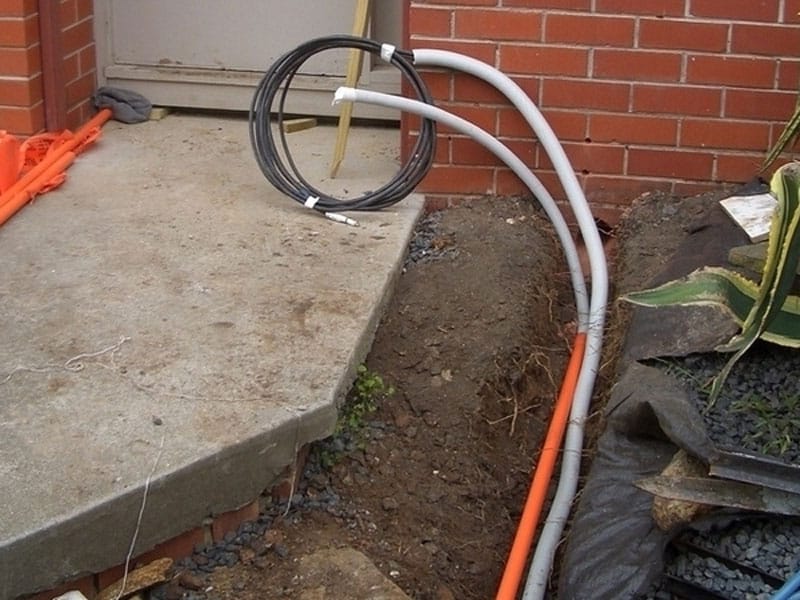
Table of Contents
- Why Can’t You Bury a Standard Cat 8 Cable?
- The Solution: Choosing the Right Type of Cat 8 Cable for Burial
- How to Properly Bury a Cat 8 Cable: Two Proven Methods
- Key Considerations for a Successful Underground Installation
- Is Cat 8 Even the Right Choice for Your Buried Project?
- Frequently Asked Questions (FAQ)
- Conclusion: Burying with Confidence and Future-Proofing Your Network
Why Can’t You Bury a Standard Cat 8 Cable?
Understanding why a standard indoor Cat 8 cable is unsuitable for burial is crucial. While its internal twisted pairs are engineered for incredible 40Gbps speeds, its outer jacket is its Achilles’ heel in an outdoor environment. As a manufacturer of high-performance cabling, we know that a cable is only as strong as its weakest component. For indoor cables, that component is the jacket when faced with the elements.
The Dangers of Moisture and Corrosion
The primary enemy of any buried cable is moisture. Soil is perpetually damp, and rainwater will inevitably seep through. A standard PVC jacket is permeable over time and will absorb this moisture. Worse, any tiny nicks or scrapes sustained during installation become entry points for water. Once inside, moisture will:
- Corrode the Copper Conductors: Water will oxidize the copper wires, increasing resistance and severely degrading signal quality.
- Compromise the Shielding: Cat 8 relies heavily on its foil and/or braid shielding (F/FTP or S/FTP) to prevent crosstalk and interference. Moisture will corrode this shield, rendering it ineffective and making the cable susceptible to electromagnetic interference (EMI).
- Cause Signal Attenuation: Water ingress changes the cable’s electrical properties, leading to significant signal loss (attenuation) over the length of the run.
UV Radiation and Jacket Degradation
Even before burial, if any part of the cable is exposed to sunlight (for example, where it exits the ground and enters a building), UV radiation will attack a standard PVC jacket. This causes the plastic to become brittle, crack, and flake away, creating a direct path for water to enter the cable and destroying its physical integrity.
Physical Stress and Temperature Extremes
The ground is not static. It shifts, freezes, and thaws. Standard cables are not designed to handle the crushing pressure of the soil above or the sheering force of ground movement. The constant expansion and contraction from temperature cycles will further stress a brittle indoor jacket, leading to cracks and failure.
The Solution: Choosing the Right Type of Cat 8 Cable for Burial
To overcome these challenges, you must use a cable engineered for the underground environment. These cables feature specialized jackets and, in some cases, additional protective layers to ensure decades of reliable performance.
Direct Burial Cat 8 Cables: Built for the Trenches
This is the best choice for burying Cat 8 without conduit. Direct burial cables are the toughest in the family. Their key feature is a thick, durable jacket made from Low-Density Polyethylene (LDPE) or a similar UV-resistant, waterproof material. This jacket is impervious to water, resistant to soil acidity, and flexible enough to handle ground temperature shifts. Many high-quality direct burial cables also include:
- Gel-Filling or Water-Blocking Tape: A special gel or swellable tape is packed around the conductors. If the outer jacket is somehow breached, this material immediately seals the opening, preventing water from traveling down the length of the cable.
- Heavy-Duty Shielding: They maintain the required S/FTP shielding of Cat 8, ensuring performance is not sacrificed for durability.
Outdoor-Rated (CMX) Cat 8 Cables
A CMX-rated cable is designed for outdoor use where it might be exposed to sunlight and rain, such as runs along the exterior wall of a building. It typically features a UV-resistant and waterproof jacket (often LDPE). While more robust than an indoor cable, not all CMX cables are specifically designed for the constant moisture and pressure of direct burial. It is always best to choose a cable explicitly marked “Direct Burial” or to place a CMX-rated cable inside a protective conduit if burying it.
How to Identify a Burial-Grade Ethernet Cable
Check the print stream on the cable’s jacket. You should look for specific markings:
- “Direct Burial”: The most explicit and trustworthy indicator.
- “CMX”: The standard rating for outdoor communications cable.
- “Outdoor” or “O/S” (Outside Plant): General terms indicating suitability for outdoor environments.
- Jacket Material: The jacket should feel thicker and more rugged than an indoor cable. Look for LLDPE or PE jacket materials in the specifications.
| Feature | Standard Indoor Cat 8 (CMP/CMR/CM) | Outdoor-Rated Cat 8 (CMX) | Direct Burial Cat 8 |
|---|---|---|---|
| Jacket Material | PVC (Polyvinyl Chloride) | LDPE (Low-Density Polyethylene) | Heavy-Duty LLDPE / PE |
| UV Resistance | Low | High | Very High |
| Water Resistance | Low (will degrade) | High (waterproof jacket) | Very High (waterproof jacket + gel/tape) |
| Recommended for Burial? | No | Only within a conduit | Yes, with or without conduit |
How to Properly Bury a Cat 8 Cable: Two Proven Methods
Once you have the correct cable, the installation method determines its long-term reliability. There are two primary approaches.
Method 1: Direct Burial (Without Conduit)
This method is simpler and more cost-effective, but only suitable for true direct burial rated cables.
- Plan the Path: Mark the exact route from start to finish. Call 811 or your local utility locating service *before you dig* to mark any existing underground lines (gas, water, power).
- Dig the Trench: Dig a trench 6 to 8 inches deep for low-voltage cables like Ethernet. This protects it from lawn aerators and light digging. If the area experiences deep freezes or heavy traffic, 18 inches is better.
- Prepare the Trench: Clear the trench of any sharp rocks, roots, or debris that could damage the cable. It’s good practice to lay a thin layer of sand at the bottom for extra protection.
- Lay the Cable: Unspool the cable and lay it gently in the trench. Do not pull it taut; leave a little slack to account for ground shifting and temperature changes.
- Backfill: Cover the cable with a few inches of sand or fine soil first, then backfill the rest of the trench with the excavated dirt. Gently tamp the soil down.
Method 2: Using Conduit for Maximum Protection
This is the recommended method for ultimate longevity and future-proofing. Using a conduit provides superior protection against rocks, shifts, and future digging. It also allows you to easily pull new or replacement cables in the future without re-digging the trench.
- Choose Your Conduit: PVC conduit is inexpensive and effective. Rigid metal conduit (RMC) offers the best physical protection but is more expensive. A 3/4-inch or 1-inch diameter is usually sufficient.
- Dig the Trench: The process is the same as above. Call 811 first.
- Assemble and Lay the Conduit: Glue the sections of PVC conduit together and lay them in the trench. Use wide, sweeping bends instead of hard 90-degree angles to make pulling the cable easier.
- Pull the Cable: Attach a pull string or fish tape to the end of your Cat 8 cable. Lubricate the cable with a wire-pulling lubricant if needed, and pull it through the entire length of the conduit. Again, leave some slack.
- Seal and Backfill: Seal the ends of the conduit with duct seal putty or silicone to prevent water and insects from entering. Then, backfill the trench.
Key Considerations for a Successful Underground Installation
How Deep Should You Bury the Ethernet Cable?
While low-voltage wiring often has less strict local code requirements than power lines, a proper depth is critical for protection.
- Standard Residential: 6-8 inches is a common minimum to avoid damage from garden tools and aeration.
- Areas with Deep Frost: In colder climates, burying below the frost line (which can be 18-24 inches or more) prevents the cable from being stressed by frozen ground heaving.
- Under Driveways/Walkways: For areas with vehicle traffic, a depth of at least 18-24 inches, and always within a strong conduit (like RMC), is highly recommended.
Always check your local building codes for specific requirements in your area.
Planning Your Route: Avoiding Obstacles and Hazards
A straight line isn’t always the best path. Plan your trench to avoid trees with large root systems, sprinkler lines, septic fields, and areas where future construction (like a deck or shed) might occur. Remember that the maximum channel length for Cat 8 is 30 meters (about 98 feet), so plan your run accordingly.
Proper Termination and Weatherproofing Your Connections
The cable itself might be waterproof, but the connection points are not. Where the cable terminates—whether at an outdoor camera, an access point, or a junction box—it must be protected. Use IP67 or IP68-rated waterproof keystone jacks, surface mount boxes, and RJ45 connectors with glands that seal around the cable jacket. This prevents moisture from seeping into the termination point, which is one of the most common points of failure.
Is Cat 8 Even the Right Choice for Your Buried Project?
Cat 8 is designed for extremely high-speed, short-distance runs, primarily in data centers. For a residential or small business buried project, it’s worth asking if it’s necessary.
- When Cat 8 Makes Sense: If you are connecting a workshop or outbuilding where you plan to operate high-bandwidth devices (like a 10G+ NAS or multiple workstations) and the run is under 30 meters, Cat 8 is an excellent way to future-proof your network for 25G or 40G speeds.
- Alternatives to Consider:
- Direct Burial Cat 6A: For most applications, including connecting an outbuilding for streaming, gaming, and remote work, a direct burial Cat 6A cable is more than sufficient. It reliably supports 10Gbps up to 100 meters and is typically more cost-effective.
- Fiber Optic Cable: If your run is longer than 30 meters (or especially longer than 100 meters) or you require absolute immunity from electrical interference, a pre-terminated direct burial fiber optic cable is the superior technical choice.
Frequently Asked Questions (FAQ)
What is the difference between an outdoor and direct burial cable?
An outdoor (CMX) cable is designed to resist UV rays and moisture when run in the open air. A direct burial cable is a step above, built to withstand the constant moisture, pressure, and chemical environment of being buried directly in the soil, often with extra waterproofing like gel-filling.
Do I need conduit for direct burial Cat 8 cable?
No, you do not *need* a conduit for a cable explicitly rated for direct burial. However, using a conduit is still the best practice as it provides superior physical protection and makes future upgrades or replacements vastly easier.
How long can a buried Cat 8 cable be?
The TIA-568 standard specifies a maximum channel length of 30 meters (98 feet) for Cat 8 to achieve its 25G/40G speeds. This length includes the patch cords at both ends.
Can I bury a regular Cat 8 cable if it’s inside a PVC conduit?
While the conduit provides physical and primary water protection, it’s not a foolproof solution. Conduits can crack over time and will almost always accumulate condensation (moisture) inside. An indoor-rated PVC jacket will still degrade in this damp environment. It is strongly recommended to use at least an outdoor-rated (CMX) cable even when running inside a conduit.
What happens if you bury a regular ethernet cable?
An indoor-rated ethernet cable will fail. Its PVC jacket will absorb moisture, become brittle from temperature changes, and crack. Water will then corrode the copper conductors and shielding, leading to a slow, unreliable connection that eventually dies completely.
Conclusion: Burying with Confidence and Future-Proofing Your Network
So, can you bury a Cat 8 cable? The answer is a resounding yes, provided you do it right. It’s not about the “Cat 8” designation but about the cable’s construction. By choosing a high-quality Cat 8 cable specifically rated for direct burial, you are investing in a durable, robust solution that can deliver unparalleled network speeds between buildings. For maximum protection and easy future upgrades, installing that cable within a conduit is the gold standard.
By understanding the risks of using the wrong cable and following the proper installation steps, you can create a reliable, high-performance underground network link that will serve your needs for years to come. For any direct burial project, starting with a certified, Fluke-tested cable from a trusted supplier like DLAyCable is the first and most critical step to success.