


As professionals in network infrastructure, we at DLA CABLE field questions like this every day. You’re in the middle of a network installation or upgrade, you have a reel of reliable Cat5e cable, but you’re holding a bag of new, high-performance Cat6 keystone jacks. The question is inevitable: Can you use them together? Will it work? And more importantly, what are the performance implications?
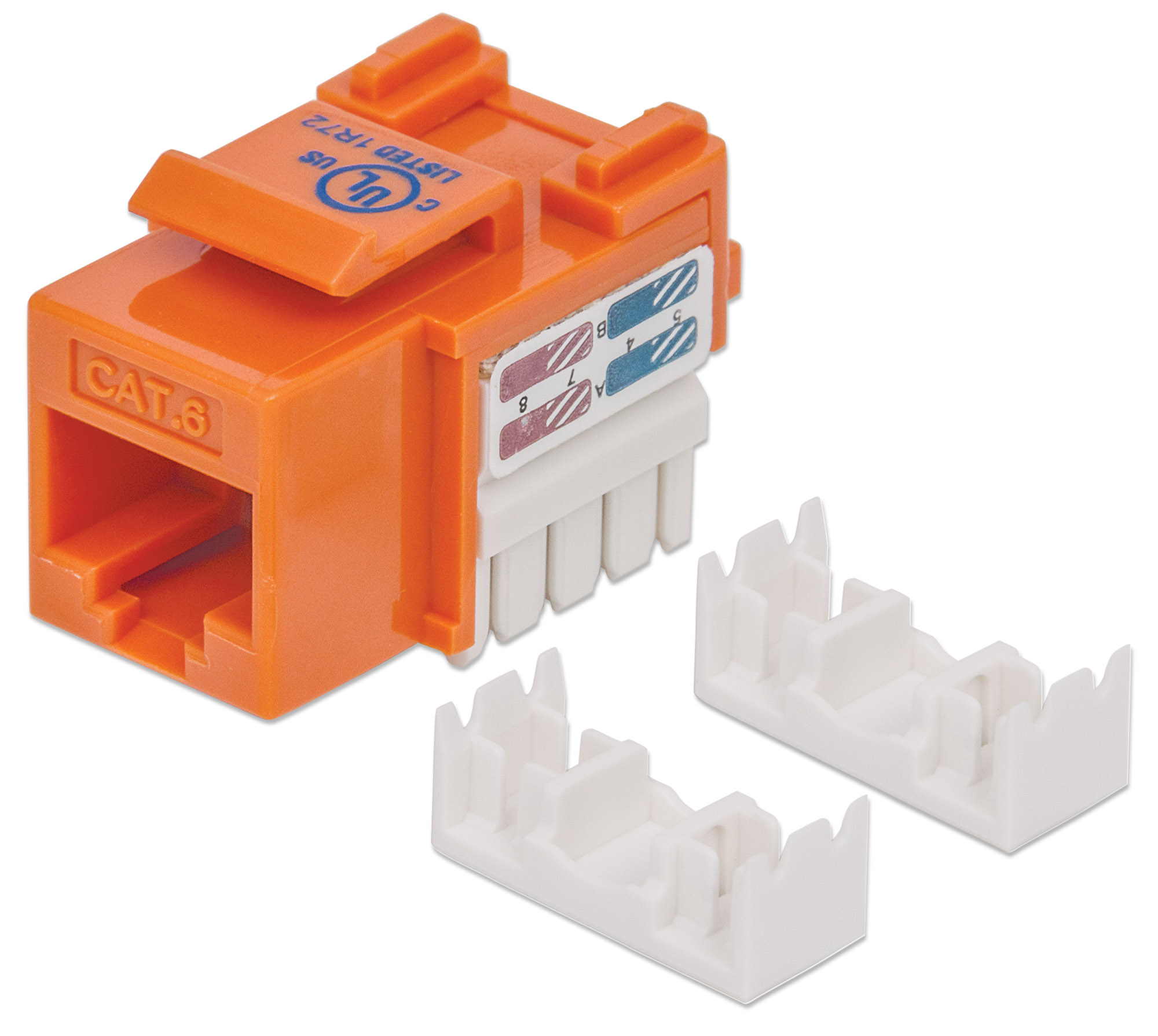
Let’s dive into the technical details and best practices to give you a clear, expert answer.
The Straight Answer: Yes, But With a Catch
Yes, you can absolutely use a Cat6 keystone jack with a Cat5e ethernet cable. The connection will work, and you will be able to establish a network link. The physical dimensions of the RJ45 plug and jack are standardized, making them physically compatible.
However—and this is the critical part—your network channel’s performance will be limited to the specifications of the lowest-rated component. In this case, your network link will perform as a Cat5e channel, not a Cat6 one.
Understanding the ‘Why’: Compatibility Explained
The reason this combination works is due to both physical and electrical backwards compatibility, which is a core principle in network component design.
- Physical Compatibility: Both Cat5e and Cat6 systems use the same standard RJ45 connector and port. The 8 pins and the jack’s dimensions are identical, allowing a Cat5e cable terminated with an RJ45 plug to fit perfectly into a Cat6 keystone jack.
- Electrical Backwards Compatibility: The Category 6 standard was designed to be superior to, but fully inclusive of, the Category 5e standard. This means a Cat6 component is engineered to meet and exceed all the performance benchmarks of Cat5e (like handling 100 MHz frequencies). When it receives a Cat5e signal, it can process it without any issue.
The Golden Rule of Network Cabling: The “Weakest Link” Principle
To truly understand the performance implications, you must remember the golden rule of network infrastructure: Your network is only as fast as its weakest component.
Think of your network channel as a highway. The cable, keystone jacks, patch panel, and patch cords are all lanes on this highway.
- A full Cat5e channel supports speeds up to 1 Gigabit per second (Gbps) at a bandwidth of 100 MHz.
- A full Cat6 channel supports speeds up to 10 Gbps (over shorter distances) at a bandwidth of 250 MHz.
When you use a Cat5e cable with Cat6 jacks, you’re essentially building a 10-lane highway (Cat6) that is forced to narrow down to a 4-lane road (Cat5e). The traffic (your data) can only flow as fast as the narrowest point allows. The superior crosstalk resistance and higher bandwidth capabilities of the Cat6 jack cannot magically improve the inherent limitations of the Cat5e cable it’s connected to.
The result: Your channel performance will default to Cat5e standards—1 Gbps speed and 100 MHz bandwidth.
Strategic Scenarios: When Mixing Components Makes Sense
So if you don’t get a performance boost, why would anyone do this? There are a couple of very practical, strategic reasons.
1. Future-Proofing Your Installation
This is the most common and intelligent reason. The most labor-intensive part of a structured cabling installation is pulling the cable through walls and ceilings. The termination points (keystone jacks and patch panels) are much easier to replace. By installing Cat6-rated jacks and patch panels now with your existing Cat5e cable, you are setting up your “fixed” infrastructure for a future upgrade. When the time comes to boost your network to 10 Gbps, you’ll only need to replace the bulk cable, not all the termination hardware. This saves significant time and labor costs down the road.
2. Simplifying Your Inventory
For network installers and IT departments, standardizing inventory is a major efficiency booster. Since Cat6 components are fully backward compatible and the cost difference can sometimes be minimal, it often makes sense to stock only Cat6 jacks and patch cords. This ensures you have high-performance parts on hand for new Cat6 installations while still being able to service and repair older Cat5e networks without needing to carry duplicate, lower-spec inventory.
Potential Downsides and Considerations
While strategically sound, there are a couple of things to keep in mind:
- No Immediate Performance Boost: It’s crucial to manage expectations. This strategy does not upgrade your current network’s speed.
- The Risk of a “False” Cat6 Network: This can create confusion. If your wall plates and patch panels are all Cat6, you or a future technician might mistakenly assume the entire channel is Cat6. This can lead to headaches when troubleshooting performance issues that are actually caused by the in-wall Cat5e cabling. Proper labeling is key to preventing this confusion.
- Termination Differences: Cat6 cables typically have a slightly thicker 23 AWG (American Wire Gauge) conductor compared to the 24 AWG common in Cat5e. While most quality Cat6 jacks are designed to accommodate both, terminating a thinner 24 AWG wire into a jack designed for 23 AWG can occasionally be less secure. At DLA CABLE, our keystone jacks are engineered for robust connections with a range of wire gauges, ensuring a solid termination every time.
What About the Reverse? Using a Cat5e Jack with Cat6 Cable
We strongly advise against this. While it will also “work,” you are actively creating a performance bottleneck. You’ve invested in high-performance Cat6 cable capable of 10 Gbps speeds, only to choke it at the connection point with a jack that is only rated for 1 Gbps performance. This negates the primary benefit of using Cat6 cable in the first place and is a poor use of resources.
DLA CABLE’s Best Practice Recommendation
As your partner in building reliable, high-performance networks, our recommendation is always to maintain consistency across your channel for guaranteed, certified performance.
- For a certified Cat6 network, you must use Cat6 cable, Cat6 keystone jacks, Cat6 patch panels, and Cat6 patch cords.
- For a certified Cat5e network, all components should be rated for Cat5e.
This approach eliminates performance guesswork and ensures your network can be certified to meet TIA/EIA standards. By sourcing all your components from a trusted supplier like DLA CABLE, you guarantee compatibility and quality from end to end.
Final Verdict
Using a Cat6 keystone jack with Cat5e cable is a perfectly acceptable and often smart strategy, especially for future-proofing your network infrastructure. It provides a functional connection today while making future upgrades easier and more cost-effective.
Just remember the golden rule: your performance will be limited by the Cat5e cable. You won’t see Cat6 speeds, but you will have a reliable Gigabit connection and a network that’s ready for tomorrow.
Planning your next network project? Browse our full range of high-quality keystone jacks and bulk ethernet cables, or contact the DLA CABLE team for expert advice on building a network that meets your needs today and in the future.