


In today’s digitally connected world, the speed and reliability of your network are paramount. While Wi-Fi is convenient, the backbone of any robust network—be it at home, in the office, or in a large data center—is the humble Ethernet cable. But not all cables are created equal. Two of the most common standards you’ll encounter are Cat5e and Cat6. Choosing the right one is crucial for performance, stability, and future-proofing your infrastructure. As leaders in network cabling solutions, we at Dlay Cable want to demystify the differences to help you make an informed decision.
Article Directory
- Cat5e vs Cat6: A Quick Comparison
- The Key Differences Explained in Detail
- Performance: Speed and Bandwidth
- Signal Integrity: The Battle Against Crosstalk
- Physical Construction: What’s Inside Matters
- Cost and Installation Considerations
- How to Choose: Which Cable is Right for You?
- The Dlay Cable Commitment to Quality
Cat5e vs Cat6: A Quick Comparison
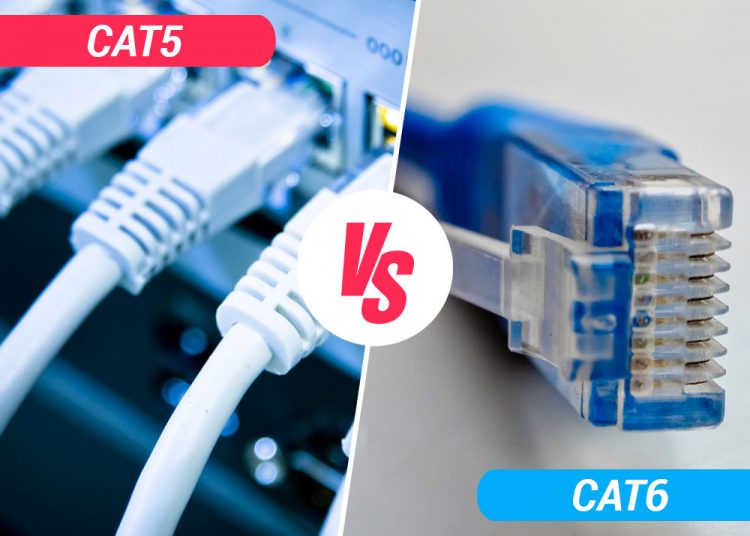
For those who need a quick answer, here’s a high-level breakdown of the primary differences between the enhanced Category 5 (Cat5e) and Category 6 (Cat6) standards.
| Feature | Cat5e (Category 5 Enhanced) | Cat6 (Category 6) |
|---|---|---|
| Max Speed | 1 Gbps at 100 meters (328 ft) | 1 Gbps at 100 meters (328 ft) 10 Gbps at up to 55 meters (180 ft) |
| Max Bandwidth (Frequency) | 100 MHz | 250 MHz |
| Crosstalk Reduction | Good – Stricter standards than original Cat5 | Excellent – Tighter wire twists and often includes a spline (a plastic separator) |
| Typical Application | Home networks, small offices, VoIP phones, standard HD streaming. | Commercial buildings, data centers, video-intensive applications, future-proofing. |
The Key Differences Explained in Detail
While the table above gives a great summary, understanding the “why” behind these differences is key to appreciating which cable best suits your needs. The variations in performance come down to how the cables are designed and manufactured.
Performance: Speed and Bandwidth
The most cited difference is performance. While both Cat5e and Cat6 can handle speeds up to 1 Gigabit per second (Gbps), the real differentiator is bandwidth, which is measured in Megahertz (MHz).
- Cat5e is rated for 100 MHz. Think of this as a two-lane highway. It’s perfectly adequate for most standard traffic (like 1 Gbps data), but it has its limits.
- Cat6 is rated for 250 MHz. This is like upgrading to a four-lane highway. It provides more than double the bandwidth, which means it can handle more data simultaneously. This higher bandwidth is what allows Cat6 to support 10 Gbps speeds over shorter distances (up to 55 meters) and provides more headroom for 1 Gbps connections, resulting in a more stable and reliable performance.
Signal Integrity: The Battle Against Crosstalk
Have you ever been on a phone call and heard a faint conversation from another line? That’s a type of interference called crosstalk. In network cables, crosstalk occurs when the signal from one wire pair bleeds over and interferes with an adjacent pair, leading to errors, packet loss, and slower speeds.
This is where Cat6 truly shines. It is designed with stricter specifications to minimize both Near-End Crosstalk (NEXT) and Alien Crosstalk (AXT).
- Tighter Twists: Cat6 cables have more twists per inch in the copper wire pairs. This simple change significantly improves the cable’s defense against interference.
- Spline (Separator): Many Cat6 cables include a plastic separator, known as a spline, that runs down the center of the cable. This spline isolates each of the four wire pairs, physically separating them to further reduce crosstalk and boost signal integrity.
This superior construction makes Cat6 an excellent choice for environments with high electromagnetic interference (EMI), such as those with heavy machinery or numerous power cables running nearby.
Physical Construction: What’s Inside Matters
The performance gains of Cat6 are a direct result of its more robust physical construction. Besides the tighter twists and spline, Cat6 cables often use a thicker gauge of copper wire. This not only contributes to better performance but also makes the cable physically thicker and less flexible than Cat5e.
At Dlay Cable, we understand that material quality is non-negotiable. That’s why our Cat5e and Cat6 cables are manufactured with 100% pure bare copper conductors. Cheaper alternatives like Copper Clad Aluminum (CCA) are less efficient, break more easily, and can be a fire hazard. Choosing a cable with pure copper, like those that pass rigorous Fluke testing, ensures you get the performance and safety you pay for.
Cost and Installation Considerations
Naturally, the enhanced performance and construction of Cat6 cables come at a slightly higher price point—typically 20-30% more than their Cat5e counterparts. Additionally, due to its thickness and rigidity, installing Cat6 can be slightly more challenging, especially when navigating tight corners or conduits.
How to Choose: Which Cable is Right for You?
Now for the most important question: which one should you install? The answer depends entirely on your specific needs, budget, and future plans.
You should choose Cat5e if:
- You have a standard home network: For everyday internet browsing, HD streaming, and online gaming, 1 Gbps is more than sufficient.
- You run a small office with basic needs: If your network primarily supports email, file sharing, and VoIP phones, Cat5e is a highly effective and budget-friendly solution.
- Budget is the primary concern: Cat5e delivers excellent gigabit performance for the lowest cost.
You should choose Cat6 if:
- You are future-proofing: If you’re undertaking a new installation or a major renovation, installing Cat6 is a smart investment. Labor is often the biggest cost of a cabling job, so using the better cable now can save you a complete re-wire in the future.
- You need maximum performance and reliability: For businesses that rely on high-speed data transfer, video conferencing, or operate in environments with high EMI, the superior signal integrity of Cat6 is a clear advantage.
- You might need 10 Gbps speeds: If your network includes high-demand devices like servers or network-attached storage (NAS) and the runs are under 55 meters, Cat6 can provide a 10 Gbps connection.
The Dlay Cable Commitment to Quality
Ultimately, the performance of your network depends not just on the category you choose, but on the quality of the cable itself. A poorly made Cat6 cable will not outperform a high-quality Cat5e cable.
At Dlay Cable, we are more than just a supplier; we are your partner in building reliable, high-performance network infrastructures. Our commitment is to provide professionally certified, top-tier cabling solutions. Whether you decide on the dependable Cat5e or the high-performance Cat6, our products are engineered with premium materials and subjected to rigorous quality control to ensure they meet and exceed industry standards.
Need help deciding? Our team of experts is ready to assist you in selecting the perfect cabling solution for your project. Browse our full range of LAN cables or contact us today for a personalized consultation.