


In today’s connected world, a fast and stable internet connection is no longer a luxury—it’s a necessity. While Wi-Fi is convenient, nothing beats the reliability and speed of a wired connection. But when you look at an Ethernet cable, you’ll see text printed on the side: “CAT5e,” “CAT6,” or even “CAT6A.” What does it all mean? As leaders in high-performance cabling solutions, we at D-Lay Cable believe in empowering our customers with knowledge. Choosing the right cable is the foundation of a robust network.
dlaycable will break down the essential differences between the two most common types of Ethernet cables—Cat5e and Cat6—so you can make an informed decision for your home or business.
Article Contents
Quick Comparison: Cat5e vs. Cat6 At a Glance
For those who need a quick answer, here’s a straightforward comparison table highlighting the core technical differences.
| Feature | Cat5e (Category 5 Enhanced) | Cat6 (Category 6) |
|---|---|---|
| Max Speed | 1 Gbps (1,000 Mbps) at 100 meters | 10 Gbps at up to 55 meters; 1 Gbps at 100 meters |
| Max Bandwidth (Frequency) | 100 MHz | 250 MHz |
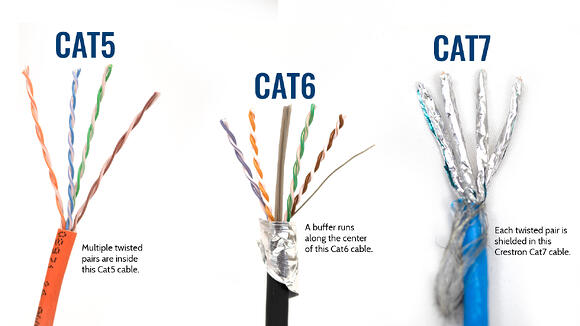
| Crosstalk Reduction | Standard twisted pairs | Tighter twisted pairs, often with a spline (a plastic divider) |
| Best For | Standard home internet, office use, VoIP phones | Gaming, 4K streaming, data centers, future-proofing |
| Cost | More affordable | Slightly more expensive |
Understanding Cat5e: The Reliable Standard
Cat5e (Category 5 Enhanced) has been the go-to standard for years, and for good reason. It was a significant improvement over the now-obsolete Cat5 cable, offering speeds of up to 1 Gigabit per second (Gbps). For the vast majority of home internet plans and standard office tasks, Cat5e is perfectly sufficient. It can handle video conferencing, HD streaming, and online browsing without breaking a sweat.
It achieves its performance through four twisted pairs of copper wires, with specifications designed to reduce signal interference over distances up to 100 meters (328 feet).
Understanding Cat6: The Performance Upgrade
Cat6 (Category 6) is the next step up. While it also supports 1 Gbps speeds at the full 100-meter distance, its key advantage lies in two areas: higher potential speeds over shorter distances and significantly better resistance to interference.
Cat6 cables can handle blazing-fast 10 Gbps speeds over distances up to 55 meters (180 feet). More importantly, it supports a bandwidth of 250 MHz—more than double that of Cat5e’s 100 MHz. Think of bandwidth as the number of lanes on a highway; more lanes mean more data can travel simultaneously without causing a traffic jam. This makes Cat6 ideal for environments with high data traffic.
The Key Differences Explained
Let’s dive deeper into the technical specifications that separate these two cables.
Speed and Bandwidth
As mentioned, the primary difference is performance potential. While both handle 1 Gbps, which is the speed of most modern routers and switches, Cat6 is built for the future. Its ability to handle 10 Gbps and its 250 MHz bandwidth make it a more robust choice for demanding applications and for “future-proofing” your network against tomorrow’s faster internet standards.
Crosstalk and Interference
“Crosstalk” is the unwanted transfer of signals between adjacent wires, which can corrupt data and slow down your network. Cat6 is engineered with stricter specifications to combat this.
- Tighter Twists: The copper wire pairs in a Cat6 cable are twisted more tightly than in Cat5e, which naturally helps cancel out interference.
- Spline (Separator): Many Cat6 cables include a plastic spine, known as a spline, that runs down the center, keeping the four wire pairs physically separated. This dramatically reduces crosstalk and ensures a cleaner, more stable signal.
This superior interference handling makes Cat6 a more reliable choice in environments with a lot of electromagnetic interference (EMI), such as near power lines, fluorescent lights, or multiple other data cables.
Physical Construction
Due to the tighter twists and the potential inclusion of a spline, Cat6 cables are typically thicker and less flexible than Cat5e cables. This can make them slightly more difficult to install in tight spaces or around sharp corners. However, this robust construction is precisely what gives them their superior performance.
How to Choose: Which Cable Do You Need?
Your choice ultimately depends on your specific needs and budget.
Choose Cat5e if:
- Your internet plan is 1 Gbps or less.
- Your primary use is web browsing, HD streaming, and general office work.
- Budget is a primary concern.
- You are running cables in a standard home or small office environment with minimal interference.
Choose Cat6 if:
- You want to future-proof your network for multi-gig internet speeds.
- You are a serious gamer who needs the lowest possible latency.
- You frequently transfer large files across your local network.
- Your network supports a smart home with many connected devices, or you stream in 4K/8K.
- You are installing cables in a new building or doing a major renovation (the small extra cost is a worthwhile investment).
Why Cable Quality Matters More Than Just the Category
At D-Lay Cable, we stress that the category number is only part of the story. The quality of the materials and construction is paramount to achieving the specified performance. Here’s what to look for, regardless of whether you choose Cat5e or Cat6:
- Pure Bare Copper Conductors: Always choose cables made with 100% pure copper. Avoid cheaper “Copper Clad Aluminum” (CCA) cables. CCA has higher resistance, is more prone to breaking, and cannot carry PoE (Power over Ethernet) as safely or effectively. All D-Lay Cable networking cables use pure copper for maximum performance and safety.
- Proper Shielding: In environments with high EMI, consider a shielded cable (STP or FTP) over an unshielded one (UTP) for an extra layer of protection against interference.
- Certifications: Look for cables that are UL or ETL certified and RoHS compliant. This ensures they have been tested to meet safety and performance standards.
The Final Word
For most users today, a high-quality Cat5e cable will serve you well. However, for a small additional investment, Cat6 offers a significant performance ceiling and robust construction that prepares your network for the demands of tomorrow. It is the smarter long-term investment.
Whatever your networking needs, from a simple home office setup to a complex data center installation, having the right foundation is key. If you have any more questions or need help selecting the perfect cable for your project, the experts at D-Lay Cable are always here to help. Back to top