


In the world of network infrastructure, clarity is key. A common question our clients and partners ask is whether Cat5e and Cat6 Ethernet cables are interchangeable. It’s a crucial question, as the answer impacts network performance, budget, and future-readiness. As a leading manufacturer of high-performance network cables, we at Dlay Cable want to provide a definitive answer.
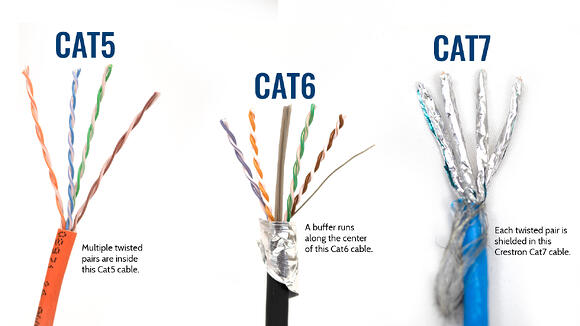
The quick answer is: Yes, Cat5e and Cat6 cables are physically interchangeable, but they are not interchangeable in terms of performance. You can plug a Cat6 cable into a device with a Cat5e port, and vice-versa. However, your network’s performance will be limited by its weakest component. Let’s dive deeper into what that means for you.
In This Guide:
Key Differences at a Glance: Cat5e vs. Cat6
To understand interchangeability, you must first understand the fundamental differences between the two cable types. While they look similar, their internal construction and capabilities vary significantly.
| Feature | Cat5e (Category 5 Enhanced) | Cat6 (Category 6) |
|---|---|---|
| Max Speed | 1 Gbps (Gigabit per second) at 100 meters | 10 Gbps at up to 55 meters; 1 Gbps at 100 meters |
| Bandwidth | Up to 100 MHz | Up to 250 MHz |
| Crosstalk | Meets baseline standard for reducing crosstalk. | Significantly reduced crosstalk due to tighter twists and a central spline. |
| Construction | 24 AWG twisted pair copper wires. | Generally thicker 23 AWG twisted pair copper wires, often with a plastic spline (separator) to isolate pairs. |
| Best For | Home networks, small offices, VoIP, and 1 Gbps applications. | Data centers, video streaming, new commercial buildings, and “future-proofing” networks. |
Understanding Cat5e: The Reliable Standard
Cat5e, or “Category 5 Enhanced,” has been the workhorse of networking for years. It was an improvement upon the original Cat5 standard, designed specifically to support Gigabit speeds (1 Gbps) over a standard distance of 100 meters. For many standard applications—like home internet, small office networking, and voice-over-IP (VoIP) phone systems—Cat5e is perfectly adequate and highly cost-effective.
At Dlay Cable, we manufacture high-grade Cat5e cables that are UL, CE, and RoHS certified, ensuring they reliably meet their specified performance standards for projects where budget and proven stability are the top priorities.
Understanding Cat6: The Performance Upgrade
Cat6 represents a significant step up in performance. It’s built with more stringent specifications to deliver higher speeds and handle more data simultaneously. This is achieved through several key physical improvements:
- Tighter Twists: The copper wire pairs inside a Cat6 cable are twisted more tightly than in Cat5e. This design naturally helps to cancel out interference and signal noise.
- Spline (Separator): Most Cat6 cables include a plastic spine, or “spline,” that runs down the center, keeping the four wire pairs separated. This dramatically reduces crosstalk—the signal bleeding between pairs that can corrupt data and slow down your network.
- Higher Bandwidth: With a bandwidth of 250 MHz (more than double that of Cat5e), Cat6 can be thought of as a wider “highway” for data, allowing more traffic to flow at higher speeds without congestion.
This superior construction allows Cat6 to support 10 Gbps speeds, although this is typically limited to distances under 55 meters. For any new installation where performance is a priority, Cat6 is the recommended choice.
Real-World Interchangeability Scenarios: What Actually Happens?
Because Cat5e and Cat6 cables both use the same RJ45 connector, they are physically compatible. But here’s what happens to your network speed in common mixing-and-matching scenarios:
Scenario 1: Using a Cat6 cable with Cat5e ports and patch panels.
Your network will work, but it will be bottlenecked by the Cat5e components. You get no performance benefit from the Cat6 cable in this case. The entire connection will run at Cat5e speeds (max 1 Gbps, 100 MHz).
Scenario 2: Using a Cat5e cable with Cat6 ports and a Cat6 network.
This is the most common performance killer. Even if you have a 10G-capable switch and server, plugging in a single Cat5e patch cord in the chain will downgrade that entire link’s performance to Cat5e standards. You are effectively crippling your high-speed hardware.
The Golden Rule: Your network connection is only as fast as its slowest component. This includes the bulk cable in the walls, the patch panels, the keystone jacks, and the patch cords connecting your devices.
How to Choose: When to Use Cat5e vs. Cat6
As your cabling partner, we want to help you make the smartest investment. The choice between Cat5e and Cat6 depends entirely on your specific needs.
Choose Cat5e if:
- Budget is the primary concern. Cat5e is more affordable.
- Your current network hardware is 1 Gbps or less.
- Your primary use is for standard home or small office data and VoIP.
- You have no plans for major network speed upgrades in the near future.
Choose Cat6 if:
- You are planning for the future (“future-proofing”). The small additional cost is a wise investment for new installations.
- You need to support high-bandwidth applications like 4K video streaming, large file transfers, or high-traffic servers.
- You are installing cable in an environment with high electromagnetic interference (EMI). The superior construction of Cat6 (especially shielded versions like F/UTP) provides better protection.
- You plan to upgrade to 10 Gbps networking equipment soon.
–
Why Cable Quality is More Important Than Category
While choosing between Cat5e and Cat6 is important, the quality of the cable itself is paramount. A poorly made Cat6 cable from an unverified source can perform worse than a high-quality Cat5e cable from a reputable manufacturer like Dlay Cable.
Here’s what sets a Dlay Cable product apart:
- 100% Pure Bare Copper Conductors: We exclusively use pure copper, which offers superior conductivity and durability compared to cheaper Copper Clad Aluminum (CCA) cables. CCA cables are brittle, have higher resistance, and fail to meet TIA performance standards.
- Rigorous Testing & Certification: Every cable we produce, whether it’s Cat5e, Cat6, or Cat6A, is rigorously tested to meet and exceed industry standards like ISO/IEC, TIA, UL, and RoHS. This guarantees performance and safety.
- Manufacturing Excellence: As an experienced OEM/ODM manufacturer, we control the entire production process, from sourcing raw materials to the final jacket extrusion. This ensures consistent quality in every box.
Conclusion: Interchangeable in Form, Not in Function
So, are Cat5e and Cat6 interchangeable? For a simple connection, yes. For optimal performance, absolutely not. Mixing categories will always result in your network defaulting to the lower standard.
Our professional recommendation is straightforward: For all new installations, Cat6 is the superior and more intelligent investment. For existing Cat5e networks that are performing well, there is no need to tear out cables. However, when adding or upgrading, use components that match your performance goals.
If you have any questions about which cabling solution is right for your project, don’t hesitate to reach out. The expert team at Dlay Cable is here to help you build a reliable, high-performance network from the ground up.