


In today’s connected world, the performance of your network is only as strong as its weakest link. Often, that link is the physical cable connecting your devices. When setting up a network, a common question arises: should I use Cat5e or Cat6 cable? As a leading manufacturer with over two decades of experience in high-quality network cabling, we at D-Lay Cable are here to demystify the differences and help you make the most informed decision for your home, office, or data center.
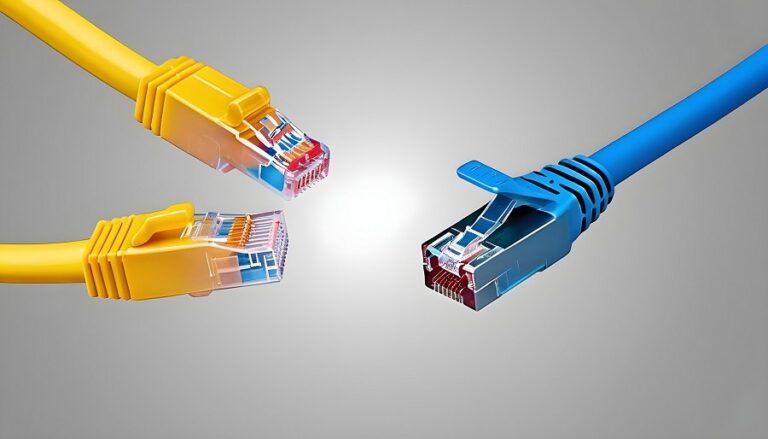
dlaycable will break down the technical specifications, performance differences, and ideal use cases for both Cat5e and Cat6, ensuring you invest in a network infrastructure that is both reliable today and ready for the demands of tomorrow.
Article Contents
Cat5e vs. Cat6: At a Glance
For a quick overview, here is a direct comparison of the most important specifications for each cable type.
| Feature | Cat5e (Category 5 Enhanced) | Cat6 (Category 6) |
|---|---|---|
| Speed | Up to 1 Gbps (Gigabit per second) | Up to 10 Gbps (over shorter distances of up to 55 meters) |
| Bandwidth / Frequency | 100 MHz | 250 MHz |
| Crosstalk | Standard protection against crosstalk | Significantly reduced crosstalk due to tighter twists and a spline |
| Max Cable Length | 100 meters (328 feet) for 1 Gbps speed | 100 meters (328 feet) for 1 Gbps; 55 meters (180 feet) for 10 Gbps |
| Cost | More affordable | Slightly more expensive |
Understanding Cat5e Cable
Cat5e (Category 5 Enhanced) was an improvement upon the older Cat5 standard, designed to reliably support Gigabit Ethernet. For many years, it has been the workhorse of home and small office networks.
- Performance: It is rated for speeds up to 1 Gbps over a distance of 100 meters.
- Frequency: It operates at a bandwidth of 100 MHz. Think of this like a two-lane highway—it gets the job done effectively for most standard traffic.
- Best For: Cat5e is an excellent, cost-effective choice for general home use, such as web browsing, HD video streaming, and connecting standard office equipment like printers and PCs where network demand is not exceptionally high.
Understanding Cat6 Cable
Cat6 (Category 6) represents a significant step up in performance and construction. It was engineered to handle higher speeds and reduce interference, making it a more robust solution for modern networking.
- Performance: Cat6 can support speeds of 10 Gbps, but only for distances up to 55 meters. For the standard 100-meter length, it reliably delivers 1 Gbps, just like Cat5e, but with much more headroom.
- Frequency: It supports a much higher bandwidth of 250 MHz. Using our highway analogy, this is like upgrading to a four-lane highway, allowing more data to travel simultaneously with less congestion.
- Best For: Cat6 is ideal for environments that demand higher performance and reliability. This includes businesses with high data transfer needs, smart homes with numerous connected devices, 4K video streaming, and online gaming where low latency is critical.
The Key Differences in Detail
While the table above gives a quick summary, understanding *why* these cables perform differently comes down to their physical construction—an area where we at D-Lay Cable excel.
Construction and Crosstalk Reduction
The biggest enemy of a stable network connection is “crosstalk”—the unwanted transfer of signals between adjacent wire pairs inside the cable. This interference can lead to errors, packet loss, and slower speeds.
- Cat5e: The four twisted pairs of copper wire inside a Cat5e cable have a standard twist rate. This twisting helps reduce some crosstalk, meeting the minimum requirements for Gigabit Ethernet.
- Cat6: As manufacturers, we build Cat6 cables to a stricter standard. They feature tighter-wound wire pairs and often include a “spline,” which is a plastic separator that runs down the center of the cable. This spline isolates each of the four pairs from the others, drastically reducing crosstalk and ensuring a cleaner, more reliable signal. This superior construction is the primary reason Cat6 can handle higher frequencies and speeds.
Performance: Speed and Bandwidth
While both cables can deliver 1 Gbps speeds at 100 meters, the 250 MHz bandwidth of Cat6 provides more “headroom.” This means it can handle more simultaneous data traffic without performance degradation. It’s the difference between a network that simply works and a network that performs optimally under load. For future applications that may require more bandwidth, Cat6 provides a clear advantage.
Cost and Future-Proofing
Cat5e is undoubtedly the more budget-friendly option. For a simple setup with basic needs, it remains a viable choice. However, Cat6 should be viewed as an investment. The slightly higher upfront cost provides a network backbone that is prepared for the increasing data demands of the future, from 8K streaming and virtual reality to the growing number of IoT devices in homes and offices. Installing Cat6 now can save you the significant cost and hassle of re-cabling later.
How to Choose: Which Cable is Right for You?
Making the right choice is about balancing your current needs, future goals, and budget.
Choose Cat5e When:
- Budget is the primary concern.
- Your current internet speed is 1 Gbps or less, with no immediate plans to upgrade.
- The network is for basic home use like web browsing, email, and standard HD streaming.
- You are setting up a temporary network or a small office with light data usage.
Choose Cat6 When:
- You are “future-proofing” your network.
- You have or plan to get an internet connection faster than 1 Gbps.
- You are a serious online gamer, a 4K/8K video streamer, or work with large file transfers.
- The installation is in an environment with high potential for electromagnetic interference (e.g., near power lines, fluorescent lights, or motors).
- You are wiring a new home or office—the marginal cost increase is well worth the long-term benefit.
Looking Ahead: A Note on Cat6a and Beyond
It’s also important to know about Cat6a (Category 6 Augmented). While Cat6 supports 10 Gbps up to 55 meters, Cat6a is the standard designed to reliably deliver 10 Gbps performance over the full 100-meter distance. It features even better shielding and construction to eliminate crosstalk at these higher frequencies. For data centers, enterprise networks, and mission-critical applications, Cat6a is the recommended standard.
At D-Lay Cable, our product lines also include Cat7 and Cat8 solutions for the most demanding, high-end data center and industrial applications, showcasing our commitment to being at the forefront of network technology.
The D-Lay Cable Promise: Quality and Reliability
Ultimately, the category of the cable is only part of the equation. The quality of the manufacturing is what ensures you receive the performance you expect. At D-Lay Cable, every spool of our Cat5e, Cat6, and Cat6a cable is produced using high-purity copper conductors and durable jacketing. We adhere to the strictest industry standards, including UL, CE, and RoHS, and subject our products to rigorous Fluke testing to guarantee they meet or exceed performance specifications.
Whether you need a reliable solution for your home or a robust, future-proof infrastructure for your business, the right cable makes all the difference. If you have any questions or need help selecting the perfect cabling solution for your project, please contact our team of experts. We are your trusted partner in network connectivity.