


In the world of network cabling, choosing the right foundation is critical for performance and reliability. As a leading manufacturer with over 20 years of experience in network solutions, we at D-Lay Cable often get asked: “What is the real difference between Cat5e and Cat6 Ethernet cables?” While they may look similar, their internal construction and capabilities are vastly different, impacting everything from your internet speed to the future-readiness of your infrastructure. dlaycable will break down the differences to help you make an informed decision.
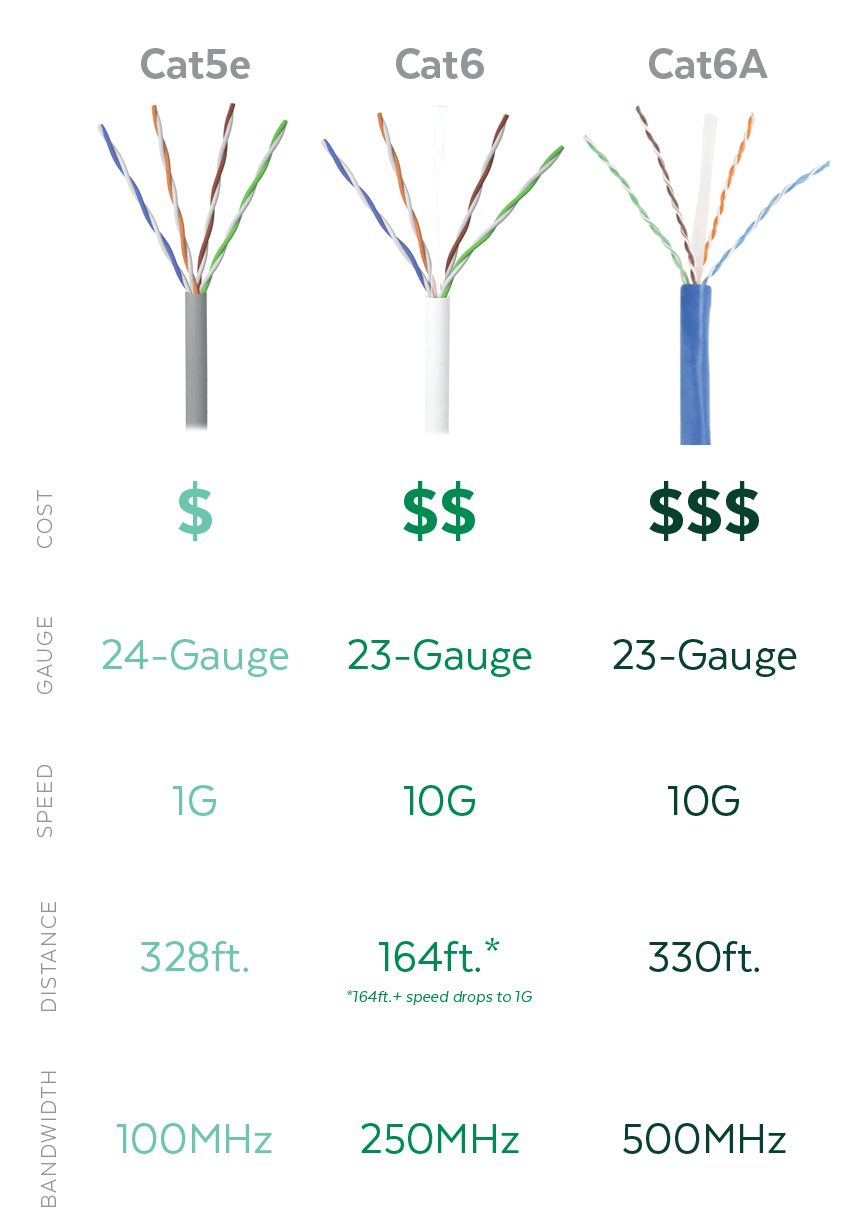
Table of Contents
- At a Glance: Cat5e vs. Cat6 Comparison Table
- Diving Deeper: The Key Technical Differences
- Practical Considerations: Which Cable Is Right for You?
- The Cost Factor: Is Cat6 a Worthwhile Investment?
- The D-Lay Cable Advantage: Quality Beyond the Category
- Frequently Asked Questions (FAQ)
- Your Partner in High-Performance Connectivity
At a Glance: Cat5e vs. Cat6 Comparison Table
For a quick overview, here’s a side-by-side comparison of the two most common Ethernet cable standards.
| Feature | Category 5e (Cat5e) | Category 6 (Cat6) |
|---|---|---|
| Max Speed | 1 Gbps (1,000 Mbps) at 100 meters | 10 Gbps up to 55 meters; 1 Gbps at 100 meters |
| Max Bandwidth | 100 MHz | 250 MHz |
| Crosstalk Reduction | Standard twisted pairs | Tighter twists, often includes a spline (plastic separator) |
| Cost | Lower | Higher (Approx. 20-30% more) |
| Best For | Standard home internet, small offices, 1 Gbps networks | Future-proofing, high-demand offices, data centers, serious gaming |
Diving Deeper: The Key Technical Differences
The specifications in the table above come from distinct differences in how Cat5e and Cat6 cables are engineered. Understanding these will clarify why one performs better than the other.
Speed and Throughput: The Data Rate
Cat5e is the enhanced version of the older Cat5 standard and is designed to reliably support speeds up to 1 Gigabit per second (Gbps). This is perfectly adequate for most home internet plans and standard office tasks today.
Cat6, on the other hand, is built for higher performance. It can support speeds of 10 Gbps, but only for distances up to 55 meters (180 feet). For the full 100-meter (328 feet) length, it reliably handles 1 Gbps, just like Cat5e, but with significantly more headroom for signal integrity.
Bandwidth (Frequency): The Data Highway’s Width
Think of bandwidth as the number of lanes on a data highway. More lanes mean more data can travel simultaneously without congestion. Cat5e has a bandwidth of 100 MHz. In contrast, Cat6 boasts a bandwidth of 250 MHz, more than double that of Cat5e. This wider “highway” is a key reason Cat6 can handle more data and is better prepared for future applications that demand higher bandwidth.
Crosstalk and Interference: Ensuring Signal Purity
Crosstalk is the unwanted signal interference between adjacent wire pairs inside a cable. This “noise” can lead to errors, slower speeds, and dropped packets. Cat6 cables are specifically designed to combat this.
- Tighter Twists: The copper wire pairs inside a Cat6 cable are twisted more tightly than in a Cat5e cable. This helps to cancel out electromagnetic interference from neighboring pairs.
- Spline (Separator): Most Cat6 cables include a plastic separator, known as a spline, that runs down the center of the cable. This spline physically isolates the four twisted pairs from each other, drastically reducing near-end crosstalk (NEXT) and alien crosstalk (AXT).
This superior construction makes Cat6 a much more robust and reliable choice in environments with high electronic interference.
Physical Construction: What’s Inside Matters
As a result of the tighter twists and the addition of a spline, Cat6 cables are generally thicker and less flexible than their Cat5e counterparts. This can make installation in tight corners or conduits more challenging. However, this thicker gauge and robust build is a direct contributor to its superior performance and durability.
Practical Considerations: Which Cable Is Right for You?
The best choice depends entirely on your specific needs, budget, and future plans.
For Standard Home Networks
For most homes with internet speeds up to 1 Gbps, Cat5e is often sufficient and more cost-effective. It easily handles HD streaming, online browsing, and remote work. If you’re on a budget and don’t foresee needing speeds beyond 1 Gbps in the next few years, Cat5e is a solid, reliable choice.
For Business and Demanding Office Environments
For any new business installation or major network upgrade, Cat6 is the recommended standard. The superior performance and reduction in crosstalk are crucial in a dense office environment with many connections. It provides the necessary backbone for high-volume data transfer, VoIP phone systems, and prepares your infrastructure for future technologies. It’s an investment in productivity and stability.
For Gamers and High-Bandwidth Users
Gamers, content creators, and users with local media servers will benefit from Cat6. The higher bandwidth and lower potential for interference ensure a more stable, lower-latency connection, which is critical for competitive gaming and streaming large 4K files across a local network.
The Cost Factor: Is Cat6 a Worthwhile Investment?
Cat6 cables and associated components (keystone jacks, patch panels) are typically 20-30% more expensive than their Cat5e equivalents. For a single patch cord, the difference is minimal. For a full structural wiring project, the cost can add up. However, think of it as future-proofing. The labor cost of installing cable is the same regardless of the category. Choosing Cat6 now can save you the significant expense and hassle of re-wiring your entire home or office in a few years when 1 Gbps is no longer enough.
The D-Lay Cable Advantage: Quality Beyond the Category
Whether you choose Cat5e or Cat6, the most important factor is the quality of the cable itself. As a direct manufacturer, D-Lay Cable guarantees that our products meet and exceed industry standards.
- 100% Pure Bare Copper: We use only pure solid copper conductors, which provide superior conductivity and durability compared to cheaper Copper Clad Aluminum (CCA) alternatives that are prone to failure.
- Strict Quality Control: Every batch of our cable undergoes rigorous testing, including Fluke tests, to ensure it performs to its rated specifications for speed and bandwidth.
- Certified Performance: Our cables are UL, ETL, and CPR certified, giving you peace of mind that you are installing a safe, reliable, and compliant product in your network.
Frequently Asked Questions (FAQ)
Can I use a Cat6 cable with a Cat5e network?
Yes. Cat6 cables are fully backwards compatible with Cat5e, Cat5, and even Cat3 standards. You can plug a Cat6 cable into a device or wall jack made for Cat5e and it will work perfectly, though it will be limited to the speed of the slowest component in the network.
Can I use Cat5e cables on a 10G network?
This is not recommended. While Cat5e might achieve higher speeds over very short distances in ideal conditions, it is not designed or certified for 10 Gbps speeds. Using it for such applications will likely result in poor performance and data loss.
How can I tell the difference between a Cat5e and Cat6 cable physically?
Look at the text printed on the cable’s outer jacket. It will almost always be labeled with its category, such as “Category 6” or “Cat5e”. Cat6 cables are also often noticeably thicker than Cat5e cables.
Your Partner in High-Performance Connectivity
Choosing between Cat5e and Cat6 is a balance of current needs, future goals, and budget. Cat5e is the reliable workhorse for today’s 1 Gbps networks, while Cat6 is the forward-thinking choice for those who demand higher performance and want to invest in a stable, long-term infrastructure.
At D-Lay Cable, we provide top-tier, certified solutions for both categories. By focusing on manufacturing excellence with pure copper and strict testing, we ensure that whichever cable you choose, you are building your network on a foundation of quality. Explore our range of bulk cables, patch cords, and connectivity components to find the perfect solution for your project.