


As a leading manufacturer of high-performance network cables, we at Dlaycable often receive questions about network setup and upgrades. One of the most common inquiries is: “Is Cat6 cable compatible with Cat5?” It’s a critical question whether you’re planning a new installation or upgrading an existing network. dlaycable will provide a clear, comprehensive answer and help you make the best decision for your needs.
The Quick Answer: Yes, Cat6 is Compatible with Cat5
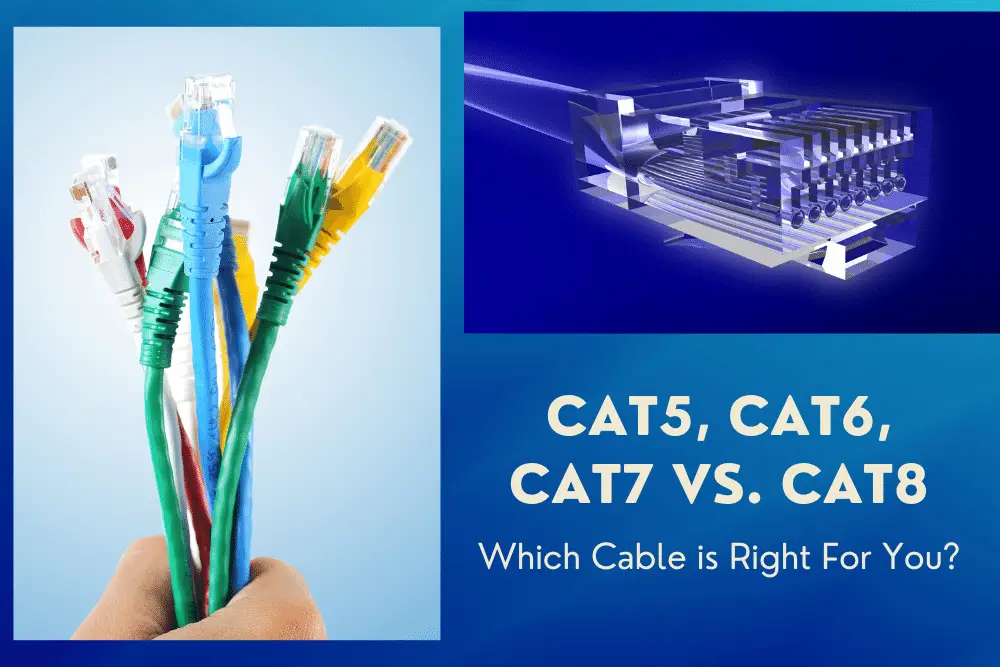
Yes, Cat6 cable is backward compatible with both Cat5 and Cat5e standards. This is possible because all three cable types use the same RJ45 connector and wiring configuration (T568A or T568B). You can plug a Cat6 cable into a device, wall jack, or patch panel designed for Cat5 or Cat5e, and it will work.
However, “working” and “performing optimally” are two different things. While you will get a connection, your network’s overall performance will be limited by its lowest-category component. We’ll explore this crucial detail further down.
Understanding the Key Differences: Cat6 vs. Cat5e
While they look similar, the technology inside a Cat6 cable is a significant upgrade from Cat5e (the successor to the now largely obsolete Cat5). As manufacturers adhering to strict international standards like ISO9001, UL, and CE, we build these differences into every cable we produce.
Speed and Bandwidth
- Cat5e: Supports speeds up to 1 Gigabit per second (Gbps) with a bandwidth of 100 MHz. This is sufficient for many home and small office applications.
- Cat6: Also supports speeds up to 1 Gbps for distances up to 100 meters, but its key advantage is supporting 10 Gbps speeds over shorter distances (up to 55 meters). It achieves this with a much higher bandwidth of 250 MHz. This extra bandwidth is like having more lanes on a highway—it can handle more data traffic simultaneously, reducing congestion.
Crosstalk and Construction
Crosstalk is the unwanted interference between adjacent wires in a cable, which can lead to errors and slower speeds. Cat6 is engineered specifically to combat this.
- Tighter Twists: Cat6 cables have more twists per inch in their copper wire pairs than Cat5e cables. This tighter twist rate naturally reduces interference.
- Spline (Separator): Most Cat6 cables include a plastic spline that runs down the center, isolating the four twisted pairs from each other. This physical barrier is a primary reason Cat6 excels at minimizing “crosstalk.”
- Thicker Conductors: Cat6 often uses slightly thicker copper conductors, which improves signal strength and performance.
At Dlaycable, our precision manufacturing process ensures these construction elements meet and exceed TIA/EIA standards, guaranteeing reliable performance and signal integrity.
The “Weakest Link” Rule: Performance When Mixing Cables
This is the most critical concept to understand when mixing network components. Your network will always operate at the speed of its slowest component.
Here are some examples:
- Scenario 1: You use a high-quality Cat6 Patch Cord to connect your PC to a wall jack that is wired with older Cat5e cable.
Result: Your connection speed will be limited to Cat5e performance (1 Gbps, 100 MHz). - Scenario 2: Your entire network infrastructure is Cat6 (cables in the walls, patch panel, jacks), but you use an old Cat5 patch cord.
Result: The network connection for that specific device will be limited to Cat5 performance (100 Mbps, 100 MHz).
The takeaway: For a true Cat6-speed network, every single component in the data’s path—from the router to the patch panel, the in-wall cabling, the wall jack, and the final patch cord to your device—must be rated for Cat6.
Practical Scenarios: When to Choose Cat6
So, should you use Cat6? It depends on your specific needs.
- For New Installations: Absolutely. For any new home or office build, installing Cat6 is the standard recommendation. The marginal cost difference is minimal compared to the labor of installation, and it provides a “future-proof” network that can handle increasing data demands for years to come.
- For High-Demand Applications: If you regularly transfer large files, stream 4K/8K video, engage in competitive online gaming, or operate a data-intensive office, the superior bandwidth and lower crosstalk of Cat6 provide a more stable and faster experience.
- For Environments with High Interference: In settings with a lot of electronic equipment or where cables are bundled together, the superior construction of Cat6 makes it more resilient to electromagnetic interference (EMI) and crosstalk.
– For Upgrading an Existing Network: If you are simply replacing a faulty patch cord, using a Cat6 cable is a great choice as it ensures you’re not creating a bottleneck. However, to get the full benefit, you’ll eventually want to upgrade the entire channel.
The Dlaycable Advantage: Quality You Can Trust
Choosing the right cable category is only half the battle. The quality of the cable itself is paramount. As a professional OEM/ODM cable manufacturer, Dlaycable provides networking solutions built on a foundation of excellence.
- Manufacturing Expertise: We aren’t just a reseller; we are the factory. This gives us complete control over the production process, from sourcing high-purity copper to the final Fluke test of our patch cords.
- Strict Quality Standards: Our products are certified with UL, CE, RoHS, and ISO9001, ensuring they are safe, reliable, and perform to specification. We believe in providing robust, durable cables that you can install with confidence.
- Future-Ready Products: We offer a complete range of network cabling, from Cat5e to Cat6, Cat6A, and even Cat8, ensuring that no matter your requirement, we have a high-performance solution ready for you.
Conclusion: Making the Right Connection
To summarize, Cat6 cable is fully backward compatible with Cat5 and Cat5e networks, making it a safe and versatile choice for any connection. However, to unlock its true potential for higher speeds and superior performance, your entire network channel must be Cat6-rated.
For any new project, Cat6 is the undisputed choice for a reliable and future-proof network. For existing networks, upgrading to Cat6 components, especially high-quality patch cords, can help eliminate potential bottlenecks and improve signal integrity.
Ready to build a faster, more reliable network? Explore our full range of professionally manufactured Cat6 and Cat6A network cables, built to deliver the performance you demand.