


As a leading provider of high-performance network cabling solutions, we at Dlaycable often get questions about the practical differences between cable categories. One of the most common queries we hear is: “Are Cat6 and Cat5e cables interchangeable?” It’s a fantastic question that gets to the heart of network performance, future-proofing, and budget.
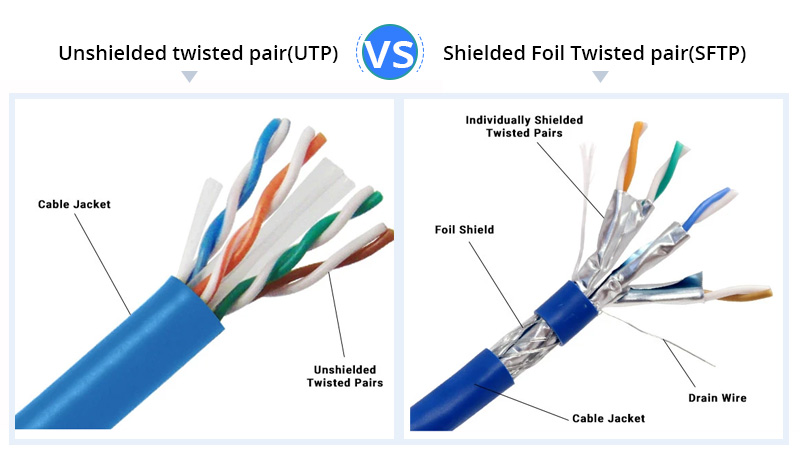
The short answer is yes, they are physically interchangeable. But the real answer is more nuanced and depends entirely on the performance you expect from your network. Let’s break it down.
The Quick Answer: Physical vs. Performance Interchangeability
Physically, Cat5e and Cat6 cables are identical from the outside. They both use the same RJ45 connector, which means you can plug a Cat6 cable into a device designed for Cat5e and vice-versa. Your computer, router, or gaming console won’t reject the cable. This is what we mean by “interchangeable.”
However, performance interchangeability is a different story. The internal construction of these cables is what sets them apart, dictating their speed, bandwidth, and ability to handle interference. Using the wrong cable for your network’s capabilities can create a bottleneck, preventing you from getting the speeds you’re paying for. Your network is only as fast as its slowest component.
At a Glance: Core Differences Between Cat5e and Cat6
To understand the performance implications, let’s look at the technical specifications. The primary differences lie in bandwidth and crosstalk protection.
| Feature | Cat5e (Category 5 Enhanced) | Cat6 (Category 6) |
|---|---|---|
| Max Speed | 1 Gbps at 100 meters | 10 Gbps up to 55 meters (1 Gbps at 100 meters) |
| Max Bandwidth | 100 MHz | 250 MHz |
| Crosstalk Protection | Tighter wire twists than Cat5 | Even tighter twists, often includes a “spline” (a plastic divider) to separate pairs |
| Best For | Home/Small office networking, 1 Gbps internet plans, budget-conscious setups | Future-proofing, high-demand applications (gaming, 4K streaming), environments with high electronic interference |
| Cost | Lower | Slightly Higher |
Bandwidth (MHz): Think of bandwidth as a highway. Cat6 has a 2.5x wider highway (250 MHz vs. 100 MHz), allowing more data to travel simultaneously without congestion. This is crucial for high-demand tasks.
Crosstalk (XT): This is the electronic “noise” or interference between the twisted pairs of wires inside the cable. Cat6’s stricter construction standards, including a potential central spline, drastically reduce crosstalk, leading to a more stable and reliable signal.
What Interchangeability Means in Real-World Scenarios
Understanding the theory is great, but how does this play out in practice?
Scenario 1: Using a Cat6 Cable in a Cat5e Network
You have a router, switch, and computer that all support up to 1 Gbps (a typical Cat5e setup). If you use a Dlaycable Cat6 patch cord to connect them, everything will work perfectly. The cable is backward compatible. You won’t get more than 1 Gbps speed because the rest of your hardware is the limiting factor, but you’ll benefit from the superior crosstalk protection of the Cat6 cable, potentially leading to a more stable connection. This is an excellent way to future-proof your infrastructure.
Scenario 2: Using a Cat5e Cable in a Cat6 Network
You have a new 10-Gigabit switch and a computer with a 10G network card. If you connect them using an old Cat5e cable, the connection will work, but it will create a bottleneck. The Cat5e cable will cap your performance at 1 Gbps, completely negating the benefit of your expensive high-speed hardware. You’ll be leaving 90% of your potential speed on the table.
Which Cable Should You Choose for Your Network?
At Dlaycable, we believe in providing the right tool for the job. Here’s our professional recommendation:
Choose Cat5e If:
- Your internet speed is 1 Gbps or less.
- Your primary use is general web browsing, email, and HD streaming.
- Budget is the primary concern for a large-scale installation.
Choose Cat6 (Our General Recommendation) If:
- You want to future-proof your network. The small additional cost is an investment in future performance.
- You have or plan to get internet speeds greater than 1 Gbps.
- You are a gamer, a 4K/8K content streamer, or frequently transfer large files between devices on your local network.
- Your cabling will run near power lines or other sources of electromagnetic interference (EMI). The superior construction of Cat6 provides better protection.
For the vast majority of new installations today, Cat6 offers the best balance of price, performance, and future-readiness.
The Dlaycable Advantage: Why Quality Matters Most
Whether you choose Cat5e or Cat6, the single most important factor is the quality of the cable itself. A poorly made Cat6 cable can perform worse than a high-quality Cat5e cable. This is where Dlaycable stands apart.
- Quality Assurance: All our cables, from Cat5e to Cat8, are rigorously tested to meet and exceed industry standards like UL, ETL, CE, and RoHS. We provide Fluke Test reports to guarantee performance.
- Pure Bare Copper Conductors: We use 100% pure bare copper in our cables, unlike cheaper Copper Clad Aluminum (CCA) alternatives. This ensures maximum signal integrity, reliability, and safety.
- Factory-Direct Value: By selling directly from our factory, we eliminate middlemen and pass the savings on to you, ensuring you get premium, certified cabling without the premium price tag.
- Expert Support: We don’t just sell cables; we provide solutions. Our team is here to help you select the perfect products for your specific project, whether it’s a home network upgrade or a large-scale data center deployment.
The Final Verdict
So, are Cat6 and Cat5e interchangeable? Yes, for physical connectivity. No, for optimal performance.
You can plug them into the same ports, but using a Cat5e cable in a high-speed network will limit your potential. For this reason, we strongly recommend using Cat6 cables for all new installations or upgrades. The minor cost difference is a small price to pay for a faster, more reliable, and future-proof network.
Ready to build a network you can count on? Explore our full range of certified Cat5e and Cat6 cables and components. At Dlaycable, we connect your world with quality and confidence.