


In today’s digitally-driven world, the backbone of any successful business, smart home, or data center is its network infrastructure. While Wi-Fi is convenient, the speed, reliability, and security of a wired connection are unparalleled. As a leading manufacturer of high-quality connectivity solutions, we at D-Lay Cable know that choosing the right cable is a critical decision that impacts performance for years to come. Two of the most common choices for modern networks are Category 6 (Cat6) and Category 6a (Cat6a) cables.
But what’s the real difference? Choosing incorrectly can lead to performance bottlenecks, while overspending is an unnecessary drain on your budget. dlaycable will break down the key distinctions, helping you make an informed decision and ensure your network is built on a solid, future-proof foundation.
Cat6 vs. Cat6a: At a Glance
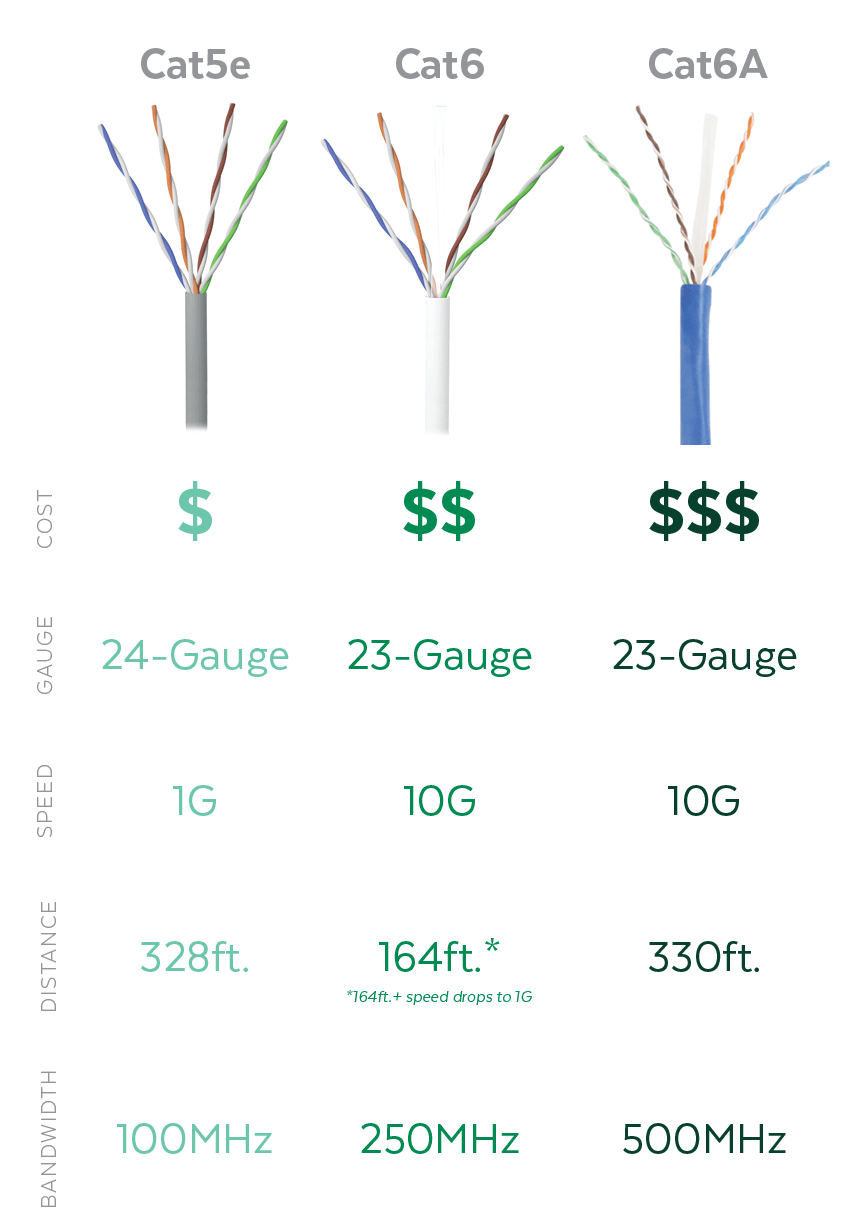
For those who need a quick answer, here is a summary of the primary differences between Cat6 and Cat6a cabling.
| Feature | Cat6 | Cat6a |
|---|---|---|
| Max Speed | 10 Gbps (up to 55 meters) | 10 Gbps (up to 100 meters) |
| Bandwidth | 250 MHz | 500 MHz |
| Max Distance for 10 Gbps | 37-55 meters (unreliable) | 100 meters (328 feet) |
| Crosstalk Protection | Good | Excellent (Superior Alien Crosstalk mitigation) |
| Physical Size | Standard | Thicker & Heavier |
| Cost | Lower | Higher |
Understanding Cat6 Cable
Category 6 cable was a significant step up from its predecessor, Cat5e. It offered higher performance by specifying a bandwidth of 250 MHz. This allows it to reliably support 1 Gigabit Ethernet (1 Gbps) speeds over the full 100-meter channel length. While it can technically support 10 Gbps, it’s limited to shorter, often impractical distances of under 55 meters and is highly susceptible to interference at that speed.
In short: Cat6 is the established standard for gigabit speeds in office and home environments.
Understanding Cat6a: The “Augmented” Standard
The “a” in Cat6a stands for “Augmented.” This standard was specifically designed to solve the 10 Gbps distance limitation of Cat6. By doubling the bandwidth to 500 MHz and incorporating significant improvements in construction, Cat6a can reliably support 10 Gigabit Ethernet speeds over the full 100-meter (328-foot) distance. These improvements focus heavily on reducing “crosstalk”—the signal interference between adjacent cables.
In short: Cat6a is the modern standard for reliably achieving 10 Gbps speeds and future-proofing your network.
The 5 Key Differences in Detail
Let’s dive deeper into the factors that separate these two categories.
1. Performance: Speed and Bandwidth
While both cables can theoretically hit 10 Gbps, the reliability and distance differ dramatically. The key is bandwidth. Think of bandwidth as the width of a highway. Cat6 has a 250 MHz highway, while Cat6a has a 500 MHz super-highway. This extra width allows Cat6a to handle more data traffic at higher speeds without errors, making it the only reliable choice for a 10 Gbps connection over standard distances.
2. Distance: The 10G Ethernet Limitation
This is the most critical difference for network planning. If your goal is to run a 10 Gbps network, Cat6a is the only choice that guarantees performance up to the TIA/EIA standard of 100 meters. A Cat6 cable attempting the same run will either fail to connect at 10 Gbps or suffer from significant data loss, effectively reducing its performance.
3. Crosstalk: The Unseen Performance Killer
When multiple cables are bundled together, their signals can bleed into one another, causing interference. This is called crosstalk. Cat6a is engineered to combat this, especially Alien Crosstalk (ANEXT), which is interference from cables in other bundles. It achieves this through:
- Tighter Twists: The pairs of wires inside are twisted more tightly.
- Thicker Outer Jacket: A more robust sheath provides better insulation.
- Internal Spline: Many Cat6a cables include a plastic separator that keeps the wire pairs physically isolated.
This superior construction makes Cat6a the ideal choice for dense environments like data centers and server rooms.
4. Physical Build and Installation
The enhancements that give Cat6a its superior performance also make it physically larger. Cat6a cables are noticeably thicker and less flexible than Cat6 cables. This has installation implications: you can fit fewer Cat6a cables into a conduit, and they require a larger bend radius. This needs to be factored into your network design and installation plan.
5. Cost: The Budgetary Consideration
Due to its more complex construction and higher material usage, Cat6a cable is more expensive than Cat6. This price difference extends to the associated hardware—Cat6a keystone jacks, patch panels, and connectors are also more costly as they must meet the same stringent performance standards. For projects on a tight budget where 1 Gbps is sufficient, Cat6 presents a more economical solution.
Practical Scenarios: When to Choose Cat6
Despite the superiority of Cat6a, Cat6 remains an excellent and cost-effective choice for many applications:
- Standard Office Networks: For workstations running typical office applications, 1 Gbps to the desktop is more than sufficient.
- Home Networks: Most home internet plans are below 1 Gbps, making Cat6 a perfect fit for connecting routers, PCs, and smart TVs.
- VoIP and IP Cameras: These devices have low bandwidth requirements, and Cat6 handles them with ease.
- Budget-Constrained Projects: When the budget is the primary driver and 10 Gbps is not a current or near-future requirement.
Practical Scenarios: When to Choose Cat6a
Investing in Cat6a is about building for tomorrow’s needs today. You should choose Cat6a for:
- Future-Proofing: If there is any chance your network will need to support 10 Gbps or higher speeds in the next 5-10 years, Cat6a is the wise investment. The cost of re-cabling a building far outweighs the initial premium for Cat6a.
- Data Centers: An absolute requirement for high-speed switch-to-server and switch-to-switch connections.
- Hospitals and Universities: Environments that transfer large data files (like medical imaging or research data) and need to support a high density of users.
- Advanced Power over Ethernet (PoE): Cat6a’s thicker conductors handle the heat generated by high-power PoE++ applications better than Cat6, improving efficiency and safety.
- Applications Sensitive to Interference: In manufacturing or industrial settings, Cat6a’s superior shielding protects data integrity.
Why the Entire Channel Matters
A network is only as strong as its weakest link. Installing Cat6a cable is just one part of the equation. To achieve true Cat6a performance, every component in the channel—from the patch panel in the server room to the keystone jack in the wall plate—must be Cat6a rated. Mixing Cat6 components with a Cat6a cable will bottleneck the entire channel to Cat6 performance.
At D-Lay Cable, we provide a complete, end-to-end solution. Our UL, ETL, and RoHS certified Cat6a cables, patch cords, keystone jacks, and patch panels are engineered to work together seamlessly, guaranteeing you the performance you paid for.
The D-Lay Cable Verdict: Partnering for Performance
The choice between Cat6 and Cat6a comes down to a balance of current needs, future goals, and budget.
Choose Cat6 for reliable, cost-effective gigabit performance in environments where 10 Gbps is not on the horizon.
Choose Cat6a for future-proofing, guaranteed 10 Gbps performance, and robust operation in demanding, high-density environments.
Building a reliable network requires more than just cables; it requires a reliable partner. With over a decade of experience in manufacturing and OEM/ODM services, D-Lay Cable is committed to providing high-quality, certified connectivity solutions that power your success. If you’re planning your next network installation, contact our team of experts. We’re here to help you build a network that’s not just functional, but exceptional.