


CAT8 Riser (CMR) cable supports 40Gbps speeds up to 30 meters, ideal for vertical runs between floors in hyperscale data center spine architectures.
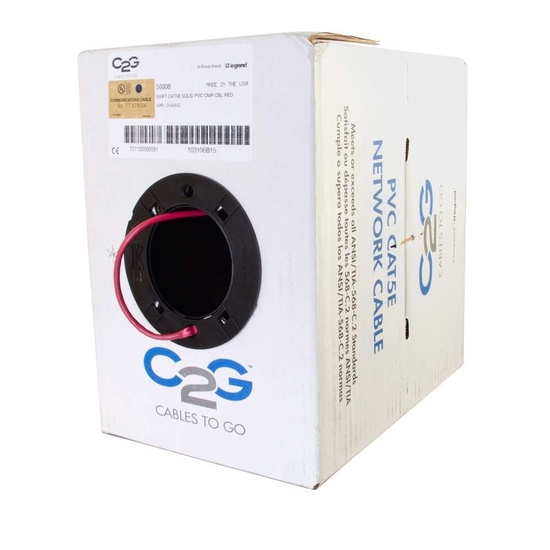
The relentless expansion of data generation and cloud computing places immense pressure on data center infrastructure. For hyperscale operators, maintaining a high-performance, scalable, and cost-efficient network fabric is paramount. The spine-leaf architecture, a cornerstone of modern data centers, demands robust interconnectivity capable of handling massive east-west traffic flows. This is where advanced copper cabling solutions demonstrate their critical value, offering a powerful blend of performance and practicality for specific applications.
Table of Contents
- What Defines a CAT8 Riser (CMR) Cable?
- Why CAT8 is the Backbone for Modern Hyperscale Data Center Spines
- Technical Specifications of High-Performance CAT8 CMR Cable
- Installation and Deployment Considerations for Vertical Runs
- D-Lay Cable: Engineering Excellence for Your Data Center Infrastructure
What Defines a CAT8 Riser (CMR) Cable?
A CAT8 Riser cable is not a monolithic product but a fusion of three distinct and critical specifications: the Category 8 performance standard, the CMR fire-safety rating, and the 22AWG conductor size. Understanding how these elements combine is key to appreciating its role in sophisticated network environments. Each component addresses a different challenge, from raw data throughput to building safety and power delivery.
Decoding Category 8: Performance for Next-Generation Data Centers
Defined by the ANSI/TIA-568.2-D standard, Category 8 represents a significant leap in twisted-pair copper cabling performance. It is engineered specifically for data center applications, particularly for short-distance, high-bandwidth interconnects. Its primary characteristics include a frequency support of up to 2000 MHz, which is four times that of CAT6A. This immense bandwidth enables it to support 25GBASE-T and 40GBASE-T Ethernet, making it a future-proof solution for connecting servers to switches in Top-of-Rack (ToR) or End-of-Row (EoR) configurations.
A crucial aspect of CAT8 is its mandatory S/FTP (Screened/Foiled Twisted Pair) construction. Each of the four twisted pairs is wrapped in a metallic foil, and an overall tinned-copper braid screen encases the entire bundle. This dual-shielding design provides exceptional protection against electromagnetic interference (EMI), radio-frequency interference (RFI), and particularly alien crosstalk (ANEXT), which is a major performance inhibitor in high-density 10G+ environments.
The Significance of the CMR (Riser) Rating
The cable jacket’s fire rating is a non-negotiable safety requirement dictated by the National Electrical Code (NEC). The CMR (Communications Multipurpose Cable, Riser) designation signifies that the cable has passed rigorous vertical burn tests (UL 1666). This rating certifies the cable jacket is formulated with fire-retardant materials that resist the spread of flames up vertical shafts.
In a multi-story data center, CMR-rated cables are essential for any backbone or spine cabling that runs between floors through risers or wall penetrations that are not designated as plenum air spaces. Using an appropriately rated cable is not just a performance choice; it is a fundamental aspect of building safety compliance and protecting critical infrastructure and personnel.
Why 22AWG Conductors Matter in High-Performance Cabling
The American Wire Gauge (AWG) number indicates the diameter of the conductor; a lower number signifies a thicker wire. While many Ethernet cables use 23AWG or 24AWG, high-performance CAT8 cables often utilize 22AWG conductors. This thicker gauge provides tangible benefits directly impacting data center efficiency.
A thicker 22AWG wire has lower DC resistance, which means less signal attenuation over the length of the cable, ensuring a more robust and reliable data signal. More importantly, it generates less heat and handles power more efficiently. This is critical for supporting high-power Power over Ethernet (PoE) standards like IEEE 802.3bt (PoE++), which can deliver up to 90-100 watts. Better heat dissipation reduces the risk of performance degradation in dense, tightly packed cable bundles, a common scenario in hyperscale racks.
Why CAT8 is the Backbone for Modern Hyperscale Data Center Spines
Hyperscale data centers operate on a scale where efficiency, speed, and cost are magnified. CAT8 CMR 22AWG cable is uniquely positioned to address the specific cabling challenges found in the spine layer of these massive facilities, which serves as the central nervous system of the network.
Meeting the Bandwidth Demands of Spine-Leaf Architectures
In a spine-leaf topology, every leaf switch (typically at the top of a rack) connects to every spine switch. This creates a high-throughput, low-latency fabric that is resilient and scalable. The connections between servers and leaf switches, or between leaf and spine switches, demand extremely high bandwidth. CAT8’s ability to deliver 40Gbps is a perfect match for these links, ensuring that the network core does not become a bottleneck as server-to-server traffic volumes explode.
By deploying CAT8 for these critical 30-meter-or-less connections, data center operators can build a network fabric that supports rapid scalability and the intensive workloads of AI, machine learning, and big data analytics without being forced into a complete fiber-optic overhaul.
A Cost-Effective Alternative to Fiber Optics
While fiber optic cabling is the undisputed champion for long-distance runs, it presents a higher total cost of ownership for short-reach applications within the data center. The primary cost difference lies not in the cable itself, but in the electronics. The transceivers required for fiber (like SFP+ and QSFP+) are significantly more expensive and consume more power than the electronics behind a standard RJ45 port.
For interconnects up to 30 meters, CAT8 provides 40G performance using familiar RJ45 connectivity. This simplifies installation, reduces hardware costs, and maintains backward compatibility with existing network equipment. This pragmatic approach allows for targeted bandwidth upgrades where they are needed most, preserving capital for other critical investments.
Technical Specifications of High-Performance CAT8 CMR Cable
A comprehensive view of the technical specifications reveals why this cable is engineered for mission-critical applications. Every detail, from the conductor material to the jacket composition, is designed for maximum performance and reliability.
| Specification | Details |
|---|---|
| Standard | ANSI/TIA-568.2-D |
| Data Rate | 25GBASE-T / 40GBASE-T |
| Frequency (Bandwidth) | 2000 MHz (2 GHz) |
| Maximum Channel Length | 30 meters (98 feet) |
| Conductor Gauge | 22AWG |
| Conductor Material | Solid Bare Copper |
| Shielding | S/FTP (Screened/Foiled Twisted Pair) – Individual foil, overall braid |
| Jacket Rating | CMR (Riser) |
| PoE Support | Up to IEEE 802.3bt (Type 4 / 100W) |
| Termination | RJ45 (CAT8 Field-Terminable Plugs or Keystone Jacks) |
The use of solid bare copper conductors is a critical quality indicator. Unlike Copper Clad Aluminum (CCA) alternatives, solid copper offers superior conductivity, tensile strength, and long-term reliability, preventing signal degradation and network failures. The robust S/FTP shielding is the cable’s primary defense against noise, ensuring error-free data transmission even when bundled with power cables or other network lines in crowded conduits and pathways.
Installation and Deployment Considerations for Vertical Runs
Proper installation is vital to unlocking the full performance potential of CAT8 CMR cable. Its advanced construction requires careful handling to maintain its integrity from the box to the final termination point.
Adhering to Fire Safety Codes with CMR-Rated Jackets
The deployment of any cabling between floors mandates strict adherence to local and national fire safety codes. The CMR rating is specifically for use in vertical risers that connect different stories of a building. It is crucial to verify that these pathways are not plenum spaces (used for air circulation), which would require a higher-rated CMP (Plenum) cable. Correctly matching the cable rating to the environment is a foundational step in any compliant and safe network installation.
Best Practices for Handling and Termination
Due to its thicker gauge and extensive shielding, CAT8 cable is less flexible than its lower-category counterparts. It is imperative to respect its specified minimum bend radius during installation to avoid kinking or damaging the internal foil shields and twisted pairs, which can severely degrade performance. Pulling tension should also be kept within manufacturer limits.
Furthermore, achieving 40G performance is dependent on an end-to-end CAT8 channel. This means using CAT8-rated shielded keystone jacks, patch panels, and field-terminable plugs that are specifically designed for the larger 22AWG conductors. Proper grounding of the cable’s overall shield at the termination point is also essential for the shielding system to effectively drain away induced noise and interference.
D-Lay Cable: Engineering Excellence for Your Data Center Infrastructure
In a hyperscale environment, there is no margin for error. Network uptime, data integrity, and safety are non-negotiable. That is why choosing a cabling partner committed to uncompromising quality is a strategic decision. At D-Lay Cable, we engineer our infrastructure solutions to meet and exceed the most stringent industry standards.
Our CAT8 S/FTP Riser (CMR) 22AWG Cable is a testament to this commitment. Manufactured with 100% solid bare copper conductors and robust, dual-layer shielding, each reel is engineered for peak 40Gbps performance. Our cables are ETL Verified and UL Listed, providing you with third-party assurance of their electrical performance and safety compliance. When your data center spine requires a powerful, reliable, and standards-compliant solution for high-speed vertical interconnects, D-Lay Cable provides the bedrock for your network’s future.