


CAT8 shielded cables provide the 40Gbps speed and robust EMI shielding essential for the zero-lag, high-fidelity data transmission in robotic surgery.
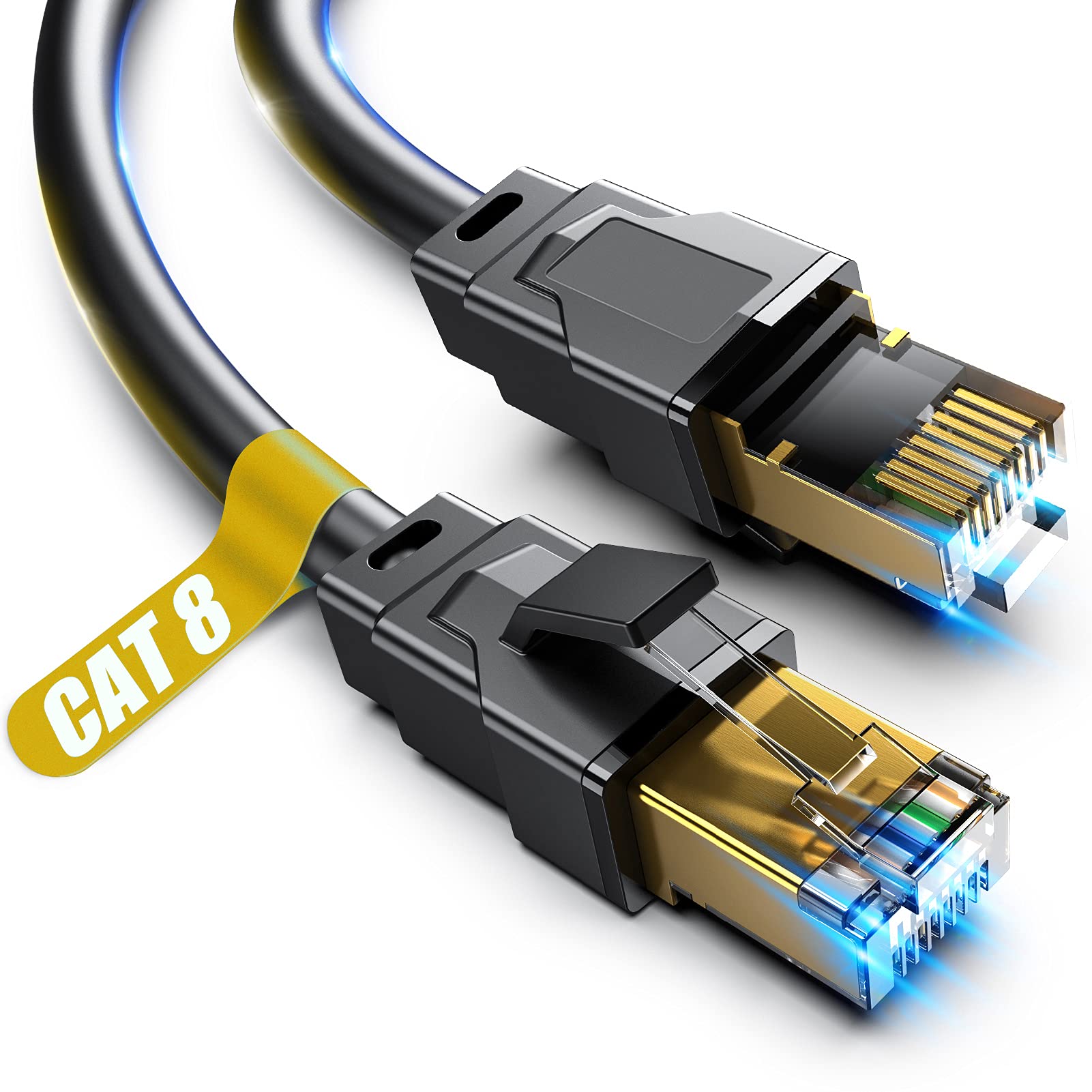
The advancement of remote-controlled surgical robots represents a monumental leap in medical technology, offering unparalleled precision and minimally invasive options for patients. The success of these intricate systems hinges on a flawless communication network connecting the surgeon’s console to the robotic instruments. This network must transmit immense amounts of data—from high-definition video to critical sensor readings—with virtually zero delay. At the core of this digital nervous system is the choice of cabling, a component that dictates the system’s speed, reliability, and ultimate effectiveness. This document details the critical role of Category 8 (CAT8) shielded cables in this demanding application, focusing on how their unique properties enable low-noise data transmission and precise, real-time haptic feedback for the surgeon.
Table of Contents
- What Are the Network Demands of Modern Surgical Robots?
- Why is CAT8 Shielded Cable the Optimal Solution for Robotic Surgery?
- How Does CAT8 Directly Enhance Precision Haptic Feedback?
- Technical Comparison: CAT8 vs. Other Cabling Standards
- Implementation and Best Practices for Cabling in a Medical Environment
What Are the Network Demands of Modern Surgical Robots?
Surgical robotic platforms are profoundly data-intensive systems that function in an environment where every millisecond and every byte of data is critical. The demands placed on their underlying network infrastructure are far beyond those of standard enterprise environments, requiring a unique combination of immense bandwidth, near-instantaneous response, and absolute signal integrity.
These systems generate and consume multiple, concurrent data streams. This includes several 4K or even 8K video feeds from endoscopic cameras, providing the surgeon with a detailed, three-dimensional view of the operating field. Simultaneously, the network must carry control signals from the surgeon’s console to the robotic arms, telemetry from the instruments, and vital patient monitoring data. The aggregate of this information requires a robust pipeline capable of handling multi-gigabit throughput without congestion or packet loss. Any bottleneck can compromise the surgeon’s view or delay a critical command.
In the context of surgery, latency—the delay between a command being issued and its execution—is not just an inconvenience; it is a direct threat to patient safety. The communication between the surgeon’s hands and the robotic instrument must feel instantaneous to allow for intuitive and precise movements. Delays measured in even a few milliseconds can disrupt hand-eye coordination, leading to inaccurate maneuvers. Therefore, the network must support ultra-low latency to ensure that the robot’s actions are a perfect, real-time reflection of the surgeon’s intent.
Furthermore, the modern operating room is a space saturated with potential electronic interference. Electrosurgical units (ESUs), MRI machines, X-ray equipment, and a host of patient monitoring devices all generate significant Electromagnetic Interference (EMI) and Radio Frequency Interference (RFI). This electronic “noise” can easily corrupt unshielded or poorly shielded data signals, introducing errors that could manifest as video artifacts, control lag, or a complete loss of communication. Protecting the integrity of the data stream is non-negotiable.
Why is CAT8 Shielded Cable the Optimal Solution for Robotic Surgery?
Given the extreme requirements for speed, reliability, and noise immunity, CAT8 shielded cable emerges as the definitive connectivity solution for surgical robotics. Its technical specifications are purpose-built for the most demanding, mission-critical environments, directly addressing the core challenges of the operating room.
Unmatched Performance: Bandwidth and Speed
CAT8 is a powerhouse of performance, specified for frequencies up to 2000 MHz (2 GHz) and capable of delivering data rates of up to 40 Gigabits per second (Gbps) over channel lengths of up to 30 meters. This level of performance is more than sufficient for the current generation of surgical robots, and it provides significant headroom to accommodate future advancements. As robotic systems integrate more sensors, higher-resolution imaging, and AI-driven analytics, the demand for bandwidth will only escalate. Investing in a CAT8 infrastructure ensures the facility is prepared for next-generation technology without requiring a costly cabling overhaul.
Superior Noise Immunity through Advanced Shielding
The most significant advantage of CAT8 in a medical setting is its shielding design. The standard construction for CAT8 is S/FTP (Shielded/Foiled Twisted Pair). This involves a foil shield around each individual twisted pair of conductors, which isolates them from internal crosstalk. An overall tinned-copper braid shield then encases all four pairs, providing a robust barrier against external EMI and RFI. This dual-layer shielding is exceptionally effective at rejecting the electronic noise prevalent in operating rooms, ensuring that the data signal remains pure and free from corruption. Cabling solutions, such as those from DLAYCABLE, utilize high-quality S/FTP CAT8 construction with pure copper conductors to guarantee maximum protection against EMI and ensure signal purity.
Ensuring Rock-Solid Connection Reliability
In a surgical procedure, a lost data packet is not an option. The physical construction of a CAT8 cable, combined with high-performance shielded connectors, creates an extremely reliable and robust physical layer. The stringent manufacturing tolerances and quality materials ensure a stable connection that is less susceptible to physical jostling or environmental factors. When properly terminated and tested, a CAT8 channel provides a dependable link that prevents data loss and maintains the constant stream of communication necessary for safe and effective robotic surgery.
How Does CAT8 Directly Enhance Precision Haptic Feedback?
Haptic feedback is the technology that simulates the sense of touch, allowing surgeons to feel the interaction between the robotic instruments and patient tissue. This capability is transformative, restoring the tactile sensations lost in traditional minimally invasive surgery. The quality of this feedback is entirely dependent on the performance of the underlying network cable.
The sensation of touch is not a single data point but a continuous, high-frequency, bi-directional conversation between the instrument sensors and the actuators in the surgeon’s console. The robotic instrument senses pressure, tension, and resistance, translates this information into a digital signal, and sends it to the console. The console’s actuators then replicate this force, allowing the surgeon to “feel” what the robot is doing. This entire round trip must occur in real-time to be effective. CAT8’s ultra-low latency and high bandwidth provide the foundation for this digital sense of touch, ensuring there is no perceptible lag.
The connection between low electronic noise and high-fidelity haptic sensations is direct and critical. EMI and RFI introduce jitter and bit errors into the data stream. In a haptic system, this data corruption translates into inaccurate or delayed force feedback. The surgeon might experience “ghost” sensations, judder, or a delayed response, which completely undermines their confidence and precision. The superior S/FTP shielding of CAT8 cable effectively eliminates this electronic noise, ensuring the data is pristine. This clean signal allows for a perfect, 1:1 translation of physical forces into digital data and back again, resulting in smooth, accurate, and realistic haptic feedback.
Beyond simply transmitting the signal, CAT8’s vast bandwidth allows for more complex and nuanced haptic data. As sensors become more sophisticated, they can capture subtle details like tissue texture and suture tension. Transmitting this rich dataset without compression or delay requires the large pipeline that CAT8 provides. This enables a surgeon to not only feel resistance but to discern the difference between different types of tissue, leading to more delicate and precise surgical maneuvers and improved patient outcomes.
Technical Comparison: CAT8 vs. Other Cabling Standards
To fully appreciate the suitability of CAT8 for surgical robotics, it is useful to compare it against previous generations of copper cabling. While standards like CAT6A and CAT7 are high-performance cables, CAT8 offers distinct advantages that make it the superior choice for this specific application.
| Feature | Category 6A (CAT6A) | Category 7 (CAT7) | Category 8 (CAT8) |
|---|---|---|---|
| Max Frequency | 500 MHz | 600 MHz | 2000 MHz (2 GHz) |
| Max Data Rate | 10 Gbps @ 100m | 10 Gbps @ 100m | 40 Gbps @ 30m |
| Standard Shielding | U/FTP or F/UTP | S/FTP (Required) | S/FTP (Required) |
| Ideal Application | Enterprise LAN, Data Center | Data Center, High-EMI Areas | Data Center (Top-of-Rack), Mission-Critical Links (e.g., Healthcare, Robotics) |
While CAT6A is a capable standard for general 10 Gbps networking, its 500 MHz bandwidth may become a limiting factor for future generations of data-heavy surgical equipment. CAT7, while offering S/FTP shielding, was not officially recognized as a standard by the Telecommunications Industry Association (TIA) and can present compatibility issues. CAT8, on the other hand, is a fully standardized TIA and ISO/IEC solution that provides four times the bandwidth of CAT6A and a 40Gbps data rate. This combination of standardized, future-proof performance and mandatory, high-grade shielding makes it the unequivocal technical choice for new medical installations where performance and reliability are paramount.
Implementation and Best Practices for Cabling in a Medical Environment
Selecting the right cable is only the first step. To unlock the full potential of a CAT8 infrastructure and ensure its long-term reliability in a sensitive medical environment, adherence to strict installation and material standards is crucial.
The Importance of Professional Installation
The performance of high-frequency cabling like CAT8 is highly dependent on the quality of its installation. Installers must be trained to handle the cable properly, respecting its minimum bend radius to avoid damaging the internal structure. Furthermore, proper grounding and bonding of the shield are essential for the EMI/RFI protection to function correctly. Using certified termination tools and techniques with high-quality shielded connectors ensures that the connection points do not become a weak link in the channel.
Material and Construction Quality
Not all cables are created equal. For critical applications, it is vital to specify cables made with 100% pure bare copper conductors. Cheaper alternatives like Copper Clad Aluminum (CCA) have higher resistance, generate more heat, and are more brittle, making them unsuitable and unsafe for high-power, high-performance applications. The cable’s jacket material is also a key consideration. In hospital environments, Low Smoke Zero Halogen (LSZH) jackets are often required as they emit minimal smoke and no toxic halogens when exposed to fire, enhancing facility safety.
Verifying Performance
After installation, the final step is to certify the performance of each cabling channel. This should be done using a network cable analyzer capable of testing to the full TIA CAT8 standard. This testing provides documented proof that the entire link—from the patch panel to the wall outlet—meets the required performance specifications for bandwidth, insertion loss, and crosstalk. This verification process ensures that the network infrastructure can be trusted to support the life-critical applications running over it.