


For the vast majority of home users, gamers, and even most businesses, you do not need a Cat 7 Ethernet cable. While its specifications seem impressive on paper, Cat 7 is not a recognized Ethernet standard by the Telecommunications Industry Association (TIA), the primary standards body in North America. The more widely adopted and officially recognized Cat 6a standard offers the same 10 Gbps speeds with full backward compatibility, standard connectors, and often at a more reasonable price point, making it the superior choice for both current needs and future-proofing.
What Exactly is a Cat 7 Ethernet Cable?
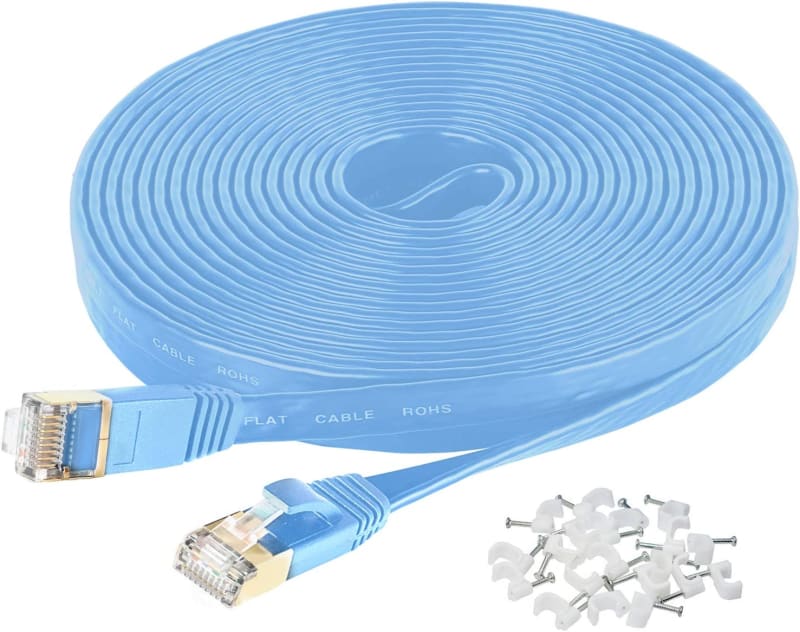
On the surface, Category 7, or Cat 7, cabling sounds like a significant leap forward. It was designed to support extremely high-speed Ethernet with impressive technical specifications. A true Cat 7 cable is specified to handle frequencies up to 600 MHz and is designed for data transfer rates of 10 Gigabits per second (Gbps) over 100 meters of copper cabling. This performance is largely achieved through its construction.
One of the defining features of Cat 7 is its mandatory and extensive shielding. Every Cat 7 cable is an S/FTP cable, which stands for Screened/Foiled Twisted Pair. This means that not only is there an overall braided screen around all four pairs of wires, but each individual twisted pair is also wrapped in its own foil shield. This dual-shielding design makes Cat 7 cables highly resistant to crosstalk and electromagnetic interference (EMI), which can be a significant issue in data centers or industrial environments with a lot of electronic “noise.”
The Core Issue: Why Cat 7 Isn’t Recommended for Ethernet
Despite its robust specifications, Cat 7 has a fundamental flaw that prevents it from being the recommended choice for most networking applications. The problem isn’t with its speed or shielding but with its lack of official recognition and its proprietary nature, which creates significant compatibility and performance issues in typical network setups.
The Standardization Problem: TIA vs. ISO
In the world of network cabling, standards are everything. They ensure that a cable from one manufacturer will work seamlessly with hardware from another. In North America, the dominant standards body for structured cabling is the TIA (Telecommunications Industry Association). The TIA is responsible for the familiar standards like Cat 5e, Cat 6, and Cat 6a.
Crucially, the TIA never recognized Cat 7 as an Ethernet standard. Instead, they developed Cat 6a to meet the 10 Gbps performance target. Cat 7 is actually an ISO/IEC standard (Class F), which is more common in Europe. Because TIA-approved hardware and infrastructure are prevalent in the US and many other parts of the world, installing a cable that doesn’t conform to TIA standards can lead to non-compliance and interoperability headaches.
The Connector Conundrum: Why Your RJ45 Plug Matters
This is perhaps the biggest deal-breaker for Cat 7. The traditional plug you use for Ethernet is called an 8P8C connector, commonly (though somewhat inaccurately) known as an RJ45. This is the standard connector for all TIA-ratified Ethernet categories from Cat 5e to Cat 6a and even Cat 8.
The official ISO standard for Cat 7, however, requires a different, proprietary connector called a GG45 or a TERA connector to achieve its full 600 MHz performance. Since virtually no consumer or prosumer networking equipment (routers, switches, computers) uses these connectors, most “Cat 7” cables sold today are terminated with standard 8P8C (RJ45) plugs. When you do this, the cable is no longer truly Cat 7 compliant and its performance is effectively limited to that of a Cat 6a cable (500 MHz). You are paying a premium for a non-standard cable that, when used with standard equipment, offers no performance benefit over Cat 6a.
Marketing Hype vs. Real-World Performance
Many manufacturers market Cat 7 cables to consumers by leveraging the “bigger number is better” fallacy. They advertise higher frequencies and superior shielding, implying that it will lead to faster internet speeds or lower latency for gaming. In reality, for a home or office network, these advertised benefits are negligible. Your internet speed is determined by your Internet Service Provider (ISP), and the performance of your local network is more than adequately served by a well-made Cat 6 or Cat 6a cable. Paying extra for a non-standard Cat 7 cable provides no tangible performance increase for these applications.
How Does Cat 7 Compare to Other Ethernet Cables? (The Showdown)
To understand why Cat 6a is the recommended choice, it helps to see how the different categories stack up. This table provides a clear comparison of the most common Ethernet cable standards.
| Category | Max Speed | Max Bandwidth | Recommended Use Case |
|---|---|---|---|
| Cat 5e | 1 Gbps | 100 MHz | Basic home/office networking, up to 1 Gigabit internet. |
| Cat 6 | 10 Gbps (up to 55m) | 250 MHz | Excellent for most home networks and small businesses. Handles multi-gig speeds over shorter distances. |
| Cat 6a | 10 Gbps (up to 100m) | 500 MHz | The gold standard. Ideal for future-proofing, 10G networks, and new installations. |
| Cat 7 | 10 Gbps (up to 100m) | 600 MHz | Not TIA recognized. Niche use in high-EMI environments, but Cat 6a Shielded is a better alternative. |
| Cat 8 | 25/40 Gbps (up to 30m) | 2000 MHz | Data centers and server-to-switch connections. Severe overkill for home use. |
The Smarter Choice: Why Cat 6a is the Gold Standard for Most
As the table shows, Cat 6a (Category 6 Augmented) is the clear winner for performance, compatibility, and value. It was specifically designed by the TIA to be the standard for 10 Gbps Ethernet over 100 meters. Here’s why it’s the right choice:
- Fully Standardized: Cat 6a is an official TIA/EIA-568 standard, ensuring maximum compatibility with all standard networking hardware.
- 10 Gbps Performance: It reliably delivers 10 Gbps speeds over the full 100-meter channel length, making it perfect for today’s multi-gig internet plans and tomorrow’s network demands.
- Standard RJ45 Connectors: It uses the same ubiquitous 8P8C (RJ45) connector as all other common Ethernet cables, ensuring plug-and-play simplicity.
- Cost-Effective: It provides all the real-world performance of Cat 7 at a lower cost and without the compatibility issues.
For any new network installation or for anyone looking to upgrade their network for multi-gigabit speeds, Cat 6a is the most logical and reliable choice. It offers the perfect balance of performance to truly future-proof your setup.
Answering Your Specific Questions About Cat 7
Let’s address some of the most common questions users have when considering a Cat 7 cable for specific applications.
Do I need a Cat 7 cable for gaming?
Absolutely not. For online gaming, the most critical network metrics are low latency (ping) and a stable connection, not massive bandwidth. A 25 Mbps connection is more than enough for gaming. The difference in latency between a well-made Cat 5e, Cat 6, Cat 6a, or Cat 7 cable is practically zero. You will see no improvement in your K/D ratio or ping by “upgrading” to Cat 7 from a good Cat 6 or Cat 6a cable. Your focus should be on a stable, wired connection rather than Wi-Fi.
Is Cat 7 good for streaming 4K or 8K video?
Cat 7 is extreme overkill for streaming. Netflix recommends just 15 Mbps for a 4K stream. Even uncompressed 8K video requires less than 1 Gbps. A standard Cat 5e or Cat 6 cable can handle these requirements with ease. Investing in Cat 7 for streaming provides no visual or performance benefit.
What about future-proofing my home network?
This is a valid concern, but Cat 7 is the wrong answer. The true future-proofing cable for residential and commercial use is Cat 6a. It is standardized for 10 Gbps, which will be the high-end residential internet speed for the foreseeable future. By the time networks require speeds beyond 10 Gbps, a new, more suitable standard will likely be in place for home use. Cat 6a hits the sweet spot of being ready for tomorrow without paying for the proprietary drawbacks of Cat 7.
When would someone *actually* use a Cat 7 cable?
The only legitimate (and very niche) use case for Cat 7 cabling is in a fully proprietary, end-to-end Class F installation that uses the proper GG45 connectors. This might be found in specific industrial or AV applications where extreme EMI is a constant problem and the entire system is designed around the ISO/IEC standard from the ground up. For anyone using standard Ethernet networking equipment, there is no practical reason to choose Cat 7.
A Glimpse into the Future: What About Cat 8?
To show how the TIA standards evolve, we have Cat 8. This is the official successor to Cat 6a, but it’s not for you. Cat 8 is designed for mind-boggling speeds of 25 Gbps or even 40 Gbps, but only over a very short distance of 30 meters. Its purpose is exclusively for high-speed connections inside data centers, such as linking servers to switches in the same rack. It’s a specialized, short-distance cable and is not intended or necessary for home or office networking.
The Final Verdict: Stick with the Standards for Reliable Performance
The world of network cabling can be confusing, with marketing often muddying the waters. The case of Cat 7 is a prime example. While it boasts impressive shielding and specifications, its lack of TIA recognition and reliance on proprietary connectors render it a poor choice for virtually all standard Ethernet applications.
For the best combination of performance, compatibility, and value, the choice is clear:
- For new installations or if you’re preparing for multi-gig internet, invest in high-quality, certified Cat 6a cables.
- For existing networks running at 1 Gbps or less, your current Cat 5e or Cat 6 cables are still perfectly capable.
At Dlaycable, we are committed to manufacturing cables that adhere to strict industry standards to guarantee performance and reliability. By choosing a certified cable like Cat 6a, you ensure your network is robust, fast, and ready for whatever the future holds. Explore our range of certified LAN cables to find the perfect, standards-compliant solution for your network needs.