


Deciding between Cat6 and Cat8 Ethernet cables comes down to your specific needs; for nearly all home and office applications, a Cat6 or Cat6a cable is the ideal choice, offering ample speed and bandwidth for streaming, gaming, and general web use at a great value. Cat8 is a highly specialized cable designed exclusively for short-distance, high-bandwidth connections within data centers and is considered significant overkill for residential or typical commercial environments.
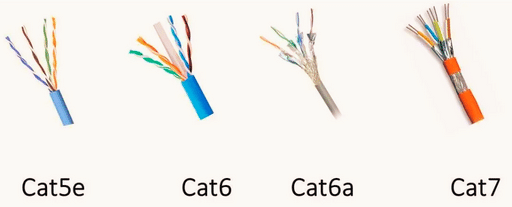
In the world of network infrastructure, choosing the right cabling is the foundation of a reliable and fast connection. As technology evolves, so do the standards for the cables that carry our data. Two categories that often come up in discussions about performance are Category 6 (and its successor, Cat6a) and the powerhouse Category 8. While it might seem intuitive to just pick the highest number for the “best” performance, the reality is far more nuanced.
Making the wrong choice can mean overspending on capabilities you’ll never use or, conversely, creating a bottleneck that hinders your network’s potential. At D-Lay Cable, we specialize in manufacturing high-quality, standards-compliant network cables, and our goal is to empower you with the knowledge to make an informed decision. This comprehensive guide will break down the differences, explain the ideal use cases, and help you determine whether Cat6, Cat6a, or Cat8 is the right fit for your mission.
Table of Contents
- Understanding the Basics: What Are Ethernet Cable Categories?
- Cat6 and Cat6a: The Versatile Standard for Today’s Networks
- Cat8: The Powerhouse for Data Centers
- Head-to-Head Comparison: Cat6 vs. Cat6a vs. Cat8 at a Glance
- Making the Right Choice: Which Cable Do You Really Need?
- Common Myths and Misconceptions Debunked
- The D-Lay Cable Commitment: Quality That Matters
- Conclusion: Match the Cable to the Mission
Understanding the Basics: What Are Ethernet Cable Categories?
Before diving into a direct comparison, it’s essential to understand what the “Cat” in “Cat6” means. The term “Category” refers to a series of performance standards set by organizations like the Telecommunications Industry Association (TIA) and the International Organization for Standardization (ISO). Each higher category represents a significant step up in potential data transmission speed (data rate) and the frequency bandwidth it can handle. Higher bandwidth allows for more data to be transmitted simultaneously and reduces issues like *crosstalk*—the unwanted interference between adjacent wire pairs. As a manufacturer, D-Lay Cable adheres strictly to these TIA/EIA standards to ensure our cables perform exactly as specified, providing a stable and reliable network backbone.
Cat6 and Cat6a: The Versatile Standard for Today’s Networks
For the vast majority of networking needs today, the conversation begins and ends with Category 6 and its enhanced version, Category 6a. These cables represent the sweet spot of performance, value, and practicality for a huge range of applications.
What is Cat6 Cable?
Category 6 (Cat6) was a major leap forward from its predecessor, Cat5e. It’s designed with stricter specifications to handle higher speeds and reduce system noise.
- Data Rate: Supports 1 Gbps (Gigabit per second) up to a maximum length of 100 meters (328 feet). It can even support 10 Gbps speeds over shorter distances, typically up to 55 meters (180 feet), though environmental factors can affect this.
- Bandwidth: Operates at a frequency of 250 MHz. This increased bandwidth, compared to Cat5e’s 100 MHz, provides more headroom for data, resulting in a more stable connection, especially in data-heavy environments.
Cat6 is an excellent and cost-effective choice for modern homes and small offices where the primary network speed is 1 Gbps. It easily handles 4K video streaming, online gaming, large file transfers, and connecting multiple devices without breaking a sweat.
What is Cat6a Cable? The ‘a’ is for Augmented
Category 6a (Cat6a) is the “augmented” version of Cat6. It was specifically developed to reliably support the demanding speeds of 10-Gigabit Ethernet over the full distance of a standard network channel.
- Data Rate: Comfortably supports 10 Gbps up to the full maximum length of 100 meters (328 feet).
- Bandwidth: Operates at double the frequency of Cat6, at 500 MHz. This significant increase in bandwidth drastically improves its ability to mitigate crosstalk, particularly alien crosstalk (interference from neighboring cables), making it the superior choice for dense cabling environments.
Cat6a is the recommended standard for new installations and for those looking to future-proof their network. If you’re building a new home, wiring an office, or planning to upgrade your network hardware to support 10 Gbps speeds, investing in D-Lay Cable’s premium Cat6a cables is the most practical and forward-thinking decision.
When Should You Use Cat6 or Cat6a?
Choose Cat6 or Cat6a for virtually any standard networking application outside of a dedicated data center. This includes:
- Home Networks: Perfect for connecting routers, computers, smart TVs, and gaming consoles.
- Office LANs: Ideal for wiring workstations, VoIP phones, printers, and access points.
- Gaming and Streaming: Provides a stable, low-latency connection essential for competitive gaming and buffer-free 4K/8K streaming.
- Power over Ethernet (PoE): Excellently suited for connecting devices like security cameras, wireless access points, and smart lighting that receive power and data through the same cable.
Cat8: The Powerhouse for Data Centers
Category 8 (Cat8) ethernet cable represents the cutting edge of copper cabling technology. However, its power comes with very specific limitations and use cases, making it unsuitable for general use.
What is Cat8 Cable?
Cat8 is a different class of cable altogether, designed for the next generation of data center networking. Its specifications are staggering, but they come with a crucial trade-off: distance.
- Data Rate: Supports blistering speeds of 25 Gbps (25GBASE-T) and even 40 Gbps (40GBASE-T).
- Bandwidth: Operates at an incredibly high frequency of 2000 MHz (2 GHz), four times that of Cat6a.
- Maximum Distance: This performance is only achievable over a very short channel length of 30 meters (98 feet).
This short distance limitation is the primary reason why Cat8 is not intended for standard horizontal wiring in offices or homes, where cable runs frequently exceed 30 meters.
Key Features of Cat8 Cables
Beyond the monstrous speed, Cat8 cables have distinct physical characteristics. They are always shielded, typically with a Screened/Foiled Twisted Pair (S/FTP) construction. This means each individual pair of wires is wrapped in foil, and a high-coverage braided screen surrounds all four pairs. This robust shielding is necessary to manage the internal and external interference at 2000 MHz frequencies. This also makes our high-performance Cat8 cables thicker, less flexible, and more expensive than their Cat6 counterparts.
Where is Cat8 Cable Actually Used?
The sole purpose of Cat8 is to provide high-speed copper connections within a data center. Its primary application is for short-distance “end-of-row” or “top-of-rack” connections, linking servers to switches or interconnecting switches within the same rack. In this environment, where distances are short and predictable, Cat8 offers a cost-effective copper alternative to more expensive fiber optic transceivers for 25G/40G links.
Head-to-Head Comparison: Cat6 vs. Cat6a vs. Cat8 at a Glance
To simplify the decision, here is a direct comparison of the key specifications and features of each cable category.
| Feature | Cat6 | Cat6a | Cat8 |
|---|---|---|---|
| Max Data Rate | 1 Gbps @ 100m 10 Gbps @ 55m |
10 Gbps @ 100m | 40 Gbps @ 30m |
| Max Bandwidth | 250 MHz | 500 MHz | 2000 MHz |
| Max Distance | 100 meters (328 ft) | 100 meters (328 ft) | 30 meters (98 ft) |
| Shielding | UTP (Unshielded) or STP (Shielded) | UTP or STP (Shielded recommended) | S/FTP (Always Shielded) |
| Typical Application | Home & Small Office LAN | Home, Office & Commercial LAN (Future-Proofing) | Data Centers (Switch-to-Server) |
| Relative Cost | $ | $$ | $$$$ |
Making the Right Choice: Which Cable Do You Really Need?
With the technical details covered, let’s translate this into a practical recommendation based on your specific situation. Your choice should be guided by your application, not just by the highest number on the box.
For Home Users (Gamers, Streamers, Remote Workers)
The verdict is clear: Cat6a is your best choice. It provides more than enough performance for today’s multi-gig internet plans and is fully prepared for the 10 Gbps networks of tomorrow. It delivers the low latency gamers need and the high throughput required for flawless 4K/8K streaming and fast downloads. A standard Cat6 cable is also an excellent, budget-friendly option if your internet plan and devices are all 1 Gbps or less. There is absolutely no practical benefit to using a Cat8 cable in a home network; your other hardware (modem, router, network card) would be the bottleneck long before the cable is.
For Small to Medium Businesses (SMBs)
For any new office builds or major network upgrades, Cat6a is the minimum standard you should install. It ensures your infrastructure can support 10GBASE-T connectivity to workstations, servers, and high-performance wireless access points. This prevents the need for a costly re-cabling project in a few years. For existing 1 Gbps office networks that are performing well, Cat6 remains a perfectly viable solution. Cat8 has no role in the horizontal LAN wiring of a typical office.
For Data Centers and Enterprise Networks
This is the exclusive domain of Cat8. Network architects and IT professionals should specify Cat8 for short-length interconnects between servers and switches that operate at 25 Gbps or 40 Gbps. It serves as a copper-based solution within racks where high-speed, point-to-point connections are critical. For longer runs between racks or across the data center floor, fiber optic cabling remains the industry standard.
Common Myths and Misconceptions Debunked
The marketing around high-category cables has led to some common misunderstandings. Let’s clear them up.
Myth: “Cat8 will make my home internet faster.”
Fact: Your internet speed is determined by the plan you purchase from your Internet Service Provider (ISP) and the capabilities of your modem and router. Using a Cat8 cable on a 1 Gbps internet plan will not make it faster than using a quality Cat6 or Cat6a cable. The cable’s job is to reliably carry the signal it’s given. As long as the cable’s capacity exceeds your internet speed, it is not the limiting factor.
Myth: “I need Cat8 for the best gaming experience.”
Fact: For online gaming, the most critical metric is latency (or “ping”), which is the time it takes for data to travel to the game server and back. Bandwidth is less important; most games use a surprisingly small amount. A stable, low-latency connection is key. Both Cat6 and Cat6a provide exceptionally low latency and more than enough bandwidth for any gaming application. The extra capabilities of Cat8 provide zero advantage for gaming and are not worth the significant extra cost.
The D-Lay Cable Commitment: Quality That Matters
Regardless of which category you choose, the quality of the cable itself is paramount. At D-Lay Cable, we stand behind the integrity of our products. All our Ethernet cables, from Cat6 to Cat8, are constructed using 100% pure bare copper conductors, not inferior Copper Clad Aluminum (CCA). Pure copper provides superior conductivity, durability, and compliance with PoE standards. Our cables are rigorously tested to meet or exceed TIA performance specifications, ensuring you get the speed and reliability you’re paying for. Choosing a certified, well-made cable from a trusted supplier is the most important decision you can make.
Conclusion: Match the Cable to the Mission
Choosing the right Ethernet cable doesn’t have to be complicated. The answer to “Which do I need, Cat6 or Cat8?” is a question of application.
- For homes and offices, now and in the foreseeable future, Cat6a is the intelligent choice for performance and future-proofing, while Cat6 remains an excellent choice for current gigabit needs.
- For data center professionals designing high-speed, short-distance infrastructure, Cat8 is the new copper standard for 25G/40G links.
By understanding the distinct roles these cables play, you can invest wisely, building a network that is both powerful and cost-effective. Your network is only as strong as its weakest link, so start with a solid foundation built on the right cabling for the job.