


In a world dominated by wireless signals, it’s easy to forget the reliable workhorse of network connectivity: the Ethernet cable. But when you need stable, high-speed internet for gaming, streaming 4K video, or critical work tasks, a wired connection is unbeatable. One of the most common cables you’ll encounter is Cat5e. But just how fast is it, and is it still a good choice today?
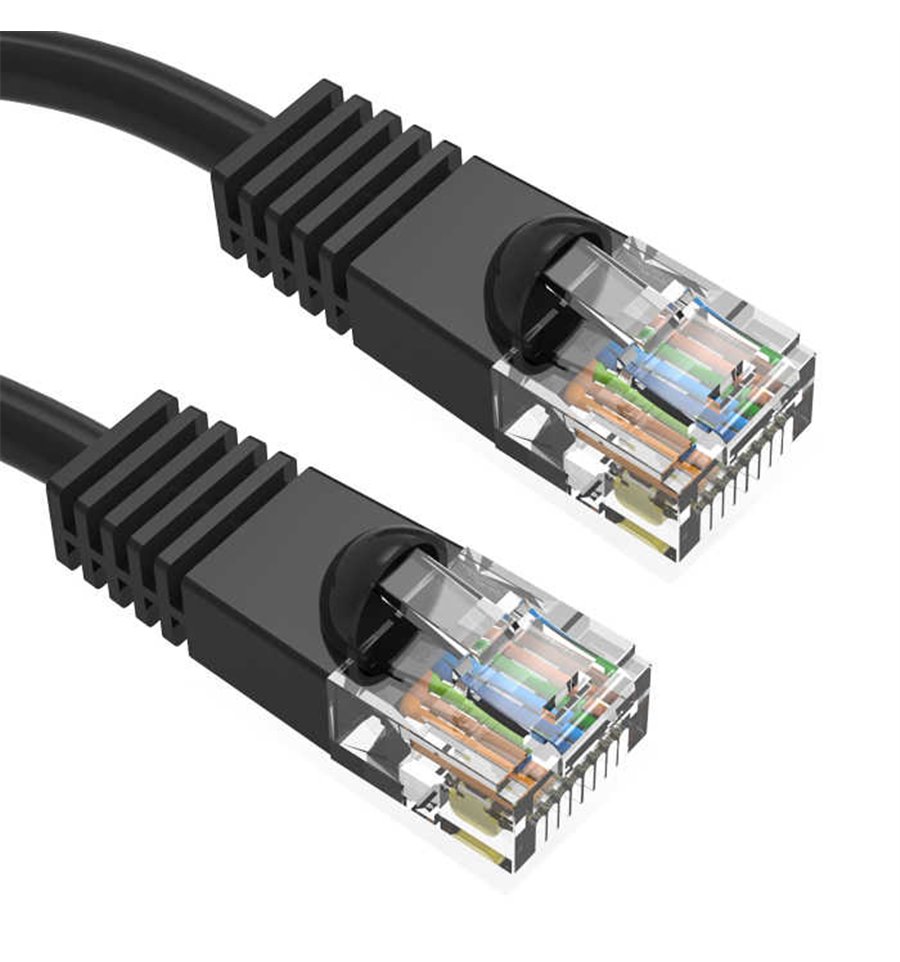
At DlayCable, we’re not just sellers; we are experts in connectivity. We live and breathe cable standards to ensure you get the performance you pay for. Let’s break down the real-world speed and capabilities of Cat5e.
The Straight Answer: Cat5e Speed & Specifications
Category 5e (Enhanced) Ethernet cable is officially rated for the 1000BASE-T or Gigabit Ethernet standard. Here’s what that means in practical terms:
- Speed: Up to 1 Gigabit per second (Gbps), or 1,000 Megabits per second (Mbps).
- Bandwidth: Up to 100 MHz. Think of this as the “highway” for data; a wider highway can handle more traffic at once.
- Maximum Length: 100 meters (328 feet). Beyond this distance, you risk signal degradation and a significant drop in speed and reliability.
For most homes and small offices, a 1 Gbps connection is more than enough to handle multiple high-demand tasks simultaneously without breaking a sweat.
Cat5e vs. Cat6 vs. Cat6a: A Quick Comparison
Understanding how Cat5e stacks up against its successors is key to making the right choice. While they may look similar, their internal construction and performance capabilities differ significantly.
| Feature | Cat5e | Cat6 | Cat6a |
|---|---|---|---|
| Max Speed (at 100m) | 1 Gbps | 1 Gbps | 10 Gbps |
| Max Speed (at <55m) | 1 Gbps | 10 Gbps | 10 Gbps |
| Bandwidth | 100 MHz | 250 MHz | 500 MHz |
| Best For | Home & Small Office Gigabit Networks | Future-Proofing & Reduced Crosstalk | Data Centers & 10G Networks |
The takeaway: Cat5e is the king of cost-effective Gigabit performance. Cat6 offers better resistance to interference (crosstalk) and can handle 10 Gbps speeds at shorter distances, making it a great future-proofing option. Cat6a is the standard for running a full 10 Gbps network over the maximum 100-meter distance.
Is Cat5e Still Good Enough for Your Needs?
For the vast majority of users, the answer is a resounding yes. Let’s look at common scenarios:
For Home Use (Streaming & Browsing)
A 4K Netflix stream requires about 25 Mbps. A 1 Gbps Cat5e cable can theoretically handle 40 of these streams at once. For web browsing, video calls, and smart home devices, Cat5e provides more than enough speed.
For Online Gaming
Gaming relies more on low latency (ping) than raw speed. A stable, wired Cat5e connection will deliver a much more reliable and low-latency experience than even the best Wi-Fi. 1 Gbps is ample bandwidth for any online game.
For Small to Medium Offices
In a typical office environment where tasks include file sharing, cloud applications, and VoIP phones, a Cat5e infrastructure provides a reliable and budget-friendly backbone for a Gigabit network.
Beyond the Spec Sheet: Factors That Impact Real-World Speed
A cable’s rating is a promise, but achieving that promise depends on several factors. As industry professionals, we know that a network is only as strong as its weakest link.
1. Cable Quality: Pure Copper vs. CCA
This is the single most important factor. DlayCable exclusively uses 100% pure solid copper conductors. Cheaper cables often use Copper-Clad Aluminum (CCA), which is aluminum coated in a thin layer of copper. CCA cables suffer from higher signal loss, are more prone to breaking, and are not compliant with TIA standards for Ethernet. They are a false economy that will compromise your network’s speed and reliability.
2. Your Network Hardware
Your Cat5e cable can’t make your network faster than your other equipment allows. To get 1 Gbps speeds, your router, network switch, and the network card (NIC) in your computer must all be Gigabit-capable.
3. Installation and Interference
Ethernet cables are susceptible to electromagnetic interference (EMI) from sources like power lines, fluorescent lights, and large motors. Proper installation, avoiding tight kinks, and not exceeding the 100-meter length limit are crucial for maintaining signal integrity and speed.
Why Quality Matters: The DlayCable Advantage
When you’re building a network, every component counts. Choosing a high-quality Cat5e cable from a trusted source like DlayCable is an investment in performance and peace of mind.
Our commitment is to provide professionally-graded products that meet and exceed industry standards. With our pure copper Cat5e cables, you are guaranteed a foundation for a fast, stable, and reliable network that performs as advertised. Don’t let a low-quality cable be the bottleneck in your system.
Frequently Asked Questions (FAQ)
Can Cat5e handle 5 Gbps speeds?
While the official standard for Cat5e is 1 Gbps, some modern network hardware supports NBASE-T technology, which can push speeds of 2.5 Gbps or even 5 Gbps over existing Cat5e infrastructure, especially at shorter distances. However, this is not guaranteed and depends entirely on your specific hardware.
Is Cat5e good for Power over Ethernet (PoE)?
Yes, Cat5e is perfectly suitable for PoE applications like powering IP cameras, VoIP phones, and wireless access points. The superior conductivity and heat dissipation of pure copper cables (like those from DlayCable) make them a safer and more efficient choice for PoE than CCA cables.
Should I buy Cat5e or Cat6 for a new installation?
If your budget allows, Cat6 is a wise choice for new installations. It offers better performance and future-proofs your network for potential upgrades beyond 1 Gbps. However, if your needs are firmly within the 1 Gbps range and budget is a primary concern, Cat5e remains an excellent, high-performing option.