


In the world of networking, acronyms and numbers can be overwhelming. You know you need a fast, reliable internet connection, but what does that really mean when it comes to the cables connecting your devices? One of the most common and powerful standards today is Cat6, but a simple question often comes up: just how fast is it?
As experts in high-performance network infrastructure at DlayCable, we’re here to cut through the noise. dlaycable will not only give you the straightforward answer but also explain what those speeds mean for you and how to ensure you’re getting the best possible performance from your network.
Article Contents
- The Straight Answer: Cat6 Speeds and Distances
- Beyond Megabits: Understanding Bandwidth vs. Speed
- Cat6 Speed in the Real World: What Can It Handle?
- The Critical Comparison: Cat6 vs. Cat5e and Cat6a
- Warning: Not All Cat6 Cables Are Created Equal
- Is Cat6 the Right Choice For Your Network?
- Conclusion: Building a Foundation for Speed with DlayCable
The Straight Answer: Cat6 Speeds and Distances
Let’s get right to the point. The performance of a Category 6 (Cat6) cable is defined by two key scenarios:
- 1 Gigabit per second (Gbps): Cat6 can reliably deliver 1 Gbps speeds over a distance of up to 100 meters (328 feet). This is the most common standard and is more than enough for most home and office applications.
- 10 Gigabits per second (Gbps): Cat6 is also capable of achieving blazing-fast 10 Gbps speeds, but only over shorter distances—typically up to 55 meters (180 feet).
This dual-capability makes Cat6 a versatile and cost-effective choice. It comfortably handles today’s gigabit internet plans while offering a pathway to 10-gigabit networking for high-demand devices or future upgrades within a limited area.
Beyond Megabits: Understanding Bandwidth vs. Speed
While we often talk about speed (data rate), the technical specification that truly sets cable categories apart is bandwidth, measured in Megahertz (MHz). Think of it like a highway:
- Speed (Gbps) is the speed limit of the cars on the highway.
- Bandwidth (MHz) is the number of lanes on the highway.
Cat6 cable has a bandwidth of 250 MHz. This is more than double the 100 MHz bandwidth of its predecessor, Cat5e. This wider “highway” allows more data to travel simultaneously, reducing congestion and ensuring a more stable, reliable connection, especially when multiple devices are active.
Cat6 Speed in the Real World: What Can It Handle?
Technical specifications are great, but what does 1 Gbps or 10 Gbps actually mean for your daily activities? A robust Cat6 network foundation can effortlessly support:
- 4K/8K Ultra-HD Streaming: Stream the highest quality content on multiple devices without buffering.
- Competitive Online Gaming: Enjoy low latency (ping) and a lag-free experience, giving you a competitive edge.
- Large File Transfers: Move massive video files, backups, and project data across your local network in seconds, not minutes.
- Busy Office Environments: Support dozens of computers, VoIP phones, printers, and servers simultaneously without network slowdowns.
- Smart Home Devices: Provide a stable backbone for dozens of IoT devices, security cameras, and smart assistants.
The Critical Comparison: Cat6 vs. Cat5e and Cat6a
Choosing the right cable often comes down to comparing your options. Here’s how Cat6 stacks up against its closest relatives.
| Feature | Cat5e | Cat6 | Cat6a |
|---|---|---|---|
| Max Speed | 1 Gbps | 10 Gbps (up to 55m) | 10 Gbps (up to 100m) |
| Bandwidth | 100 MHz | 250 MHz | 500 MHz |
| Best For | Basic home/office use, budget-conscious installations. | Excellent all-rounder for modern homes and SMBs. | Future-proofing, data centers, high-interference areas. |
- Cat6 vs. Cat5e: Cat6 is a clear upgrade. Its higher bandwidth and stricter construction standards (tighter twists, often a spline to separate pairs) mean better resistance to crosstalk and a more reliable signal. For any new installation, Cat6 is the recommended minimum.
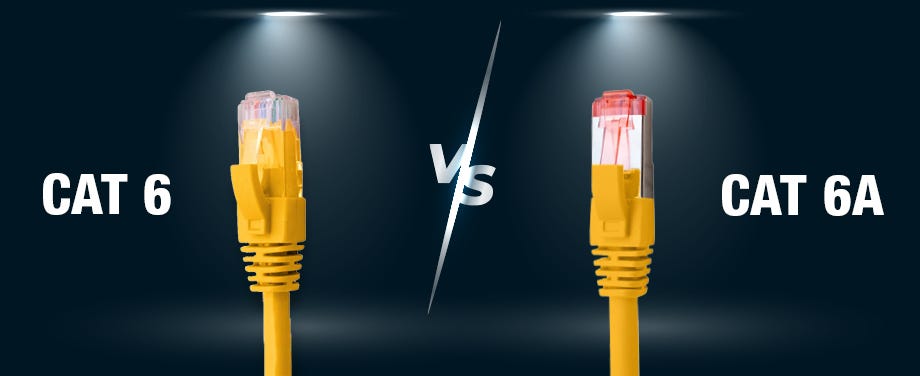
- Cat6 vs. Cat6a: The “a” stands for “augmented.” Cat6a is designed to handle 10 Gbps over the full 100 meters. It’s thicker, better shielded, and more expensive. Cat6a is ideal for data centers or installations that require full 10 Gbps speeds over long distances. For most homes and offices, Cat6 provides the perfect balance of performance and cost.
Warning: Not All Cat6 Cables Are Created Equal
Here’s a critical point that is often overlooked: the speed of your network is only as strong as its weakest link. The “Cat6” label is meaningless if the cable itself is of poor quality. At DlayCable, we know that the materials and construction are what truly deliver performance.
Pure Copper vs. CCA (Copper Clad Aluminum)
This is the single most important factor. Always choose cables with 100% solid bare copper conductors. Cheaper alternatives use Copper Clad Aluminum (CCA), where an aluminum core is thinly coated in copper. CCA cables suffer from:
- Higher Resistance: Leads to more data loss, slower speeds, and failure over longer distances.
- Risk of Breaking: Aluminum is brittle and can easily break during installation.
- Safety Hazard: It generates more heat, posing a fire risk, especially with Power over Ethernet (PoE) applications.
- Non-Compliance: CCA cables do not meet TIA/EIA industry standards for Cat6 performance.
All DlayCable Ethernet cables are made from 100% pure bare copper to guarantee performance and safety.
Shielding (UTP vs. STP/FTP)
Cat6 cables come in Unshielded Twisted Pair (UTP) and Shielded/Foiled Twisted Pair (STP/FTP) varieties. UTP is perfect for most home and office environments. However, if you are running cables near high-power electrical lines, motors, or fluorescent lights, a shielded cable is essential to protect against electromagnetic interference (EMI) that can corrupt data and slow your network.
Is Cat6 the Right Choice For Your Network?
So, should you choose Cat6? Here’s a quick guide:
- For a New Home or Office Installation: Absolutely. Cat6 is the new standard. It provides excellent performance for today’s needs and a degree of future-proofing at a reasonable price point.
- For Gamers, Streamers, and Content Creators: Yes. A wired Cat6 connection will provide the stable, low-latency connection you need for a smooth, uninterrupted experience.
- For Upgrading an Old Cat5/Cat5e Network: Highly recommended. If your network feels sluggish despite having a fast internet plan, old cabling could be the bottleneck. Upgrading to a quality Cat6 infrastructure can unlock the full speed you’re paying for.
Conclusion: Building a Foundation for Speed with DlayCable
Cat6 cable is impressively fast, offering a robust 1 Gbps over standard distances and a powerful 10 Gbps path for shorter, high-demand connections. Its 250 MHz bandwidth makes it a reliable workhorse for everything from 4K streaming to busy office environments.
However, achieving this speed isn’t just about the category—it’s about quality. The true performance of your network relies on using professionally built components, from 100% pure copper Cat6 cables to high-grade keystone jacks and patch panels. By investing in a quality infrastructure from a trusted partner like DlayCable, you’re not just buying cables; you’re building a fast, reliable, and future-ready foundation for all your digital needs.