


Cat6 Ethernet cable is an excellent choice for the vast majority of modern home and office networks, providing a perfect balance of high performance, affordability, and future-proofing. It is fully capable of supporting Gigabit internet speeds (1 Gbps) over long distances and can even handle 10 Gbps speeds over shorter runs, making it ideal for demanding tasks like 4K streaming, competitive online gaming, and large file transfers. For anyone setting up a new network or upgrading from older standards like Cat5e, Cat6 is the definitive gold standard for reliable, high-speed wired connections.
In a world dominated by Wi-Fi, the humble Ethernet cable often gets overlooked. Yet, for a stable, fast, and secure internet connection, nothing beats a direct wired link. Among the various types of cables, the Category 6, or Cat6, cable has emerged as the go-to standard for users who demand superior performance without breaking the bank. But how good is it really, and is it the right choice for your setup? This comprehensive guide will break down everything you need to know about Cat6, from its technical specifications to real-world applications and how it stacks up against the competition.
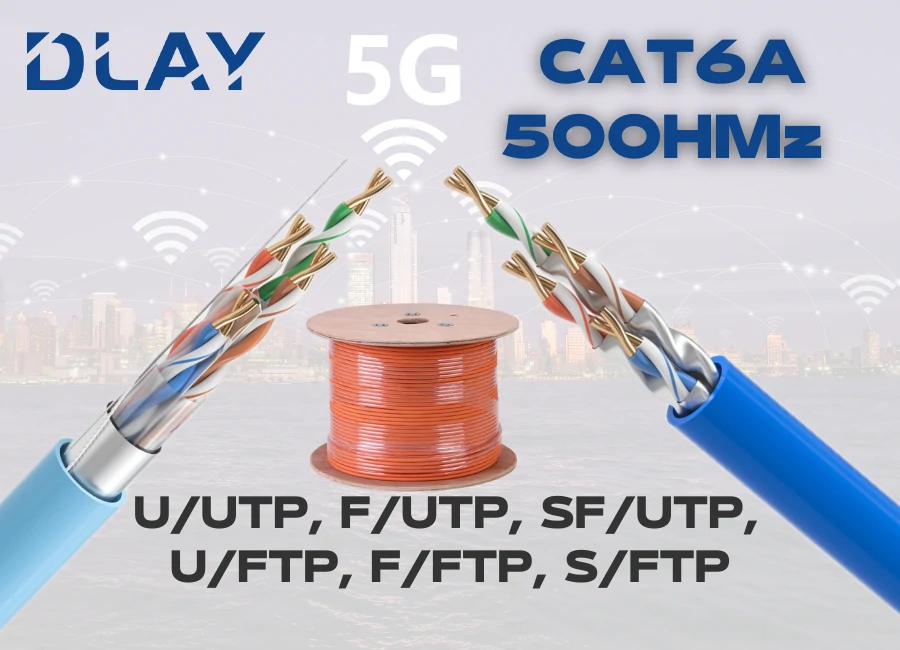
Table of Contents
- What is a Cat6 Ethernet Cable? A Technical Breakdown
- The Ultimate Showdown: Cat6 vs. Cat5e
- Is Cat6 Fast Enough for Your Needs? Real-World Applications
- Looking Ahead: How Does Cat6 Compare to Cat6a, Cat7, and Cat8?
- Practical Guide to Choosing and Using Cat6 Cables
- Frequently Asked Questions (FAQ) about Cat6 Cables
- The Final Verdict: Is Cat6 the Right Ethernet Cable for You?
What is a Cat6 Ethernet Cable? A Technical Breakdown
At its core, a Category 6 (Cat6) Ethernet cable is a standardized twisted pair cable used for Ethernet and other network physical layers. It is backward compatible with the previous standards like Cat5 and Cat5e. However, it was designed with significantly more stringent specifications to deliver higher performance, particularly in reducing signal interference and enabling faster data transmission speeds. It represents a major leap forward from its predecessors, establishing a new baseline for modern networking.
Understanding Speed vs. Bandwidth
To truly appreciate what makes Cat6 so good, it’s crucial to understand two key terms: speed and bandwidth. Speed, measured in gigabits per second (Gbps), is how fast data can travel through the cable. Bandwidth, measured in megahertz (MHz), is the capacity of the cable—think of it as the number of lanes on a highway. More lanes mean more data can be sent simultaneously without causing congestion.
A Cat6 cable boasts a bandwidth of 250 MHz, more than double the 100 MHz of Cat5e. This increased bandwidth allows it to reliably support data transfer speeds of 1 Gbps (Gigabit Ethernet) up to a maximum length of 100 meters (328 feet). Even more impressively, Cat6 can support super-fast 10 Gbps speeds over shorter distances, typically up to 55 meters (180 feet), making it a versatile and powerful option for a wide range of network setups.
The Physical Difference: Tighter Twists and Splines
The superior performance of Cat6 isn’t magic; it’s a result of better engineering. Compared to Cat5e, the copper wires inside a Cat6 cable are twisted more tightly. This design choice is fundamental to reducing signal interference from external sources (like power lines) and from within the cable itself. This interference is known as crosstalk.
Furthermore, many Cat6 cables include a physical separator, called a spline, which is a plastic cross that runs down the center of the cable, isolating each of the four twisted pairs of wires from one another. This physical separation is a key feature that dramatically reduces near-end crosstalk (NEXT) and alien crosstalk (AXT), resulting in a cleaner, more stable, and more reliable signal. This robust construction ensures that you get the consistent performance you pay for from your internet service provider.
The Ultimate Showdown: Cat6 vs. Cat5e
For many years, Cat5e was the undisputed king of home networking. It was cheap, widely available, and capable of handling the 1 Gbps speeds that were becoming common. However, as internet speeds have increased and our reliance on data-heavy applications has grown, the advantages of Cat6 have become impossible to ignore.
Performance Metrics: Speed and Bandwidth Compared
The most significant difference between the two lies in their bandwidth capacity. While both Cat5e and Cat6 can handle speeds of 1 Gbps, Cat6’s 250 MHz bandwidth provides significantly more headroom. This means that on a busy network with multiple devices streaming, gaming, and downloading simultaneously, a Cat6 cable is less likely to become a bottleneck. The data packets have more “lanes” to travel on, reducing latency and ensuring smoother performance for all connected devices.
| Feature | Cat5e | Cat6 |
|---|---|---|
| Max Speed (at 100m) | 1 Gbps | 1 Gbps |
| Max Speed (at <55m) | 1 Gbps | 10 Gbps |
| Bandwidth | 100 MHz | 250 MHz |
| Crosstalk Reduction | Standard | Superior (tighter twists, spline) |
Crosstalk Reduction: Why Cat6 Offers a More Stable Connection
As mentioned earlier, the superior construction of Cat6 cables provides a tangible benefit in signal stability. Crosstalk can lead to data errors, forcing your devices to re-transmit information, which in turn increases latency (ping) and can cause stuttering or buffering. This is particularly noticeable in activities that require a real-time, uninterrupted data flow, such as online gaming or video conferencing.
Because Cat6 is built to stricter standards to minimize this interference, it delivers a more robust and error-free connection. This stability is a key reason why it is often recommended for any application where a consistent, low-latency connection is critical. It’s not just about raw speed; it’s about the quality and reliability of that speed.
The Verdict: Is Upgrading from Cat5e to Cat6 Worth It?
The answer depends on your situation. If you are running new cables for a new network or home renovation, you should absolutely use Cat6. The cost difference is now minimal, and it provides significant future-proofing. For existing setups, if you have an internet plan of 1 Gbps or higher, or if you frequently transfer large files between devices on your local network, upgrading your main connections (e.g., from your router to your primary computer or gaming console) to Cat6 can provide a noticeable improvement in stability and performance. If your internet speed is below 500 Mbps and you don’t experience any issues, your existing Cat5e cables are likely sufficient for now.
Is Cat6 Fast Enough for Your Needs? Real-World Applications
Technical specifications are one thing, but how does a Cat6 cable perform in the real world? The answer is exceptionally well. For virtually all consumer and prosumer applications, Cat6 is not just fast enough—it’s the ideal choice.
For High-Speed Internet and Gaming
For competitive online gamers, latency is the enemy. A wired connection is always preferred over Wi-Fi, and a Cat6 cable is the perfect tool for the job. Its ability to maintain a stable, low-latency connection by minimizing crosstalk and data errors ensures that your in-game actions are registered as quickly as possible. If you have a gigabit internet plan, a Cat6 cable will ensure you get every megabit you’re paying for, providing faster game downloads and a lag-free experience.
For 4K/8K Streaming and Media Servers
Streaming high-bitrate 4K, and increasingly 8K, content requires a tremendous amount of bandwidth. While modern Wi-Fi can handle this, it’s susceptible to interference and congestion. A Cat6 cable provides a dedicated, high-capacity pipeline directly to your smart TV, streaming device, or media server. This eliminates buffering and ensures you’re getting the best possible picture and sound quality without interruption, even if other people in the house are using the internet heavily.
For the Modern Home Office and Large File Transfers
In a work-from-home environment, a reliable connection is non-negotiable. Cat6 ensures that your video conference calls are crystal clear and your connection to your company’s VPN is stable. For professionals like video editors, graphic designers, or software developers who frequently transfer large files to and from a local network-attached storage (NAS) device, Cat6’s high bandwidth and potential for 10 Gbps speeds over shorter distances can dramatically reduce waiting times and boost productivity.
Looking Ahead: How Does Cat6 Compare to Cat6a, Cat7, and Cat8?
Technology never stands still, and several newer Ethernet standards have emerged since Cat6. While they offer higher performance, they also come with increased costs and are often overkill for typical home use.
Cat6a: The 10 Gbps Champion
Category 6a (the ‘a’ stands for augmented) is an enhanced version of Cat6. Its primary advantage is that it can support 10 Gbps speeds over the full 100-meter distance, unlike the ~55-meter limit of standard Cat6. It achieves this with even better shielding and a higher bandwidth of 500 MHz. For home users, Cat6a is a solid choice for future-proofing, but for now, few home networks can actually take advantage of its 10 Gbps capability. It’s most useful in business environments or for prosumers connecting a high-speed server or NAS.
Cat7 and Cat8: For Data Centers, Not Your Living Room
Category 7 (Cat7) and Category 8 (Cat8) are high-performance cables designed primarily for data centers and enterprise-level networking. Cat7 offers 600 MHz of bandwidth and requires proprietary connectors, making it less practical for residential use. Cat8 is an absolute beast, supporting speeds of 25 Gbps or even 40 Gbps over short distances, with a massive bandwidth of 2000 MHz. These cables are significantly more expensive, more rigid, and offer no practical benefit for a home user over Cat6 or Cat6a.
A Practical Comparison Table
| Specification | Cat6 | Cat6a | Cat7 | Cat8 |
|---|---|---|---|---|
| Max Speed | 10 Gbps (~55m) | 10 Gbps (100m) | 10 Gbps (100m) | 40 Gbps (~30m) |
| Bandwidth | 250 MHz | 500 MHz | 600 MHz | 2000 MHz |
| Best Use Case | Home & Small Business | Future-Proofing, Prosumer | Data Center / Enterprise | Data Center / Enterprise |
Practical Guide to Choosing and Using Cat6 Cables
Now that you know how good Cat6 is, here are a few practical tips for buying and using these cables effectively.
UTP vs. STP: Do You Need a Shielded Cable?
Cat6 cables come in two main varieties: Unshielded Twisted Pair (UTP) and Shielded Twisted Pair (STP). UTP cables are the most common and are perfectly adequate for most home and office environments. STP cables include an additional layer of foil or braided shielding that provides extra protection against electromagnetic interference (EMI). You would only need to consider STP cables if you are running them in an environment with high EMI, such as alongside high-voltage power cables or inside a factory with heavy machinery.
How to Identify a Cat6 Cable
Identifying a Cat6 cable is simple. The cable’s outer jacket is almost always printed with its specification. Look for text that says “Category 6” or “CAT.6”. The cable itself is also typically thicker and less flexible than a Cat5e cable due to the thicker copper wires, tighter twists, and the potential presence of a spline.
Understanding Cable Length Limitations
The maximum recommended length for a single Cat6 cable run is 100 meters (328 feet) for 1 Gbps speeds. For the higher 10 Gbps speeds, the length should be kept to under 55 meters (180 feet). Exceeding these lengths can lead to signal degradation, resulting in a slower and less reliable connection. For most home applications, these limits are more than sufficient.
Frequently Asked Questions (FAQ) about Cat6 Cables
Is Cat6 compatible with Cat5e ports and devices?
Yes, absolutely. Cat6 is fully backward compatible. You can plug a Cat6 cable into any device with a standard Ethernet port (RJ45), and it will work perfectly. The connection will simply operate at the maximum speed supported by the slowest component in the chain (e.g., if you plug a Cat6 cable into a 1 Gbps port, it will run at 1 Gbps).
Is Cat6 good for PoE (Power over Ethernet)?
Yes, Cat6 is an excellent choice for PoE applications. Its thicker gauge copper wires can handle power delivery more efficiently and with less heat buildup than older Cat5e cables, making it ideal for powering devices like security cameras, VoIP phones, and wireless access points.
Does the color of an Ethernet cable matter?
No, the color of the outer jacket has no bearing on the performance of the cable. Color coding is typically used by network administrators in complex environments to easily distinguish between different connections (e.g., blue for workstations, yellow for servers). For home use, you can choose any color you like.
The Final Verdict: Is Cat6 the Right Ethernet Cable for You?
Without a doubt, Cat6 is an outstanding Ethernet cable and the right choice for the vast majority of users in 2024. It provides a massive performance boost over its predecessors at a very reasonable price point, delivering the speed and stability required for today’s data-intensive world.
It comfortably handles gigabit internet, excels in reducing latency for gaming, provides a rock-solid connection for 4K streaming, and offers a reliable foundation for any home office. While faster standards like Cat6a and Cat8 exist, they are designed for enterprise-level needs that far exceed the requirements of a typical home network. For a powerful, reliable, and future-proof wired connection, Cat6 is not just good—it’s the smart standard.