


A Category 8 (Cat 8) Ethernet cable can carry a maximum data rate of 40,000 Megabits per second (Mbps), which is equivalent to 40 Gigabits per second (Gbps). This incredible speed is supported by a massive bandwidth of 2000 MHz, but it’s crucial to understand that this performance is achievable over a limited distance of just 30 meters (98 feet). As leaders in engineering and supplying high-performance network cabling, we at D-Lay Cable believe in empowering our clients with precise, practical knowledge. dlaycable breaks down what these numbers mean, who needs this level of performance, and how Cat 8 fits into the broader landscape of Ethernet technology.
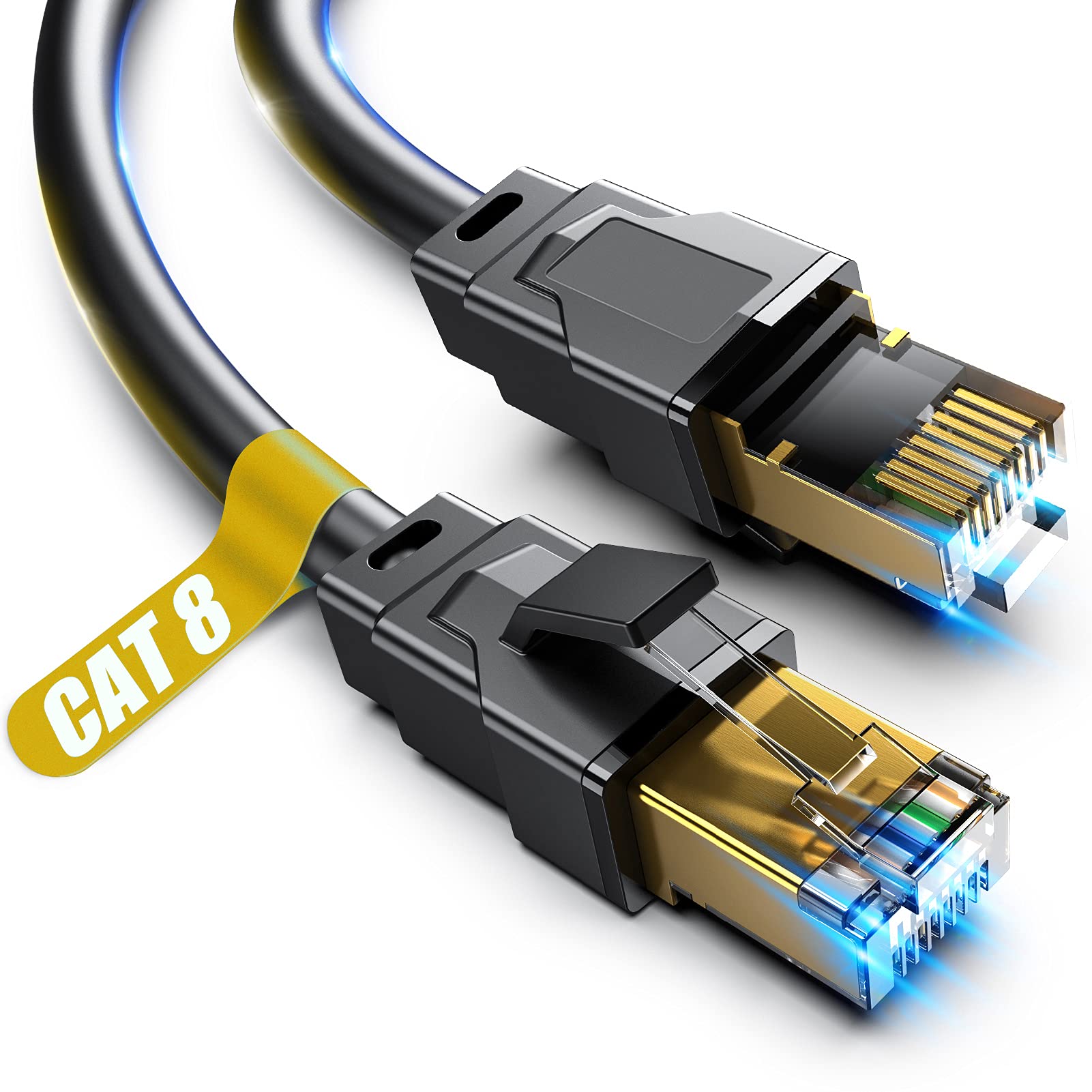
Table of Contents
- What Exactly is a Category 8 (Cat 8) Cable?
- The Numbers Decoded: Cat 8 Speed, Bandwidth, and Distance
- How Does Cat 8 Compare to Other Ethernet Cables?
- The Anatomy of a Powerhouse: Why is Cat 8 So Fast?
- Real-World Applications: Who Truly Needs a 40,000 Mbps Cable?
- Is Cat 8 Worth It For Gaming and Home Networks?
- Your Guide to Choosing the Right Cable with D-Lay Cable
What Exactly is a Category 8 (Cat 8) Cable?
Category 8, or Cat 8, represents the latest generation in twisted-pair copper Ethernet cabling recognized by the ANSI/TIA-568-C.2-1 standard. It’s not just an incremental update; it’s a significant leap in performance designed for a very specific purpose. Unlike its predecessors which were developed for general office and home use, Cat 8 was created specifically for data center applications, particularly for short-distance, high-speed interconnects.
The primary function of Cat 8 cabling is to support 25GBASE-T and 40GBASE-T Ethernet standards. This means it serves as the copper-based infrastructure for connecting servers, storage area networks (SANs), and network switches that operate at 25 Gbps or 40 Gbps. It provides a more cost-effective and easier-to-install alternative to fiber optic cables for connections within a server rack or between adjacent racks.
The Numbers Decoded: Cat 8 Speed, Bandwidth, and Distance
To truly appreciate Cat 8, you need to understand the three specifications that define its performance: data rate (speed), bandwidth (frequency), and channel length (distance). These elements work together to deliver its groundbreaking capabilities.
Blazing Fast Data Rates: Up to 40,000 Mbps
The headline feature of Cat 8 is its speed. At 40,000 Mbps (or 40 Gbps), it is 40 times faster than a standard Cat 6 cable (1,000 Mbps) and 4 times faster than a Cat 6a cable (10,000 Mbps). To put this in perspective, a 40 Gbps connection could theoretically download a 100 GB file in just 20 seconds. This level of throughput is essential in environments where massive datasets are constantly being moved and processed, such as in data analytics, cloud computing, and high-frequency trading.
The Power of 2000 MHz Bandwidth
If speed (Mbps) is how fast the data travels, bandwidth (MHz) is the capacity of the pathway. Think of it like a highway: bandwidth is the number of lanes available. Cat 8’s 2000 MHz bandwidth is double that of Cat 7 (1000 MHz) and four times that of Cat 6a (500 MHz). This wider “highway” allows more data to be transmitted simultaneously without congestion, resulting in lower latency and more stable performance under heavy network loads. This high frequency is what enables the cable to sustain 40 Gbps speeds reliably.
The Critical Limitation: A 30-Meter Channel Length
This is the most important trade-off for Cat 8’s extreme performance. To maintain signal integrity at such high frequencies, the maximum supported channel length is just 30 meters (98 feet). This is significantly shorter than the 100-meter (328-foot) length supported by Cat 6a and Cat 7. This limitation makes Cat 8 impractical for horizontal cabling runs across an office floor but perfectly suited for its intended role: connecting equipment within a single room, such as linking top-of-rack switches to servers housed within the same or an adjacent cabinet.
How Does Cat 8 Compare to Other Ethernet Cables?
Choosing the right cable means understanding the differences between the categories. While Cat 8 is the most powerful, it isn’t always the best choice for every situation. This table provides a clear comparison of the most common Ethernet cable types.
| Category | Max Speed | Bandwidth | Max Distance | Ideal Use Case |
|---|---|---|---|---|
| Cat 5e | 1,000 Mbps / 1 Gbps | 100 MHz | 100 meters | Basic home/office networking, VoIP phones. |
| Cat 6 | 1,000 Mbps / 1 Gbps | 250 MHz | 100 meters | Reliable Gigabit Ethernet, small business networks. |
| Cat 6a | 10,000 Mbps / 10 Gbps | 500 MHz | 100 meters | Future-proof home/office, 10G networks, PoE devices. |
| Cat 7 | 10,000 Mbps / 10 Gbps | 600-1000 MHz | 100 meters | High-end home media centers, AV installations, some data centers. |
| Cat 8 | 40,000 Mbps / 40 Gbps | 2000 MHz | 30 meters | Data centers, server rooms, short-run switch-to-server links. |
As the table illustrates, the jump to Cat 8 is exclusively about achieving 25G and 40G speeds over short distances. For any application requiring 10 Gbps or less over standard distances, Cat 6a remains the gold standard.
The Anatomy of a Powerhouse: Why is Cat 8 So Fast?
The remarkable performance of a Cat 8 cable isn’t magic; it’s the result of meticulous engineering and superior materials. Its construction is fundamentally different from lower-category cables to handle the extreme frequencies and data loads.
Superior Shielding as a Standard
Every Cat 8 cable is a shielded cable. The most common construction is S/FTP (Screened/Foiled Twisted Pair). This means each of the four twisted pairs of copper conductors is wrapped in its own foil shield. Then, an overall braid screen is wrapped around all four pairs. This dual-layer shielding is essential for two reasons:
- It protects the data signals from external electromagnetic interference (EMI) generated by power lines, fluorescent lights, and other network cables.
- It prevents signal “leakage” from the cable itself, which is critical at 2000 MHz. This drastically reduces both internal crosstalk between the pairs and alien crosstalk (AXT) between adjacent cables.
Precision Engineering: Tighter Twists and Quality Conductors
To support a 2000 MHz bandwidth, the physical construction of Cat 8 cables is more robust. The copper conductors are typically a thicker gauge (e.g., 22AWG) to improve signal strength and reduce heat. Furthermore, the individual pairs of wires are twisted much more tightly and consistently than in previous categories. This precision twisting is a key defense against signal degradation and interference, ensuring the data remains clean and error-free from one end to the other.
Real-World Applications: Who Truly Needs a 40,000 Mbps Cable?
Given its specifications, Cat 8 is a specialized tool for high-demand environments. You won’t find it running to a standard office desktop or a home gaming console. Its use cases are concentrated in the core of modern digital infrastructure.
- Data Centers & Server Rooms: This is the natural habitat for Cat 8. It’s used for End-of-Row (EoR) or Top-of-Rack (ToR) deployments, providing high-speed links between network switches and the servers and storage arrays they manage. Its use of the standard RJ45 connector makes it a seamless upgrade path for facilities looking to move from 10G to 40G networking without a complete switch to fiber optics.
- High-Bandwidth Professional Setups: Industries that transfer huge digital files can benefit from Cat 8 in localized networks. This includes film and video production studios moving raw 4K/8K footage, scientific research facilities processing large datasets, and financial institutions requiring the lowest possible latency for high-frequency trading platforms.
- Future-Proofing Critical Infrastructure: For organizations building new data centers or overhauling their network core, installing Cat 8 can be a strategic investment. It ensures the physical cabling layer can support not only current 25G/40G hardware but also potential future generations of equipment.
Is Cat 8 Worth It For Gaming and Home Networks?
This is a frequent question, and the answer is a clear and simple: No, Cat 8 is overkill for gaming and virtually all home networks. While marketers may promote it as the “fastest gaming cable,” this is misleading. The performance of your online gaming, streaming, or general internet use is almost entirely limited by two factors:
- Your Internet Plan Speed: Most residential internet plans range from 100 Mbps to 1,000 Mbps (1 Gbps). A very small percentage have access to 2 Gbps or 5 Gbps plans. Even the fastest consumer internet is a fraction of Cat 8’s 40,000 Mbps capacity. Using a Cat 8 cable will not make your internet faster than the speed you pay for.
- Network Latency (Ping): A low-latency connection is more important for gaming than raw speed. While a quality cable can ensure a stable connection, a Cat 6a or Cat 7 cable is more than capable of providing minimal latency within a home network. The primary factor affecting your ping is the distance to the game server.
For a high-performance, future-proofed home network that can easily handle multi-gigabit internet, a quality Cat 6a or Cat 7 cable is the most practical and cost-effective choice. It provides 10 Gbps capacity over the full 100-meter distance, which is more than enough for any residential application for the foreseeable future.
Your Guide to Choosing the Right Cable with D-Lay Cable
Understanding the capabilities and limitations of different Ethernet cables is key to building a reliable and efficient network. The choice isn’t about always picking the highest number, but about matching the right technology to the right application.
To summarize:
- Choose Cat 8 for mission-critical, short-distance connections in data centers and professional environments that demand 25 Gbps or 40 Gbps speeds.
- Choose Cat 6a or Cat 7 for robust, future-proofed performance in modern offices, high-end home networks, and for supporting 10 Gbps devices.
- Choose Cat 6 for dependable Gigabit performance in standard home and office applications.
At D-Lay Cable, we pride ourselves on manufacturing high-quality, certified network cables that meet and exceed industry standards. Whether you are architecting a next-generation data center or simply upgrading your home office, we have the right solution for you. Our team of experts is always available to help you navigate the specifications and select the perfect cable for your project’s performance and budget requirements.