


Yes, a Cat6 cable is unequivocally a type of Ethernet cable. This is the most direct answer to a very common question in networking. Think of “Ethernet cable” as the general family name, like “car,” while “Cat6” is a specific model with its own set of features and performance capabilities, like a “Honda Civic.” All Cat6 cables are Ethernet cables, but not all Ethernet cables are Cat6. They are designed to be the physical medium that carries signals for an Ethernet network, which is the world’s most common standard for wired local area networks (LANs).
This article will demystify the relationship between these terms. We will explore what defines an “Ethernet” connection, what the “Cat” in Cat6 stands for, and how different categories of Ethernet cables compare. By the end, you’ll understand precisely what a Cat6 cable is, its capabilities, and when it’s the right choice for your home or office network, ensuring you can make an informed decision for a fast and stable connection.
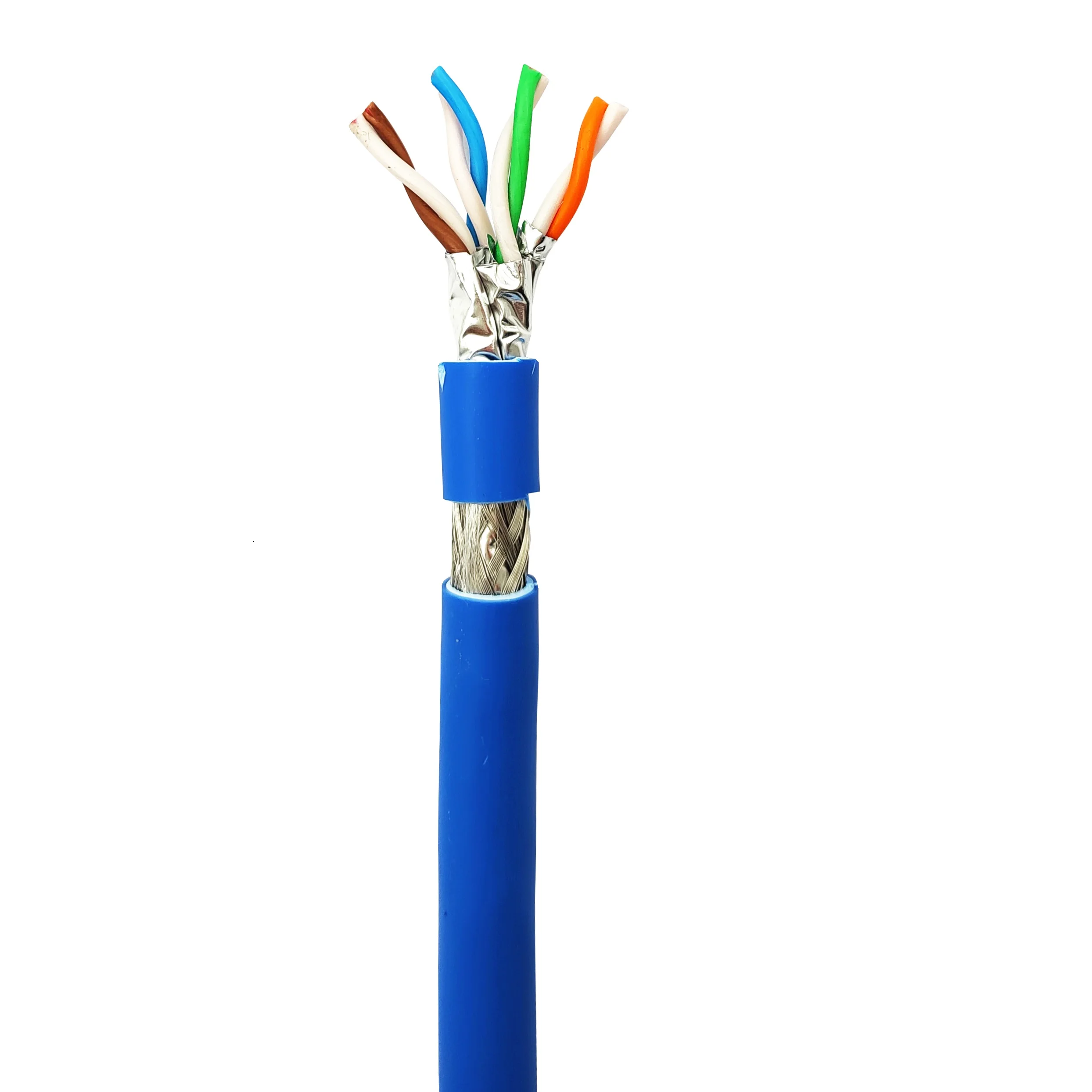
Table of Contents
- What Exactly is an Ethernet Cable? Understanding the Standard
- What Does “Cat6” Mean? Demystifying Cable Categories
- Cat6 vs. Other Ethernet Cables: A Detailed Comparison
- When Should You Choose a Cat6 Cable? Practical Applications
- Frequently Asked Questions (FAQ)
- Conclusion: Making the Right Connection
What Exactly is an Ethernet Cable? Understanding the Standard
Before diving into specific categories like Cat6, it’s crucial to understand what “Ethernet” truly represents. The term doesn’t refer to the cable itself, but rather to the underlying technology and protocols that govern how data is transmitted over a wired network. It’s the set of rules that devices follow to communicate with each other reliably and efficiently.
Ethernet: The Technology Behind Your Wired Connection
Ethernet is a family of networking technologies defined by the IEEE 802.3 standards. It dictates the format of data packets, how devices gain access to the network to send data, and how collisions (when two devices try to send data at the same time) are handled. When you plug a cable into your computer, router, or gaming console, you are connecting to an Ethernet network. The cable is simply the physical pathway that allows this technology to function. Therefore, any cable built to the specifications required for this communication—from older Cat5 to modern Cat8—is considered an Ethernet cable.
The Universal Plug: The Role of the RJ45 Connector
One of the most recognizable features of an Ethernet cable is its connector. The vast majority of these cables use a connector known as an RJ45 (Registered Jack 45). This small, clear plastic plug has eight pins that connect to the eight individual copper wires inside the cable. The standardized RJ45 connector ensures interoperability between different devices (routers, switches, PCs) and different cable categories. Whether you have a Cat5e, Cat6, or Cat6a cable, it will almost certainly terminate with an RJ45 plug, allowing it to fit into any standard Ethernet port.
What Does “Cat6” Mean? Demystifying Cable Categories
Now that we’ve established that Cat6 is a type of Ethernet cable, let’s explore what the “Cat6” designation signifies. It’s a label that tells you everything about the cable’s construction and performance potential. Understanding these categories is key to selecting the right cable for your needs.
“Cat” is for Category: A Standard of Performance
The “Cat” in Cat6 is short for Category. These categories are standards set by organizations like the Telecommunications Industry Association (TIA) and the Electronic Industries Alliance (EIA). Each subsequent category represents a generational improvement in cable design and performance. These improvements are focused on two main goals: increasing data transfer speeds and reducing interference or “crosstalk” from other wires and external sources. A Cat6 (Category 6) cable is built to a stricter specification than its predecessor, Cat5e, allowing it to perform better under demanding conditions.
Key Performance Metrics: Speed vs. Bandwidth
When comparing Ethernet cable categories, two terms are paramount: speed and bandwidth (or frequency).
- Speed (Data Rate): This is measured in bits per second (e.g., Mbps or Gbps) and tells you how much data can be transferred in a given amount of time. It’s what most users think of as “internet speed.” Cat6 supports speeds up to 10 Gbps, though typically over shorter distances (up to 55 meters).
- Bandwidth (Frequency): This is measured in Megahertz (MHz) and represents the range of frequencies the cable can reliably carry a signal over. Higher bandwidth allows for more data to be transmitted simultaneously, much like a wider highway allows more cars to travel at once. Cat6 has a standard bandwidth of 250 MHz, more than double the 100 MHz of Cat5e. This higher bandwidth is what helps it achieve higher speeds and handle more network traffic without performance degradation.
Cat6 vs. Other Ethernet Cables: A Detailed Comparison
To truly appreciate what a Cat6 cable offers, it’s helpful to see it in context with other common Ethernet cable categories. Each category has its own specifications for performance, making some better suited for specific tasks than others.
Ethernet Cable Category Specifications
This table provides a clear, at-a-glance comparison of the most common Ethernet cable categories you’ll encounter today. It highlights the key differences in performance that should guide your purchasing decision.
| Category | Max Speed (Data Rate) | Bandwidth (Frequency) | Best For |
|---|---|---|---|
| Cat5e | 1 Gbps @ 100 meters | 100 MHz | Basic home networking, standard office use, internet plans up to 1 Gbps. |
| Cat6 | 10 Gbps @ 55 meters; 1 Gbps @ 100 meters | 250 MHz | High-performance home networks, gaming, 4K streaming, small business networks. |
| Cat6a | 10 Gbps @ 100 meters | 500 MHz | Data centers, enterprise networks, future-proofing for 10G internet, professional use. |
| Cat8 | 25/40 Gbps @ 30 meters | 2000 MHz (2 GHz) | High-end data centers and server rooms where highest speeds over short distances are critical. |
The Physical Anatomy of a Cat6 Cable
The superior performance of a Cat6 cable isn’t magic; it comes from tangible improvements in its physical construction. Compared to Cat5e, Cat6 cables feature more tightly twisted pairs of copper wires. This tighter twist rate is a primary defense against crosstalk—the unwanted signal interference between adjacent wire pairs. Many Cat6 cables also include a physical separator, known as a spline, which runs down the center of the cable, isolating the four twisted pairs from each other and further reducing interference. This robust construction is what allows the cable to maintain signal integrity at a higher frequency of 250 MHz.
When Should You Choose a Cat6 Cable? Practical Applications
With its excellent balance of price and performance, a Cat6 Ethernet cable is often the ideal choice for a wide range of modern networking applications. While a Cat5e cable may be sufficient for basic internet browsing, choosing Cat6 provides significant advantages in more demanding scenarios and prepares your network for future technologies.
For the Modern Home Network
For most homes today, internet service providers offer speeds that are approaching or have surpassed 1 Gbps. While a Cat5e cable can handle 1 Gbps, a Cat6 cable provides more headroom and ensures a more stable, reliable connection, especially in environments with a lot of electronic interference. If you have multiple users, smart home devices, and high-resolution security cameras all competing for bandwidth, a Cat6 backbone for your wired network will help ensure smooth performance for all connected devices.
For Lag-Free Gaming and 4K Streaming
Online gaming and high-bitrate 4K or 8K video streaming are activities where a stable, low-latency connection is paramount. Wi-Fi can be susceptible to interference and signal drops, leading to frustrating lag spikes or buffering. A wired connection with a Cat6 cable delivers a consistently fast and stable signal directly to your gaming console or streaming device. Its superior resistance to crosstalk ensures a cleaner signal, which translates to lower ping times in games and uninterrupted, high-quality video playback.
For Business and Future-Proofing Your Network
In a business environment, network reliability is critical. Cat6 is the de facto standard for new office installations, supporting high-speed data transfers between servers, workstations, and network-attached storage (NAS) devices. Furthermore, choosing Cat6 is an act of future-proofing. As internet speeds continue to increase and network demands grow, having a Cat6 infrastructure already in place means you won’t need to re-wire your home or office to take advantage of multi-gig internet services when they become widely available. Its ability to handle 10 Gbps speeds over shorter runs makes it a smart, long-term investment.
Frequently Asked Questions (FAQ)
Can I use a Cat6 cable in a Cat5e port?
Absolutely. Ethernet cable categories are backward compatible. You can plug a Cat6 cable into a device or wall jack designed for Cat5e. The connection will simply operate at the lowest common denominator, which in this case would be the Cat5e performance standard (1 Gbps speed, 100 MHz bandwidth). You won’t damage anything.
Is Cat6 overkill for my 500 Mbps home internet?
Not necessarily. While a Cat5e cable can handle 500 Mbps, Cat6 provides a more robust and interference-resistant connection, which can lead to greater stability. More importantly, it future-proofs your network for when you inevitably upgrade to a 1 Gbps or faster internet plan.
How can I identify a Cat6 cable?
Most Ethernet cables have their category printed directly on the outer sheath or jacket. Look for text that says “Category 6,” “CAT.6,” or a similar variation. Cat6 cables are also often slightly thicker and less flexible than Cat5e cables due to the tighter twists and the potential presence of a spline.
Conclusion: Making the Right Connection
To circle back to our original question: is a Cat6 cable an Ethernet cable? The answer is a resounding yes. It is a specific, high-performance category within the broader family of Ethernet cables. By understanding that “Ethernet” is the technology and “Category 6” is the performance standard of the physical cable, you can confidently navigate the world of wired networking. For nearly all modern home, gaming, and small business applications, Cat6 offers the perfect blend of speed, reliability, and value, ensuring your network is ready for both the demands of today and the innovations of tomorrow.