


For most applications, including high-end home networks, gaming, and standard office environments, CAT8 bulk cable is not necessary. It is a highly specialized Ethernet cable designed primarily for short-distance (up to 30 meters) high-speed connections within data centers, specifically to support 25GBASE-T and 40GBASE-T networking standards. While it has potential applications in the classical computing infrastructure that supports quantum research, its cost, rigidity, and specific use case make lower-category cables like CAT6a a more practical and cost-effective choice for the vast majority of users.
What Exactly is CAT8 Cable?
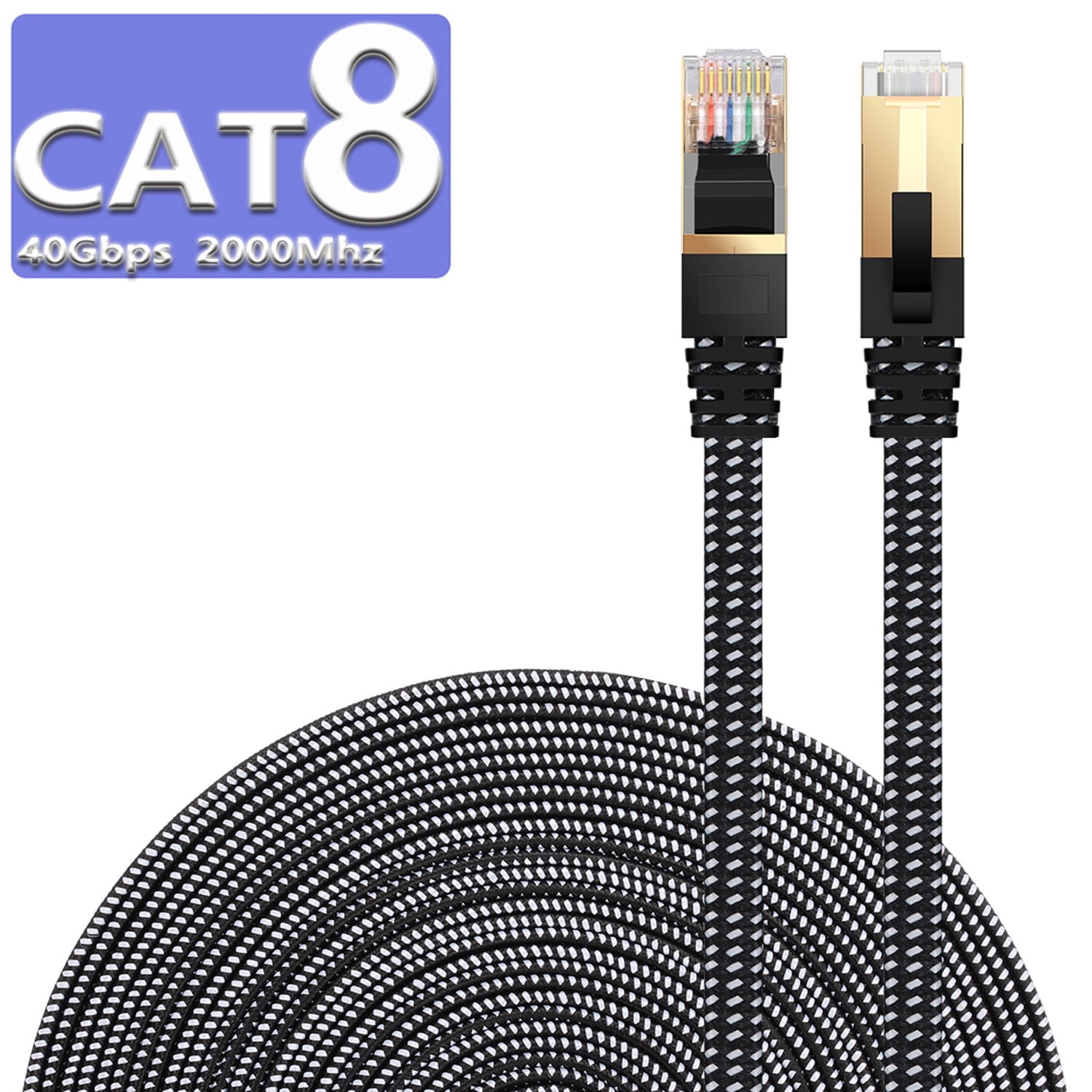
Before asking if it’s necessary, it’s crucial to understand what CAT8 cable is. Category 8, or CAT8, represents the latest generation of twisted-pair copper Ethernet cabling standardized by the ANSI/TIA-568-C.2-1. It is a significant leap forward in terms of performance, but this performance comes with very specific limitations and design intentions. Unlike its predecessors, which were designed for broad use across various environments, CAT8 was engineered with a singular focus: the data center.
Decoding the Specifications: Speed, Frequency, and Distance
The defining characteristics of CAT8 are its immense bandwidth and the speed it can support, albeit over a short distance. It is designed to operate at a frequency of up to 2000 MHz—four times that of CAT6a and double that of CAT7. This massive frequency range allows it to transmit data at speeds of 25 Gbps or even 40 Gbps. However, this performance is strictly limited to a maximum channel length of 30 meters (approximately 98 feet). This 30-meter link typically consists of up to 24 meters of solid bulk cable and a total of 6 meters of patch cords on either end. This short distance is a critical factor that defines its primary application.
The Anatomy of a CAT8 Cable: Why Shielding is Critical
To achieve a frequency of 2000 MHz without being crippled by interference and crosstalk, CAT8 cables require extensive shielding. They are exclusively built as S/FTP (Screened/Foiled Twisted Pair) cables. This means that each of the four individual twisted pairs is wrapped in a foil shield, and then an outer, more robust screen braid encases the entire bundle of four pairs. This dual-shielding is essential to mitigate both internal crosstalk (from other pairs within the cable) and external electromagnetic interference (EMI) from power lines, fluorescent lights, and other network cables. This robust construction makes CAT8 cables thicker, stiffer, and more difficult to install than their unshielded or less-shielded counterparts like CAT6 or CAT6a.
How Does CAT8 Compare to Other Ethernet Cables?
To appreciate why CAT8 is a niche product, it’s helpful to compare it to the more common cables in use today. The differences in performance, cost, and application are stark.
CAT8 vs. CAT6a: The Mainstream Champion
CAT6a (Category 6 Augmented) is the current gold standard for most new, high-performance network installations. It supports 10 Gbps speeds over a distance of up to 100 meters (328 feet). For nearly all home, office, and even many enterprise applications, 10 Gbps is more than sufficient for the foreseeable future. CAT6a is more flexible, significantly cheaper, and easier to terminate than CAT8. Asking whether you need CAT8 is often best answered by first asking, “Is CAT6a insufficient for my needs?” For over 99% of installations, the answer is no.
CAT8 vs. CAT7: The Controversial Predecessor
CAT7 is an interesting but often misunderstood cable. While it offers higher frequency (600 MHz) than CAT6a and also requires shielding, it was never officially recognized as a standard by the Telecommunications Industry Association (TIA). This has led to a market filled with non-standardized products and proprietary connectors (like GG45), although most use the standard RJ45. CAT8, on the other hand, is a fully recognized TIA standard and uses the ubiquitous RJ45 connector. Therefore, for any new installation considering a high-end shielded cable, it is best to skip the ambiguous CAT7 and choose between the TIA-approved CAT6a or CAT8, depending on the application.
A Comparative Table: CAT5e to CAT8 at a Glance
The following table provides a clear overview of the key differences between common Ethernet cable categories.
| Feature | CAT5e | CAT6 | CAT6a | CAT8 |
|---|---|---|---|---|
| Max Speed | 1 Gbps | 10 Gbps (up to 55m) | 10 Gbps | 40 Gbps |
| Max Bandwidth (Frequency) | 100 MHz | 250 MHz | 500 MHz | 2000 MHz |
| Max Distance | 100 meters (328 ft) | 100 meters (328 ft) | 100 meters (328 ft) | 30 meters (98 ft) |
| Shielding | Typically UTP (Unshielded) | UTP or STP (Shielded) | UTP or STP | S/FTP (Required) |
| Common Application | Home/Office LAN, VoIP | Home/Office LAN | Data Centers, Enterprise Networks, Future-Proofing | Data Center (Switch-to-Server) |
Where is CAT8 Bulk Cable Truly Necessary? The Core Applications
Given its specifications, CAT8’s necessity is confined to a very specific environment where its unique combination of extreme speed and short distance provides a tangible benefit over other solutions like fiber optics.
The Data Center: CAT8’s Primary Battlefield
The modern data center is the natural habitat for CAT8 cable. Its primary application is in Top-of-Rack (ToR) or End-of-Row (EoR) network architectures. In a ToR setup, a network switch is placed at the top of each server rack, and all the servers within that rack connect directly to it. These connections are very short, almost always under 30 meters. This is the exact scenario CAT8 was designed for: providing an ultra-high-speed link between the server’s network interface card (NIC) and the ToR switch. Using CAT8 allows data centers to deploy copper-based infrastructure for their server-to-switch links, which can be simpler and more cost-effective than using fiber for every single server.
Enabling 25GBASE-T and 40GBASE-T
The fundamental reason for CAT8’s existence is to be the physical medium for the 25GBASE-T and 40GBASE-T Ethernet standards. These standards were developed to provide a cost-effective, copper-based path to speeds beyond 10 Gbps. While fiber optics have long handled these speeds, deploying fiber transceivers (SFPs) for every server port in a rack can be expensive and consume more power. BASE-T standards, which run over twisted-pair copper with RJ45 connectors, are often seen as a more familiar and power-efficient alternative for these short-distance links. Therefore, if a data center architect decides to implement a 25G or 40G copper-based network, CAT8 cable becomes an absolute necessity as no lower category can support these standards.
The Intriguing Case: CAT8 in Quantum Computing Environments
The mention of quantum computing often conjures images of futuristic technology, and its connection to something as seemingly mundane as an Ethernet cable can be confusing. It is vital to clarify CAT8’s role in this domain.
Demystifying the Role: Not for Qubits, But for Control
First and foremost, CAT8 cables are not used to connect directly to the quantum processors (qubits) themselves. The internal wiring of a quantum computer operates at cryogenic temperatures near absolute zero and requires highly specialized, custom-made cryogenic coaxial cables to control and read the fragile quantum states. CAT8 is a room-temperature technology and plays no part in this delicate, internal process.
Why High-Speed Copper Matters for Classical Support Systems
The actual application for CAT8 lies in the massive classical computing infrastructure that surrounds and controls the quantum computer. A quantum system requires an army of classical hardware—signal generators, processors, and measurement devices—to manage the qubits. This control system generates and processes enormous volumes of data. For example, experimental results must be quickly offloaded from the measurement devices to storage arrays for analysis. In these supporting racks, high-speed, low-latency networking is critical. A CAT8 cable could be used to provide a 40 Gbps link between a data acquisition unit and a network switch within the same rack, facilitating rapid data transfer to a high-performance computing (HPC) cluster for processing. In this context, CAT8 is simply a high-speed data center cable being used in a research environment, not a special “quantum cable.”
CAT8 vs. Fiber Optics: Choosing the Right Medium in the Data Center
Even within its target environment, the data center, CAT8 faces stiff competition from fiber optics. The choice between them is a strategic one, involving trade-offs in cost, power, and distance.
The Case for CAT8: Cost, Power, and Familiarity
CAT8’s main advantage for short, ToR links is its potential for lower overall cost and power consumption. The electronics (PHYs) in network equipment for BASE-T standards are designed to be power-efficient, and for very high-density racks, this can add up to significant operational savings. Furthermore, network technicians are universally familiar with terminating and testing RJ45-based copper cabling, which can simplify deployment and troubleshooting. The cost of a CAT8 channel (cable + connectors) for a short link can be less than the cost of two fiber optic transceivers and a fiber patch cord.
The Case for Fiber: Distance, Bandwidth, and EMI Immunity
Fiber optics remain the undisputed king for any link longer than 30 meters. They can carry data over many kilometers without signal degradation. Their potential for future bandwidth upgrades is virtually limitless, and they are completely immune to the electromagnetic interference (EMI) that CAT8’s heavy shielding is designed to fight. In very dense and noisy electrical environments, or when connecting between rows or racks (Middle-of-Row or EoR), fiber is often the safer and more reliable choice.
Do You Need CAT8 Cable? A Practical Decision Guide
So, let’s bring it all together. When, if ever, should you choose CAT8 bulk cable?
For Home Users and Gamers: An Unnecessary Expense
The answer is a definitive no. CAT8 provides zero tangible benefit for a home network. Your internet connection is likely 1 Gbps or 2 Gbps, and even a 10 Gbps fiber connection is perfectly served by CAT6a cable. Spending extra money on CAT8 for “future-proofing” is unwise, as it’s highly improbable that home networking standards will require 40 Gbps over copper in the cable’s lifetime. You would be paying a premium for performance you cannot and will not use.
For Small to Medium Businesses: When is it Justified?
For the vast majority of SMBs, the answer is also no. A standard office network built on CAT6 or CAT6a will handle all typical business needs for years to come. The only exception might be a business with a small, on-premise data closet with 25G-capable servers and switches, and a specific plan to use 25GBASE-T for short server links. This scenario is exceedingly rare.
For Data Center Architects: A Strategic Choice
This is the intended audience. If you are designing or upgrading a data center and have made the strategic decision to use a 25GBASE-T or 40GBASE-T copper infrastructure for your short-reach, switch-to-server connections, then CAT8 is not just a good choice—it is a necessity. It is the only TIA-standardized copper cabling that will support your network’s performance requirements.
The Verdict: Is CAT8 a Necessity or a Niche Solution?
Ultimately, CAT8 bulk cable is a powerful but highly specialized niche solution, not a general-purpose necessity. It solves a specific problem for a specific user: providing a cost-effective, power-efficient, standards-based copper pathway for 25/40 Gbps speeds over short distances in a data center. Its role in supporting quantum computing is real but is an extension of its data center application, serving the classical control systems rather than the quantum processor itself.
For everyone outside of the data center architecture world, CAT8 is an over-engineered and expensive solution to a problem they don’t have. The robust and capable CAT6a remains the most logical and prudent choice for high-performance networking in homes, offices, and general enterprise environments, offering a perfect balance of performance, distance, and cost for the foreseeable future.