


Yes, a Cat8 Ethernet cable is perfectly okay for gaming, but it is significant overkill and not a cost-effective choice for virtually any home gaming setup. For an optimal gaming experience, the most critical factors are low latency (ping) and a stable connection, not maximum bandwidth. A high-quality Cat6 or Cat6a cable provides more than enough speed and stability for modern gaming and home internet plans, delivering identical real-world performance to Cat8 at a much lower cost. Your money is better spent on a better router or internet plan than on a Cat8 cable you can’t fully utilize.
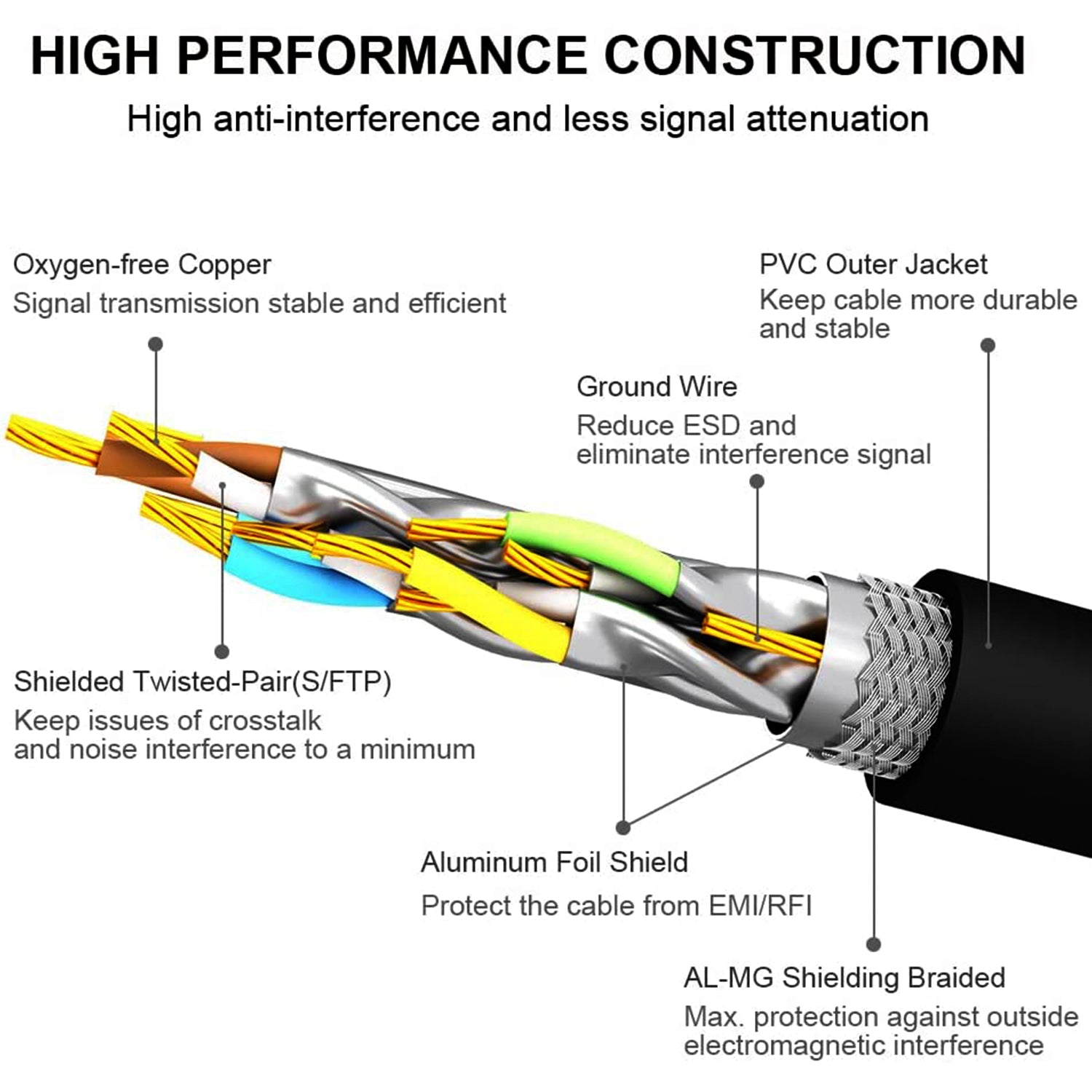
Table of Contents
- 1. Understanding the Hype: What is a Cat8 Ethernet Cable?
- 2. What Really Matters for an Optimal Gaming Experience?
- 3. Head-to-Head Comparison: Cat8 vs. Cat6a vs. Cat6 for Gaming
- 4. So, Should You Use a Cat8 Cable for Gaming? A Balanced Look
- 5. Beyond the Cable: Other Factors Affecting Your Gaming Connection
- 6. The Final Verdict: Making the Smart Choice for Your Gaming Setup
Understanding the Hype: What is a Cat8 Ethernet Cable?
In the world of networking, a higher number usually means a newer, more capable standard. This has led many enthusiastic gamers to wonder if upgrading to the latest “Category 8” or Cat8 cable will give them a competitive edge. To understand if it’s right for you, we first need to look at what Cat8 was actually designed for. It’s not just a faster version of what you have at home; it’s a different class of cable altogether.
Breaking Down the Specs: Speed and Bandwidth
A Cat8 cable is an absolute powerhouse in terms of raw specifications. It is designed to support a staggering data transfer rate of up to 40 Gigabits per second (Gbps). To complement this speed, it features a massive bandwidth of 2000 MHz. Think of bandwidth as the number of lanes on a highway and the speed as the speed limit. Cat8 provides an enormous, multi-lane superhighway for data. This is a monumental leap from its predecessors like Cat6a, which supports 10 Gbps and 500 MHz bandwidth. These numbers are impressive, but the key question for gamers is whether this extra capacity can even be used.
Built for a Different Environment: The Data Center
The development of Cat8 was driven by the needs of modern data centers and enterprise networking, not residential homes. Its primary purpose is to connect servers, switches, and storage area networks over very short distances (its 40 Gbps speed is only rated up to 30 meters, or about 98 feet). Cat8 cables feature mandatory, extensive shielding (typically S/FTP – Screened/Foiled Twisted Pair) to protect against electromagnetic interference (EMI) and crosstalk in electrically “noisy” server rooms. This heavy shielding makes the cables much thicker, stiffer, and more difficult to route through walls and around corners in a typical home environment.
What Really Matters for an Optimal Gaming Experience?
Chasing the highest numbers on a spec sheet is a common mistake. For online gaming, the most impactful metrics are not what Cat8 excels at. A smooth, lag-free experience depends on different factors that are often overlooked in the rush for more speed.
Bandwidth vs. Latency (Ping): The Gamer’s Critical Distinction
This is the most crucial concept to grasp. Bandwidth (measured in Mbps or Gbps) is the maximum amount of data you can download or upload at one time. It’s important for downloading large games or streaming 4K video. However, online gaming itself uses a surprisingly small amount of bandwidth—typically less than 5 Mbps. Latency, or “ping” (measured in milliseconds, or ‘ms’), is the time it takes for a packet of data to travel from your gaming device to the game server and back. Low latency is an absolute priority for gaming. It determines the responsiveness of your actions in the game. A Cat8 cable does not inherently provide lower latency than a well-constructed Cat6 or Cat6a cable over standard home internet connections.
The Importance of a Stable Connection
More important than either peak speed or the lowest possible ping is a stable and consistent connection. Packet loss and jitter (variations in ping) are the true enemies of online gamers, causing stuttering, lag spikes, and disconnects. A wired Ethernet connection of any modern category (Cat5e and up) will provide a far more stable connection than Wi-Fi. The quality of the cable’s construction—properly twisted pairs, robust connectors, and effective shielding (where appropriate)—contributes more to stability than its category number. A high-quality Cat6a cable will always outperform a poorly made Cat8 cable.
Identifying Your Connection’s Weakest Link
Your gaming performance is only as good as the weakest link in the chain. For 99% of gamers, the bottleneck is not their Ethernet cable. It is far more likely to be one of these factors:
- Your Internet Service Provider (ISP) Plan: Most home internet plans top out at 1 Gbps, with many users on plans offering 500 Mbps or less. A Cat6 cable can handle up to 10 Gbps at shorter distances, already exceeding the capabilities of your entire internet plan.
- Your Router and Modem: The ports on most consumer routers are limited to 1 Gbps. Your router’s processing power also plays a huge role in managing traffic and maintaining low latency.
- The Game Server: The physical distance to the game server and the server’s own performance have a massive impact on your ping.
Head-to-Head Comparison: Cat8 vs. Cat6a vs. Cat6 for Gaming
To put it all in perspective, let’s directly compare the three most relevant Ethernet cable types for a modern gaming setup. As you’ll see, Cat6a emerges as the logical choice, balancing performance, cost, and practicality.
| Feature | Cat6 | Cat6a (Augmented) | Cat8 |
|---|---|---|---|
| Max Speed | 1 Gbps @ 100m 10 Gbps @ up to 55m |
10 Gbps @ 100m | 25/40 Gbps @ 30m |
| Bandwidth | 250 MHz | 500 MHz | 2000 MHz |
| Cost | Low | Moderate | High to Very High |
| Best Use Case | Home networks up to 1 Gbps | Ideal for Gaming, home networks over 1 Gbps, future-proofing | Data Centers, server-to-server connections |
| Flexibility / Handling | Very Flexible | Moderately Stiff (if shielded) | Very Stiff and Thick |
So, Should You Use a Cat8 Cable for Gaming? A Balanced Look
We’ve established that Cat8 is technically excellent but designed for a professional environment. So, is there any reason a gamer should choose one? Let’s explore the arguments from both sides.
The Argument for Cat8: “Future-Proofing” and Bragging Rights
The main argument for buying a Cat8 cable for your gaming PC, PS5, or Xbox is future-proofing. Proponents suggest that as internet speeds increase beyond 10 Gbps in the future, you’ll already have the cable to handle it. While technically true, this is a highly speculative investment. It will likely be many years before multi-gigabit internet (above 10 Gbps) is common or affordable for residential homes. By that time, your entire networking infrastructure (modem, router) would also need a very expensive upgrade. For now, using Cat8 is more about having the “best of the best” for peace of mind, even if the benefits are purely theoretical.
The Practical Reality: Why Cat6a is the Gamer’s Sweet Spot
For a combination of performance, cost, and future-readiness, Cat6a is the undisputed champion for gamers. It delivers 10 Gbps speeds, which is more than enough to handle the fastest available residential internet plans for the foreseeable future. It provides excellent protection from crosstalk, ensures a stable and reliable connection, and does it all at a price point that is far more reasonable than Cat8. It’s the smart, practical choice that sacrifices no real-world gaming performance.
When Might a Cat8 Cable Actually Make Sense?
There is a very niche scenario where a Cat8 cable might be a logical choice in a home. If you are a tech enthusiast or content creator with a sophisticated home network that includes a 10+ Gbps local area network (LAN) and you are transferring massive files between a Network Attached Storage (NAS) device and your PC, a Cat8 cable could potentially speed up those specific, short-distance transfers. For the act of gaming online, however, it offers no tangible benefit over Cat6a.
Beyond the Cable: Other Factors Affecting Your Gaming Connection
If you’re experiencing lag and have already switched from Wi-Fi to a quality Ethernet cable like a Cat6a, the problem likely lies elsewhere. Before you spend more on cables, investigate these areas:
- Upgrade Your Router: A modern gaming router with a powerful processor and Quality of Service (QoS) features can prioritize gaming traffic and reduce latency within your home network.
- Check Your ISP Plan: If you have a low-tier internet plan, especially one with slow upload speeds, your gaming experience can suffer. Consider upgrading to a plan with higher speeds and a better reputation for stability.
- Use a Wired Connection: This cannot be stressed enough. A wired Ethernet connection will always be more stable and have lower latency than a wireless one.
The Final Verdict: Making the Smart Choice for Your Gaming Setup
So, is Cat8 okay for gaming? Yes, it works flawlessly. Is it a smart purchase for gaming? No. The performance it offers is far beyond what gaming or home networks can utilize, and it delivers no advantage in the critical areas of latency or stability when compared to a Cat6a cable.
Your focus should be on building a balanced and stable network. Instead of spending a premium on a Cat8 cable, invest in a high-quality, certified Cat6a patch cable from a reputable supplier like DLAY CABLE. This provides all the performance you’ll need for years to come. Then, use the money you saved to assess the true bottlenecks in your system, whether it’s your router, your internet plan, or your reliance on Wi-Fi. By making a smart, informed choice, you’ll achieve that lag-free gaming experience you’re looking for without overspending on technology you don’t need.
Table of Contents (Anchor Links)
- Understanding the Hype: What is a Cat8 Ethernet Cable?
- What Really Matters for an Optimal Gaming Experience?
- Head-to-Head Comparison: Cat8 vs. Cat6a vs. Cat6 for Gaming
- So, Should You Use a Cat8 Cable for Gaming? A Balanced Look
- Beyond the Cable: Other Factors Affecting Your Gaming Connection
- The Final Verdict: Making the Smart Choice for Your Gaming Setup
Anchor Text Suggestions for Internal Linking
- “Learn about the difference between Cat8 and Cat6a for gaming.” (Links to the comparison section)
- “Find out why latency is more important than bandwidth for gaming.” (Links to the Bandwidth vs. Latency section)
- “Is Cat8 worth it for future-proofing your network?” (Links to the future-proofing section)
- “The best Ethernet cable for a reliable gaming connection.” (Links to the Cat6a recommendation section)
- “Explore our high-quality Cat6a network cables.” (Could link to a DLAY CABLE product page)