


In the world of digital connectivity, the cables that form the backbone of our networks are often overlooked heroes. Among them, the Category 5, or Cat5, Ethernet cable holds a significant place in history. But what is it, and is it still relevant today? As a leading manufacturer and supplier of high-performance network solutions, D-Lay Cable is here to provide a definitive look at Cat5, its evolution, and what you need to know for your network’s success.
Article Contents
- 1. Decoding Cat5: The Foundation of Modern Networking
- 2. Cat5 vs. Cat5e: The Critical Distinction Every Pro Should Know
- 3. Key Technical Specifications of Cat5 Cable
- 4. The Role of Cat5 in Today’s High-Speed Digital Landscape
- 5. Telltale Signs: When Should You Upgrade from Cat5?
- 6. Looking Beyond: A Glimpse into Cat6 and Higher Categories
- 7. Why Your Cable Supplier Matters: The D-Lay Cable Advantage
- 8. Partner with D-Lay Cable for Your Networking Needs
1. Decoding Cat5: The Foundation of Modern Networking
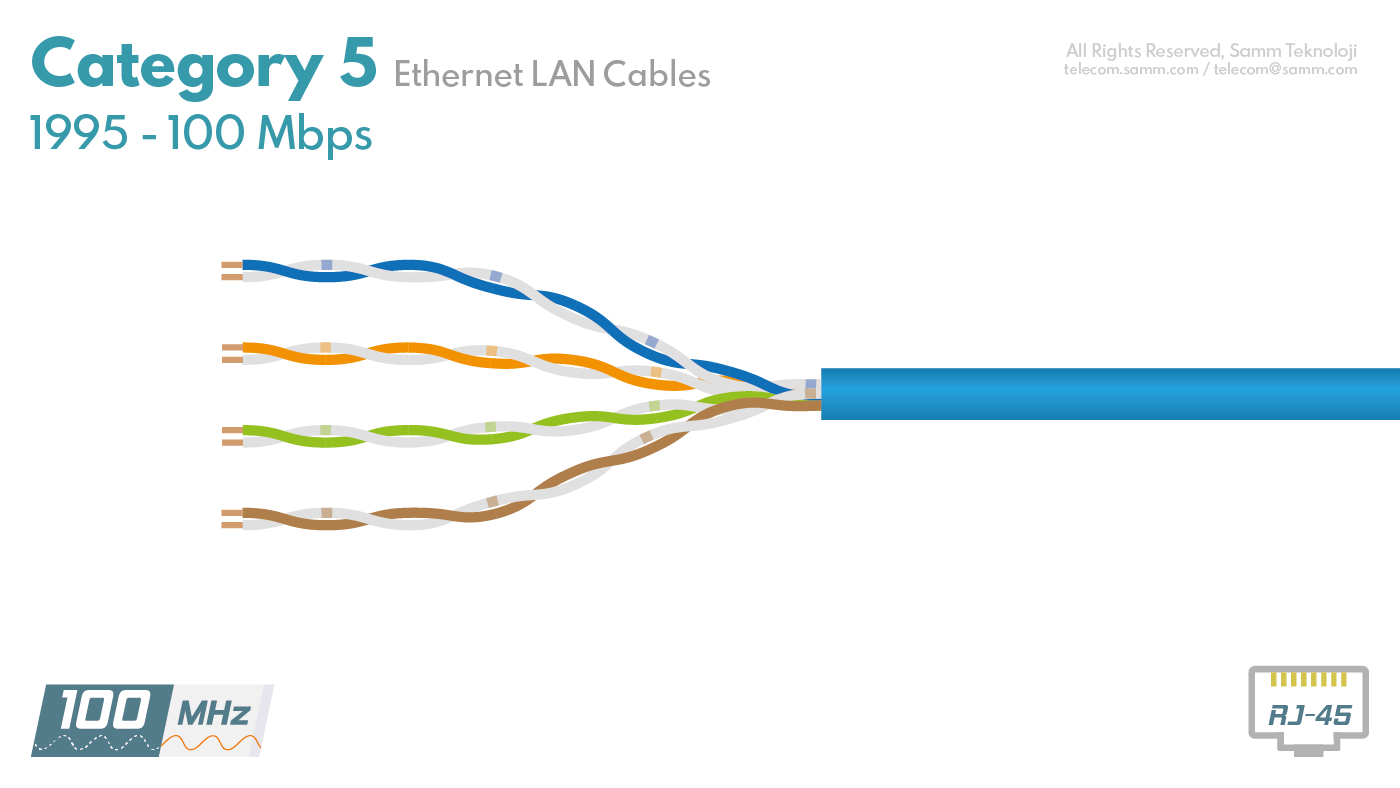
Category 5 (Cat5) is a twisted-pair Ethernet cable standard that was defined by the TIA/EIA-568-A standard in 1995. For its time, it was revolutionary. It consists of four twisted pairs of copper wire and was designed to reliably support network speeds up to 100 Mbps (Fast Ethernet) at a bandwidth of 100 MHz. For many years, it was the gold standard for connecting computers, routers, and switches in both home and office environments, effectively building the internet infrastructure we rely on today.
2. Cat5 vs. Cat5e: The Critical Distinction Every Pro Should Know
While the names are similar, the difference between Cat5 and its successor, Cat5e (Category 5 Enhanced), is substantial. The “e” in Cat5e stands for “enhanced,” and it signifies a crucial upgrade in performance and reliability. In fact, it is nearly impossible to purchase new Cat5 cable today, as Cat5e has completely replaced it as the baseline standard.
Here’s a breakdown of the key differences:
| Feature | Cat5 | Cat5e (Enhanced) |
|---|---|---|
| Max Speed | 100 Mbps (Fast Ethernet) | 1000 Mbps / 1 Gbps (Gigabit Ethernet) |
| Max Bandwidth | 100 MHz | 100 MHz (but with stricter standards) |
| Crosstalk | Prone to crosstalk (signal interference between wires) | Significantly reduced crosstalk due to tighter wire twisting and stricter manufacturing standards. |
| Best For | Legacy systems, old 10/100 Mbps networks. | Modern home and small office networks, VoIP, and Gigabit Ethernet applications. |
The takeaway is simple: For any new installation or upgrade, Cat5e is the absolute minimum standard you should consider. It provides the speed necessary for modern internet connections and is designed to minimize the signal interference that can plague network performance.
3. Key Technical Specifications of Cat5 Cable
To fully understand Cat5’s capabilities and limitations, it’s essential to look at its technical specifications:
- Conductor: Typically uses 24 AWG (American Wire Gauge) solid or stranded copper wires.
- Twisted Pairs: Contains four unshielded twisted pairs (UTP) to help cancel out electromagnetic interference.
- Bandwidth: Supports a frequency of up to 100 MHz. This is the “size” of the data pipe.
- Data Rate: Supports data rates up to 100 Mbps. This is the speed at which data travels through the pipe.
- Maximum Length: The maximum recommended channel length is 100 meters (328 feet), including patch cords. Beyond this length, signal degradation (attenuation) becomes a significant issue.
- Connector: Terminates with the standard RJ45 connector.
4. The Role of Cat5 in Today’s High-Speed Digital Landscape
Is Cat5 cable completely useless? Not entirely. Its role is now one of a legacy component. You will most likely encounter Cat5 in older buildings or network installations from the late 1990s and early 2000s. If a network is already wired with Cat5 and is only used for very basic tasks (like a 100 Mbps connection for a single point-of-sale terminal or a simple sensor), it may still function.
However, we strongly advise against using Cat5 for any new network installation. It creates an immediate bottleneck, is incapable of supporting Gigabit speeds that are now standard, and will struggle with the demands of modern applications like high-definition video streaming, large file transfers, and cloud computing.
5. Telltale Signs: When Should You Upgrade from Cat5?
If your infrastructure still relies on Cat5 cabling, you are leaving performance on the table. Consider an upgrade to Cat5e, Cat6, or higher if you experience:
- Slow Network Speeds: If you’ve upgraded your internet plan to Gigabit speeds but your wired connections are still stuck around 100 Mbps, your Cat5 cables are the likely culprit.
- Poor Data Integrity: Frequent connection drops, slow file transfers, or high latency can be symptoms of signal degradation and crosstalk common with older Cat5.
- New Hardware Installation: Installing new Gigabit-capable switches, routers, computers, or NAS (Network Attached Storage) devices requires at least a Cat5e cable to utilize their full speed.
- Network Expansion: When adding more devices or expanding your office, it’s the perfect time to future-proof your network with a modern cabling standard like Cat6 or Cat6a.
6. Looking Beyond: A Glimpse into Cat6 and Higher Categories
While Cat5e is an excellent baseline, technology doesn’t stand still. For businesses and users demanding even more performance and future-proofing, higher categories are the answer:
- Cat6: Offers a higher bandwidth of 250 MHz and can support 10 Gbps speeds over shorter distances (up to 55 meters). It’s an excellent, cost-effective choice for future-proofing most office and prosumer environments.
- Cat6a (Augmented): Boosts bandwidth to 500 MHz and reliably supports 10 Gbps speeds over the full 100-meter distance. It is the preferred standard for new commercial installations and data centers.
- Cat7 & Cat8: These are even higher-performance cables designed for high-end data center and mission-critical applications, offering massive bandwidth and shielding.
7. Why Your Cable Supplier Matters: The D-Lay Cable Advantage
Choosing the right cable is only half the battle. The quality of its manufacturing is paramount. A cable labeled “Cat6” that is poorly made will perform worse than a high-quality Cat5e cable. This is where your supplier makes all the difference.
At D-Lay Cable, we build our reputation on three pillars:
- Quality Materials: We insist on using 100% pure bare copper conductors. Cheaper alternatives like CCA (Copper Clad Aluminum) are brittle, have higher resistance, and fail to meet TIA performance standards. Pure copper ensures maximum signal integrity and power delivery (for PoE applications).
- Precision Manufacturing: Our automated processes ensure consistent wire twisting, jacket thickness, and adherence to the strictest industry standards (UL, CE, RoHS). This precision minimizes crosstalk and guarantees performance that meets or exceeds category specifications, confirmed by rigorous Fluke testing.
- Expertise and Customization (OEM/ODM): We are not just resellers; we are manufacturers. Our deep technical expertise allows us to provide expert guidance and offer OEM/ODM services to create custom solutions—from specific lengths and colors to custom printing and packaging—that perfectly match your project’s requirements.
8. Partner with D-Lay Cable for Your Networking Needs
While Cat5 cable laid the groundwork for the internet, its time as a viable option for new installations is over. The modern standard begins with Cat5e, with Cat6 offering a smart path for future growth.
Building a reliable, high-performance network starts with a solid foundation. Don’t let substandard cabling become the weak link in your digital infrastructure. Choose a partner who understands the science behind connectivity and is committed to uncompromising quality.
Ready to build a network that’s fast, reliable, and ready for the future? Contact the experts at D-Lay Cable today to discuss your requirements and discover our comprehensive range of Ethernet cables, fiber optics, and networking accessories.