


In the world of network connectivity, the sheer number of cables can be overwhelming. You’ve likely seen terms like “Cat5,” “Cat5e,” and “Cat6” printed on the jackets of Ethernet cables. But what do they really mean? When you’re setting up a home office, upgrading your business infrastructure, or building a data center, choosing the right cable is critical for performance, reliability, and future-proofing. The question isn’t just “is it an ethernet cable?” but “is it the right ethernet cable?”
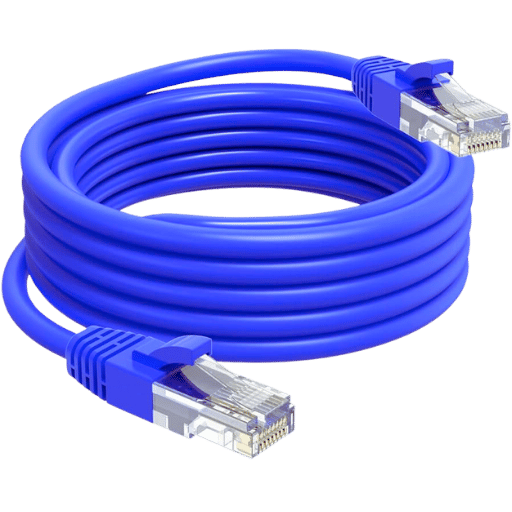
As a leading manufacturer with over 26 years of experience in network cabling solutions, we at Dlaycable want to demystify this topic. dlaycable will break down the differences between Cat5e and Cat6, helping you make an informed decision for your specific needs.
Understanding the ‘Cat’: What are Ethernet Cable Categories?
The “Cat” in Ethernet cable names is short for “Category.” These categories are standards defined by the Telecommunications Industry Association (TIA) and Electronic Industries Alliance (EIA). Each higher category number represents a more recent standard with stricter requirements for performance, specifically regarding data transmission speed and bandwidth.
Essentially, a higher category means better performance and less interference or “crosstalk.” It’s important to note that while “Cat5” was once a standard, it is now considered obsolete. The current baseline is Category 5e (Enhanced).
A Deep Dive into Cat5e: The Reliable Standard
Category 5e (Cat5e) has been the go-to cable for residential and light commercial installations for years. It was designed to reliably support Gigabit Ethernet speeds, making it a significant improvement over its predecessor, Cat5.
- Speed: Supports speeds up to 1 Gigabit per second (Gbps).
- Bandwidth: Operates at a frequency of 100 MHz.
- Best For: Home networking, small office environments, and applications where Gigabit speeds are sufficient, such as web browsing, streaming HD video, and standard office tasks.
- Advantages: Cat5e is highly affordable, flexible, and easy to install, making it an excellent budget-friendly choice for many standard applications.
Stepping Up to Cat6: The High-Performance Choice
Category 6 (Cat6) represents a major step up in performance. It features more tightly twisted pairs of wires and often includes a “spline”—a plastic divider that separates the pairs to reduce crosstalk and interference. This robust construction allows for higher speeds and greater bandwidth.
- Speed: Supports speeds up to 10 Gbps over shorter distances (typically up to 55 meters). For distances up to 100 meters, it reliably delivers 1 Gbps.
- Bandwidth: Operates at a frequency of 250 MHz, more than double that of Cat5e.
- Best For: Business networks, data centers, and demanding home applications like 4K video streaming, online gaming, and large file transfers. It’s the preferred choice for future-proofing a network.
- Advantages: Significantly better performance and signal integrity. The higher bandwidth ensures more stable connections in environments with high data traffic or electromagnetic interference.
Cat5e vs. Cat6: The Head-to-Head Comparison
Seeing the specifications side-by-side makes the differences clear. Here’s a direct comparison of the key metrics:
| Feature | Cat5e | Cat6 |
|---|---|---|
| Max Speed (Data Rate) | 1 Gbps | 10 Gbps (up to 55m) |
| Bandwidth (Frequency) | 100 MHz | 250 MHz |
| Crosstalk Reduction | Good | Excellent (stricter standards, often has a spline) |
| Cost | Lower | Higher (approx. 20-30% more) |
| Max Standard Length | 100 meters (328 ft) | 100 meters (328 ft) |
Making the Right Choice: Which Cable Is for You?
The best cable is the one that meets your current and future needs without overspending. Let’s break it down by use case:
For Standard Home Use
If your primary activities are browsing the internet, checking emails, and streaming HD content on one or two devices, Cat5e is perfectly adequate and cost-effective. It delivers the Gigabit speeds that most home internet plans provide.
For Power Users, Gamers, and Future-Proofing Homes
If you’re a serious gamer, work from home with large file transfers, stream 4K/8K video, or simply want to ensure your home network is ready for the next decade of technology, investing in Cat6 is a smart choice. The extra cost is minimal for the significant performance headroom it provides.
For Office, Business, and Data Center Installations
For any new commercial or business installation, Cat6 should be the minimum standard. The higher bandwidth supports a greater number of users and devices (computers, VoIP phones, security cameras, servers) simultaneously without performance degradation. For data centers or high-demand environments, you may even consider Cat6A or higher, but Cat6 is the solid foundation for modern business.
Practical Considerations: Beyond the Specs
There are two more points to consider when making your choice:
- Backward Compatibility: Yes, both Cat5e and Cat6 are backward compatible. You can plug a Cat6 cable into a device or patch panel designed for Cat5e and it will work, but it will only perform at the Cat5e standard. To get the full benefit of Cat6, your entire network—including your router, switches, and connected devices—must support its speeds.
- The Importance of Quality: A cable is only as good as its construction and materials. A poorly made Cat6 cable can perform worse than a high-quality Cat5e cable. Always choose cables from a reputable manufacturer that adheres to strict quality standards and holds certifications like UL, ETL, CE, and RoHS. These certifications guarantee the cable meets safety and performance benchmarks, a cornerstone of Dlaycable’s manufacturing philosophy.
The Dlaycable Advantage: Your Partner in Connectivity
Choosing the right cable is the first step. Choosing the right partner ensures your project’s success. At Dlaycable, we don’t just sell cables; we provide comprehensive connectivity solutions.
- Experience & Expertise: With over 26 years in the industry, we have the technical knowledge to guide you to the perfect solution.
- Guaranteed Quality: Our products are certified by UL, ETL, CE, and RoHS, and we back them with Fluke testing reports. You can trust our cables to perform.
- One-Stop Solution: From Cat5e and Cat6 bulk cables to patch cords, keystone jacks, patch panels, and installation tools, we offer everything you need for a complete network setup.
- Customization (OEM/ODM): We can create custom cable lengths, colors, and packaging to meet the specific requirements of your project.
Whether you need a reliable Cat5e cable for a home project or a high-performance Cat6 solution for your business infrastructure, Dlaycable has the quality products and expertise to support you. Don’t let your network’s potential be limited by the wrong cable.
Ready to build a faster, more reliable network? Contact the Dlaycable team today for a professional consultation or to request a quote for your project.