


Oil-resistant cables for autonomous mining trucks use advanced polymer sheathing to resist degradation from hydraulic fluids and mechanical wear, ensuring reliable power.
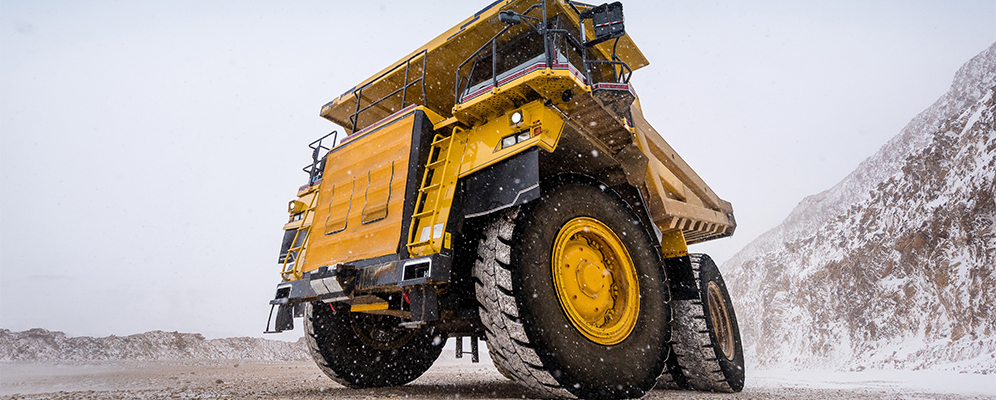
The evolution of mining into a highly automated industry, driven by Autonomous Haulage Systems (AHS), places unprecedented demands on its foundational infrastructure. The lifeblood of these robotic giants is the constant, reliable flow of power and data, delivered through highly specialized cables. These are not ordinary wires; they are engineered lifelines designed to withstand some of the harshest operating conditions on Earth. This text delves into the critical role of advanced, oil-resistant, and abrasion-proof cables in powering long-distance autonomous haulage, ensuring operational efficiency and safety in modern mining.
Table of Contents
- What Are the Power Demands of Autonomous Mining Haulage?
- Why Are Specialized Cables Essential for Autonomous Haulage Systems (AHS)?
- Deconstructing High-Performance Mining Cables: Oil Resistance and Durability
- The Critical Role of Abrasion Resistance in Mining Environments
- Solving the Long-Distance Power Challenge in Open-Pit Mines
- How to Select the Right Cable for Your Autonomous Fleet?
What Are the Power Demands of Autonomous Mining Haulage?
Autonomous haulage trucks, the workhorses of modern surface mining, operate 24/7 with minimal human intervention. This continuous operation requires a constant and robust power supply, often delivered via reeling or trailing cables, especially for electrically powered or trolley-assisted fleets. Unlike diesel-powered trucks, these electric systems significantly reduce carbon emissions and operational costs, but they introduce the challenge of maintaining a physical power connection in a dynamic, rugged environment. The cables must handle high electrical loads to power massive motors capable of moving hundreds of tons of earth, all while being spooled, dragged, and flexed thousands of times.
Furthermore, these cables are not just power conduits. They often integrate fiber optic elements for high-speed data transmission, which is essential for the truck’s navigation, control, and communication with the central command system. Any interruption in this data link can bring a multi-million-dollar piece of equipment to an immediate halt. Therefore, the demand is for a hybrid cable solution that guarantees both high-power fidelity and flawless data integrity under extreme mechanical and environmental stress.
Why Are Specialized Cables Essential for Autonomous Haulage Systems (AHS)?
Standard industrial cables would fail catastrophically within hours or days in a mining environment. The operational context of an autonomous mine—characterized by rough terrain, constant movement, and exposure to harsh elements—necessitates cables built to a far higher standard of resilience. Specialized mining cables are engineered specifically to counteract the unique combination of threats present in these settings.
The Unacceptable Cost of Downtime
In a large-scale mining operation, every minute of unplanned downtime translates into significant financial loss. A single autonomous haulage truck being out of commission can disrupt the entire production chain. Cable failure is a primary cause of such downtime. A severed or damaged cable not only stops the truck but also requires specialized repair crews and equipment to fix, a process that is both time-consuming and hazardous. Investing in high-quality, durable cables designed for AHS applications is a direct investment in maximizing operational uptime and profitability.
Ensuring Safety and Operational Integrity
While AHS reduces the number of personnel in hazardous areas, it introduces new safety considerations. A damaged power cable can create a severe electrical hazard, posing a risk to any maintenance staff in the vicinity. Furthermore, a sudden loss of power or data could cause unpredictable behavior in an autonomous vehicle. Therefore, the integrity of the cable is paramount for operational safety. Cables with reinforced construction, high-visibility coloring, and sheathing that resists cuts and punctures are not just functional components; they are critical safety equipment.
Deconstructing High-Performance Mining Cables: Oil Resistance and Durability
The performance of a mining cable is determined by the synergy of its components. From the conductor that carries the current to the outer jacket that protects it from the world, every layer is meticulously designed and manufactured for survival.
Clarification: Oil-Resistant vs. Oil-Filled Cables
It is important to distinguish between two terms. Oil-filled cables are a specific type of high-voltage power cable, typically used in static applications, where the interior is filled with insulating oil for cooling and dielectric strength. In contrast, the flexible, dynamic cables used for mobile mining equipment are oil-resistant. This means their outer sheathing is made from compounds that do not degrade upon contact with hydrocarbons like diesel, grease, and hydraulic fluids, which are ubiquitous in a mine. This resistance prevents the jacket from swelling, cracking, or becoming brittle, which would compromise the cable’s mechanical and electrical integrity.
Core Components and Their Function
A typical heavy-duty mining cable for AHS consists of several key layers. At the center are the finely stranded, flexible copper conductors that allow for repeated bending without work-hardening and breaking. Each conductor is protected by high-grade insulation, often made from Ethylene Propylene Rubber (EPR), which offers excellent dielectric strength and thermal resistance. For data, shielded twisted pairs or robust fiber optic cables are bundled alongside the power cores. The entire bundle is then wrapped in an inner jacket and often a textile braid or aramid yarn reinforcement to handle extreme pulling forces (tensile stress). This entire construction is then encased in the most critical layer for durability: the outer sheath.
The Superiority of Polyurethane (PUR) Sheathing
While various rubber compounds are used, polyurethane (PUR) has emerged as the premier material for the outer sheaths of high-performance mining cables. Its properties make it uniquely suited for the challenges of autonomous haulage. Manufacturers with expertise in harsh environments, such as D&L AY CABLE, often recommend PUR jackets for their most demanding applications due to their exceptional material characteristics.
The table below compares PUR to other common sheathing materials:
| Feature | Polyurethane (PUR) | Heavy-Duty Rubber (e.g., CPE) | Polyvinyl Chloride (PVC) |
|---|---|---|---|
| Abrasion Resistance | Excellent | Good | Poor |
| Oil & Chemical Resistance | Excellent | Good | Fair |
| Tear Resistance | Excellent | Good | Poor |
| Flexibility at Low Temps | Excellent | Good | Poor (becomes brittle) |
| UV Resistance | Good to Excellent | Good | Fair |
The Critical Role of Abrasion Resistance in Mining Environments
In an open-pit mine, a cable is constantly under attack. It is dragged over sharp rocks, gravel, and sand, which act like sandpaper on the outer jacket. It is run over by other vehicles and subjected to crushing forces. Abrasion is the primary mode of failure for cables in this application. A cable with poor abrasion resistance will see its outer jacket quickly worn away, exposing the inner components to moisture, dust, and further mechanical damage, leading to inevitable electrical failure.
This is where the high-tensile strength and tear resistance of a PUR jacket become critical. It provides a tough, smooth, and resilient barrier that can withstand being dragged across abrasive surfaces day after day. This “wear-and-tear” resistance directly translates to a longer service life, reduced need for repairs, and a more reliable power supply for the autonomous fleet. The investment in a premium, abrasion-resistant cable pays for itself many times over by preventing costly failures and extending maintenance cycles.
Solving the Long-Distance Power Challenge in Open-Pit Mines
Open-pit mines are vast, with haulage routes that can span several kilometers. Transmitting high levels of electrical power over such long distances presents significant engineering challenges that must be addressed in the cable’s design.
Minimizing Voltage Drop
According to Ohm’s law, power is lost as heat over the length of any conductor. Over long distances, this can lead to a significant “voltage drop,” meaning the voltage arriving at the truck is much lower than what was sent from the substation. This can cause motors to underperform or overheat. To counteract this, long-distance mining cables are designed with larger conductor cross-sections (thicker wires), which reduces electrical resistance. The cable must be precisely engineered to deliver the required voltage and amperage at the maximum operational distance, a critical calculation for ensuring the fleet runs at peak efficiency.
Structural Reinforcement for Tensile Strength
A long cable is also a heavy cable. When it is reeled in or dragged, the cable is subjected to immense pulling forces, or tensile stress. Without proper reinforcement, the copper conductors themselves could stretch and break. To prevent this, high-strength elements like aramid fibers (similar to those used in ballistic vests) or steel-strength members are integrated into the cable’s core. These elements bear the mechanical load, protecting the delicate electrical and fiber optic components from being damaged by tension. Leading manufacturers, such as D&L AY CABLE, specialize in engineering custom cable solutions with enhanced torsional strength and flexibility to meet the specific operational dynamics of different AHS models.
How to Select the Right Cable for Your Autonomous Fleet?
Choosing the correct cable is a critical decision that impacts productivity, safety, and total cost of ownership. The selection process should go beyond basic voltage and conductor size. Key factors to consider include the specific environmental conditions of the mine, such as the abrasiveness of the terrain and the presence of chemicals. The operational dynamics of the reeling system, including winding speed and tension levels, must also be taken into account. Finally, the required data rate for the autonomous system will determine the specification of the integrated fiber optic components.
Working with a specialized cable manufacturer is essential. They can provide expert guidance on material selection, construction design, and compliance with international mining standards (like MSHA, IEC, and VDE). A purpose-built cable, engineered with a robust PUR outer sheath, proper structural reinforcement, and high-flex conductors, is the only way to guarantee the reliability and longevity required to power the future of mining.