


For PoE surveillance, solid copper Cat6 cable is the recommended choice, balancing performance, power delivery, and cost for most modern IP camera systems. It provides a reliable foundation for both data and power, ensuring your security infrastructure operates without compromise.
Table of Contents
- What is Power over Ethernet (PoE) in Surveillance?
- Why is Your Choice of Category Cable Critical for PoE?
- Comparing Ethernet Cable Categories for Security Cameras
- The Most Important Factor: Solid Copper vs. Copper-Clad Aluminum (CCA)
- Which PoE Standard Does Your Camera System Require?
- Do You Need Shielded (STP) or Unshielded (UTP) Cables?
- Matching Cable Construction to Your Installation Environment
- Best Practices for Installing PoE Surveillance Cables
What is Power over Ethernet (PoE) in Surveillance?
Power over Ethernet (PoE) is a transformative technology that allows a single network cable to transmit both data and electrical power to connected devices. In the context of surveillance, this means an IP security camera can be powered up and connected to the network using just one Ethernet cable. This eliminates the need for a separate power outlet near the camera, drastically simplifying installation, reducing costs, and increasing placement flexibility.
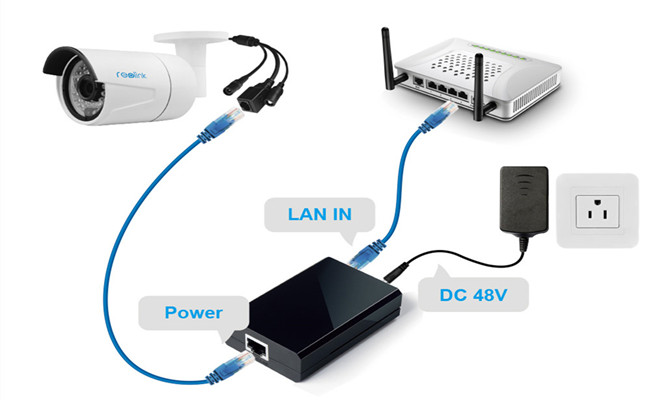
The system consists of two main components: the Power Sourcing Equipment (PSE), such as a PoE network switch or injector, which supplies the power; and the Powered Device (PD), which is the IP camera itself. The category cable acts as the crucial link, carrying the DC power from the PSE to the PD alongside the high-speed data stream, making it a fundamental component of any modern security system.
Why is Your Choice of Category Cable Critical for PoE?
When selecting a cable for a standard data-only network, the primary concern is bandwidth and signal integrity. However, for PoE applications, the cable’s role is far more demanding. The wrong choice can lead to underpowered cameras, intermittent video feeds, and even a potential fire hazard. The quality of the category cable directly impacts the efficiency of power delivery, heat dissipation, and the long-term reliability of your entire surveillance system.
A substandard cable can suffer from significant voltage drop over its length, meaning the camera at the far end may not receive enough power to operate its functions correctly, especially features like pan-tilt-zoom (PTZ), night vision IR illuminators, or built-in heaters. Furthermore, the electrical resistance in a poor-quality cable generates excess heat. When multiple PoE cables are bundled together, this heat can build up, degrading the cable’s performance and service life.
Comparing Ethernet Cable Categories for Security Cameras
Different categories of Ethernet cables offer varying levels of performance. While older standards may function, modern surveillance systems demand more robust solutions to handle higher resolutions and power requirements.
Cat5e: The Baseline Standard
Category 5e (Cat5e) has long been a workhorse for networking. It supports data speeds up to 1 Gigabit per second (Gbps) and can deliver basic PoE (IEEE 802.3af). For a simple, fixed-position IP camera with low power needs, a high-quality solid copper Cat5e cable might be sufficient for shorter runs. However, its thinner conductors (typically 24 AWG) and less stringent performance specifications make it more susceptible to power loss and less suitable for high-power cameras or future system upgrades.
Cat6: The Recommended Choice for Modern Systems
Category 6 (Cat6) represents the sweet spot for performance, price, and power delivery in today’s surveillance market. It supports data speeds up to 10 Gbps at shorter distances and features thicker copper conductors (typically 23 AWG) and tighter twists than Cat5e. This superior construction results in lower electrical resistance, which means less heat buildup and more efficient power delivery to the camera. This makes Cat6 the ideal choice for 4K cameras, PTZ models, and systems requiring PoE+ (IEEE 802.3at) power. Products like D-Lay Cable’s solid copper Cat6 CMR cables are engineered specifically to handle these dual demands reliably.
Cat6A and Beyond: For High-Power and Future-Proofing
Category 6A (Augmented) and higher categories like Cat7 or Cat8 are designed for high-demand 10 Gbps networking environments. For PoE, their primary advantage is even thicker conductors and better heat dissipation, making them the best option for the highest-power PoE++ (IEEE 802.3bt) devices. If you are installing cameras with built-in heaters, powerful illuminators, or preparing for the next generation of surveillance technology, investing in Cat6A ensures your cabling infrastructure is ready for future demands.
| Feature | Cat5e | Cat6 | Cat6A |
|---|---|---|---|
| Max Data Rate (at 100m) | 1 Gbps | 1 Gbps (10 Gbps < 55m) | 10 Gbps |
| Typical Conductor Gauge | 24 AWG | 23 AWG | 22-23 AWG |
| Recommended PoE Standard | PoE (802.3af) | PoE+ (802.3at) | PoE++ (802.3bt) |
| Best For | Basic, low-power fixed cameras | 4K, PTZ, and most modern IP cameras | High-power devices, future-proofing |
The Most Important Factor: Solid Copper vs. Copper-Clad Aluminum (CCA)
What is the single most important specification to check when buying cable for PoE? It is the conductor material. Cables must be made of 100% solid bare copper. Many cheaper cables on the market use Copper-Clad Aluminum (CCA), where an aluminum core is coated with a thin layer of copper. While these may pass data signals over short distances, they are entirely unsuitable and unsafe for PoE applications.
Aluminum has significantly higher electrical resistance than copper. This causes three critical problems:
- Severe Power Loss: More energy is lost as heat, resulting in a significant voltage drop that can starve the camera of power.
- Excessive Heat Buildup: The high resistance generates dangerous levels of heat, especially in cable bundles, which can damage the cable’s insulation and create a fire risk.
- Brittleness: CCA wires are brittle and can easily break during installation, leading to connection failures.
Reputable manufacturers like D-Lay Cable only produce ETL or UL-certified solid copper cables, ensuring they meet strict safety and performance standards for power delivery. Always check the specifications to confirm you are purchasing solid copper, not CCA.
Which PoE Standard Does Your Camera System Require?
Understanding the different PoE standards helps you match your power source (PSE) and cables to your cameras’ (PD) needs. The standards define the maximum power that can be delivered.
| Standard | IEEE Specification | Max Power to PD | Common Camera Types |
|---|---|---|---|
| PoE | 802.3af | ~13 W | Basic fixed dome/bullet cameras, indoor models |
| PoE+ | 802.3at | ~25.5 W | PTZ cameras, cameras with IR illuminators, 4K models |
| PoE++ (Type 3) | 802.3bt | ~51 W | High-performance PTZ cameras, multi-sensor cameras |
| PoE++ (Type 4) | 802.3bt | ~71 W | Cameras with integrated heaters/blowers for harsh environments |
Always check your camera’s datasheet for its power requirements. Using a Cat6 solid copper cable is a safe bet that will support both PoE and PoE+ effectively, covering the vast majority of surveillance cameras on the market today.
Do You Need Shielded (STP) or Unshielded (UTP) Cables?
Another consideration is whether to use Shielded Twisted Pair (STP) or Unshielded Twisted Pair (UTP) cable. UTP is the most common type and is sufficient for most indoor and many outdoor surveillance installations. Its twisted-pair design naturally cancels out a good amount of interference.
STP cable includes a metallic foil or braid shield around the twisted pairs, which provides extra protection against electromagnetic interference (EMI). You should choose STP cable if your cable runs are:
- Located near high-voltage electrical wiring or power equipment.
- Passing close to fluorescent lighting fixtures or industrial machinery.
- In environments with high levels of radio frequency (RF) interference.
While STP offers superior protection, it requires proper grounding at termination points to be effective. If not grounded correctly, the shield can act as an antenna and actually worsen interference.
Matching Cable Construction to Your Installation Environment
Beyond the category and conductor material, the physical construction of the cable plays a vital role in performance and safety.
Wire Gauge (AWG) and Its Impact on Power
Wire gauge, measured in American Wire Gauge (AWG), indicates the diameter of the conductor. A lower AWG number means a thicker wire. For PoE, thicker is better. Cat6 cables typically use 23 AWG wire, which is thicker than the 24 AWG wire found in most Cat5e cables. This larger diameter reduces resistance, improving power efficiency and minimizing heat. When selecting a cable, a lower AWG number is always preferable for PoE performance.
Jacket Ratings for Safety and Compliance (CMR, CMP)
The cable’s outer jacket is rated for fire safety. Using the correct jacket type is essential for meeting building codes.
- CMP (Communications Multipurpose Cable, Plenum): This is the highest fire-retardant rating. Plenum-rated cables are designed for use in “plenum” spaces—the areas used for air circulation in buildings, such as drop ceilings or raised floors. They are made from materials that burn slower and produce less toxic smoke.
- CMR (Communications Multipurpose Cable, Riser): Riser-rated cables are designed for vertical runs between floors through non-plenum shafts. They are fire-retardant but do not meet the strict standards of CMP cables.
- CM/CMG (General Purpose): Suitable for general, single-floor residential or commercial runs where plenum or riser ratings are not required.
For outdoor or direct-burial applications, you need a cable with a CMX-rated jacket, which is resistant to UV light and moisture.
Best Practices for Installing PoE Surveillance Cables
To ensure optimal performance and longevity, proper installation is key.
- Respect the Distance Limit: The maximum channel length for Ethernet cabling is 100 meters (328 feet). For PoE, it is wise to keep runs shorter if possible to minimize voltage drop.
- Avoid Tight Bends: Do not exceed the cable’s minimum bend radius (typically 4 times the cable diameter). Sharp kinks can damage the internal conductors and degrade performance.
- Maintain Separation from Power Lines: When running parallel to electrical cables, maintain as much distance as possible to reduce the chance of EMI.
- Use Quality Connectors and Tools: Poor terminations are a common point of failure. Use high-quality RJ45 connectors and proper crimping tools to ensure a solid, reliable connection.
Investing in a high-quality, certified solid copper category cable is a foundational step in building a dependable and high-performing PoE surveillance system. Making the right choice ensures your cameras receive stable power and deliver clear, uninterrupted video for years to come.