


In a world of ever-increasing internet speeds, 4K streaming, and data-hungry smart devices, it’s easy to assume that older technology is obsolete. The Cat5e Ethernet cable, once the gold standard for network connectivity, now shares the stage with its more advanced siblings like Cat6, Cat6a, and even Cat8. This leaves many home and business owners asking a critical question: is there still a place for Cat5e in today’s networks?
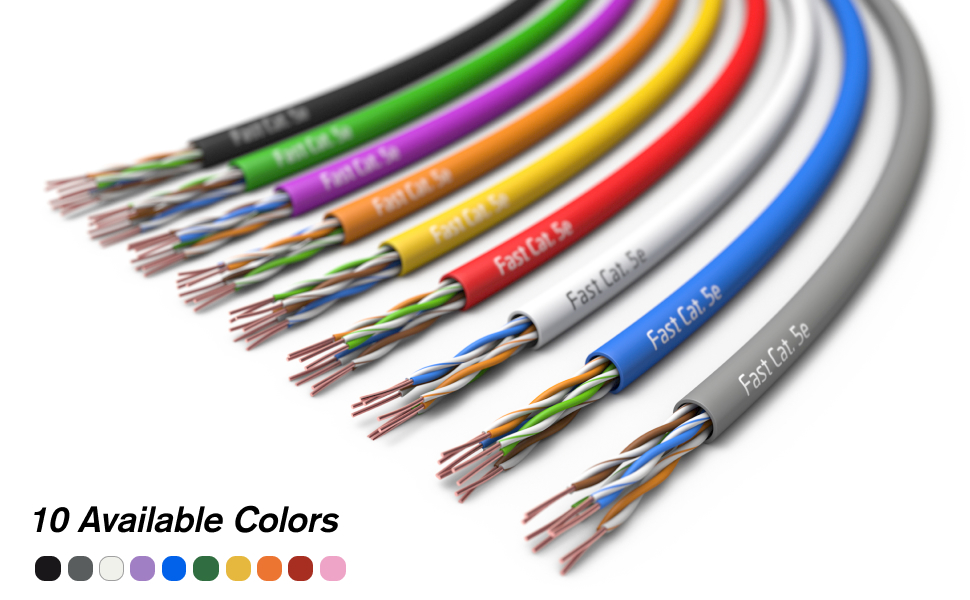
As a leading manufacturer of network cabling solutions, we at Dlaycable believe in empowering our customers with knowledge. The right cable isn’t always the newest or most expensive—it’s the one that perfectly matches your needs, budget, and performance goals. dlaycable will cut through the noise and give you a clear, honest answer.
Article Contents:
- 1. What is Cat5e Cable, Really? Understanding the Specs
- 2. The Main Event: Cat5e vs. Cat6
- 3. The Green Light: Scenarios Where Cat5e is the Smart Choice
- 4. The Red Flag: When to Upgrade to Cat6 or Higher
- 5. Beyond the Category: Why Cable Quality is Non-Negotiable
- 6. The Final Verdict: Making the Right Choice for Your Network
1. What is Cat5e Cable, Really? Understanding the Specs
Before we can decide its fate, let’s establish what Cat5e (Category 5 Enhanced) cable is. Introduced in 2001, it was an improvement upon the original Cat5 standard, designed to reduce crosstalk (interference between wire pairs) and deliver more reliable performance.
Here are its key specifications:
- Speed: Supports speeds up to 1 Gigabit per second (Gbps).
- Bandwidth: Operates at a frequency of 100 MHz.
- Distance: Maintains 1 Gbps speeds over distances up to 100 meters (328 feet).
For years, this combination was more than enough for the average internet connection and local network tasks. The question is, does it still hold up?
2. The Main Event: Cat5e vs. Cat6
The most common dilemma for buyers is choosing between Cat5e and its direct successor, Cat6. While they may look similar, their internal construction and performance capabilities are different. This is where most of the decision-making happens.
| Feature | Cat5e Cable | Cat6 Cable |
|---|---|---|
| Max Speed | 1 Gbps @ 100 meters | 10 Gbps @ up to 55 meters; 1 Gbps @ 100 meters |
| Bandwidth | 100 MHz | 250 MHz |
| Crosstalk | Meets baseline standards for 1 Gbps | Significantly less crosstalk due to tighter twisted wires and often a central spline (plastic divider). |
| Cost | Most affordable | Moderately more expensive than Cat5e |
What does this mean in plain English? While both cables can handle a standard 1 Gbps internet connection, Cat6’s higher bandwidth (250 MHz vs. 100 MHz) is like having a wider highway. It can handle more traffic simultaneously with less interference, leading to a more stable and reliable connection, especially in environments with a lot of electronic noise.
3. The Green Light: Scenarios Where Cat5e is the Smart Choice
Despite its age, Cat5e remains a perfectly viable and cost-effective solution in several specific situations. You can confidently choose Cat5e if:
- Your Internet Speed is 1 Gbps or Less: If your internet plan is 1 Gbps or below, Cat5e can deliver that speed without bottlenecking. For the majority of home users, this is more than sufficient.
- You’re on a Tight Budget: For large-scale deployments or simple home projects where every dollar counts, Cat5e offers the best price-to-performance ratio. You get gigabit speed at the lowest cost.
- The Application is Not Data-Intensive: Connecting peripherals like printers, VoIP phones, or basic office computers that don’t transfer large files continuously is a perfect job for Cat5e.
- You’re Setting Up a Temporary Network: For events, temporary offices, or short-term installations, the cost savings of Cat5e make it a logical choice.
4. The Red Flag: When to Upgrade to Cat6 or Higher
Future-proofing is the primary reason to look beyond Cat5e. The cost of labor for installing cables often far exceeds the cost of the cable itself. It’s better to install a more capable cable now than to rip out walls later. We recommend choosing Cat6 or higher when:
- You Are Building a New Home or Office: For any new construction, installing Cat6 (or even Cat6a for ultimate future-proofing) is the industry standard. It prepares your infrastructure for the multi-gig internet speeds of tomorrow.
- Your Internet Plan Exceeds 1 Gbps: If you have or plan to get a 2.5, 5, or 10 Gbps internet connection, Cat5e will be a bottleneck. Cat6a or Cat8 is required to take full advantage of these speeds.
- You Have a High-Demand Local Network: If you frequently transfer large files between computers, run a media server, or work with high-resolution video, the superior stability and bandwidth of Cat6 will provide a noticeably smoother experience.
- You Need to Mitigate Interference: In environments with significant electromagnetic interference (EMI) from machinery, power lines, or dense cabling, the superior shielding and tighter twists of Cat6 provide a more robust signal.
- Power over Ethernet (PoE) Applications: While Cat5e can handle basic PoE, Cat6 and higher standards are better suited for more demanding PoE+ and PoE++ devices like high-powered security cameras and wireless access points due to better heat dissipation.
5. Beyond the Category: Why Cable Quality is Non-Negotiable
Whether you choose Cat5e or Cat6, the single most important factor is the quality of the cable itself. A poorly made Cat6 cable will perform worse than a high-quality Cat5e cable. This is where partnering with a trusted manufacturer like Dlaycable makes all the difference.
Here’s what to look for, and what we guarantee in our products:
- Pure Bare Copper Conductors: Always choose solid bare copper over Copper Clad Aluminum (CCA). CCA is cheaper but breaks easily, has higher resistance, and is non-compliant with UL and TIA standards for network cabling. All Dlaycable network cables use 100% pure copper for maximum performance and safety.
- Certified Performance: Look for certifications like UL or ETL, which verify safety and quality standards. Our cables are rigorously tested and certified to meet and exceed industry specifications.
- Verified Testing: We use state-of-the-art Fluke Testers to verify that every batch of cable we produce performs to its rated speed and bandwidth. This ensures you get exactly what you pay for.
- RoHS Compliance: This certification ensures the cable is free from hazardous materials, making it safe for both you and the environment.
Buying cheap, uncertified cable is a gamble that can lead to network failures, slow speeds, and a frustrating troubleshooting process. Investing in quality-assured cable from a professional manufacturer is the best insurance for your network’s foundation.
6. The Final Verdict: Making the Right Choice for Your Network
So, should you still buy Cat5e cable? Yes, but for the right reasons.
Buy Cat5e if your primary concerns are cost and you have a current network demand of 1 Gbps or less. It remains a reliable and economical workhorse for many standard applications.
Buy Cat6 (or higher) if you are investing in the future, require performance above 1 Gbps, or are installing cable in a new build. The modest additional cost is a small price to pay for years of worry-free, high-performance connectivity.
At Dlaycable, we offer a complete range of networking solutions, from reliable Cat5e to future-proof Cat8, all manufactured to the highest standards of quality and performance. Whether you need a standard patch cord or a custom OEM/ODM solution, our team is here to help you build a network that’s powerful, reliable, and ready for whatever comes next.
Explore our full range of certified Cat5e cables and Cat6 cables, or contact our experts today for a personalized recommendation for your project.