


In today’s hyper-connected world, a fast and reliable network is no longer a luxury—it’s the backbone of our homes and businesses. From streaming 4K video and competitive online gaming to running a data-intensive office, the quality of your connection matters. At the heart of that connection is the often-overlooked but critically important Ethernet cable. As a leading manufacturer of network cabling solutions, we at D-Lay Cable want to demystify one of the most popular and effective standards available today: the Category 6, or Cat6, Ethernet cable.
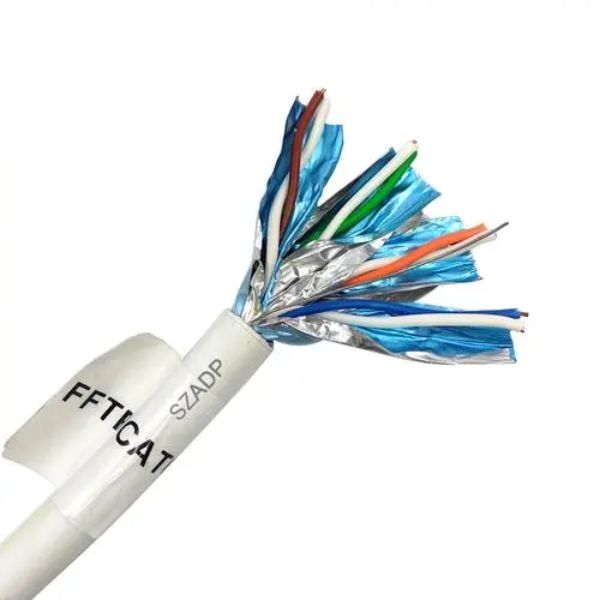
dlaycable will walk you through what Cat6 is, how it compares to other standards, and why choosing a high-quality cable is essential for unlocking your network’s true potential.
Article Contents
- What is Cat6 Ethernet Cable? A Clear Definition
- Cat6 vs. Cat5e vs. Cat6a: A Head-to-Head Comparison
- The Anatomy of a High-Performance Cat6 Cable: What to Look For
- Shielded (STP) vs. Unshielded (UTP) Cat6: Which Do You Need?
- When Should You Choose Cat6? Key Applications
- Why Source Your Cat6 Cables from a Trusted Manufacturer?
- Frequently Asked Questions (FAQ) About Cat6 Cables
What is Cat6 Ethernet Cable? A Clear Definition
A Category 6 (Cat6) Ethernet cable is a standardized twisted pair cable for Ethernet and other network physical layers that is backward compatible with the Category 5/5e and Category 3 cable standards. Compared to its predecessor, Cat5e, Cat6 must meet more stringent specifications for crosstalk and system noise.
What does this mean in practical terms? It means a Cat6 cable is designed for higher performance and can handle more data, more reliably. The key specifications are:
- Speed: Supports speeds up to 10 Gbps (Gigabits per second) over short distances (typically up to 55 meters or 180 feet). For longer distances up to 100 meters (328 feet), it reliably delivers 1 Gbps speeds.
- Bandwidth: Features a bandwidth of 250 MHz, which is more than double that of Cat5e (100 MHz). Think of bandwidth as a highway: a 250 MHz highway has more lanes than a 100 MHz one, allowing more data to travel simultaneously without congestion.
Cat6 vs. Cat5e vs. Cat6a: A Head-to-Head Comparison
Choosing the right cable can be confusing. Here’s a simple breakdown of how Cat6 stacks up against its closest relatives, Cat5e and Cat6a, to help you make an informed decision.
| Feature | Cat5e | Cat6 | Cat6a |
|---|---|---|---|
| Max Speed | 1 Gbps @ 100m | 1 Gbps @ 100m / 10 Gbps @ 55m | 10 Gbps @ 100m |
| Bandwidth | 100 MHz | 250 MHz | 500 MHz |
| Crosstalk Reduction | Basic | Good (Often has a spline) | Excellent (Thicker, better shielding) |
| Best For | Basic home/office use, 1 Gbps networks | Modern home/office, future-proofing for multi-gig speeds, PoE devices | Data centers, 10G networks, high-interference areas |
For most modern applications, Cat6 hits the sweet spot of performance, future-proofing, and cost-effectiveness.
The Anatomy of a High-Performance Cat6 Cable: What to Look For
Not all Cat6 cables are created equal. As manufacturers with stringent quality control, we know that performance comes from the inside out. Here’s what constitutes a superior Cat6 cable:
1. Conductors: 100% Pure Bare Copper
This is the single most important factor. High-quality cables use 100% solid bare copper conductors. Cheaper alternatives use Copper Clad Aluminum (CCA), which has higher resistance, breaks more easily, and is not compliant with UL and TIA standards. CCA cables lead to data loss, slower speeds, and can even be a fire hazard in Power over Ethernet (PoE) applications. At D-Lay Cable, we use only pure copper to guarantee performance and safety.
2. Tighter Twists and a Spline
Cat6 cables feature four pairs of twisted copper wires. The twists are tighter than in Cat5e, which is a primary defense against crosstalk (signal interference between pairs). Many Cat6 cables also include a plastic separator called a spline that runs down the center, isolating each pair to further reduce crosstalk and ensure a stable, high-speed signal.
3. Durable, Certified Jacket
The outer jacket protects the internal wires. Depending on the installation environment, you may need specific jacket ratings like CM (for general use), CMR (Riser, for vertical runs between floors), or CMP (Plenum, for air handling spaces). A quality jacket is durable and flexible, but most importantly, it’s certified for safety (e.g., UL, ETL).
Shielded (STP) vs. Unshielded (UTP) Cat6: Which Do You Need?
You will often see Cat6 cables described as either UTP or STP.
- UTP (Unshielded Twisted Pair): This is the most common type of Cat6 cable, perfectly suitable for most home and office environments where electromagnetic interference (EMI) is not a major concern.
- STP/FTP (Shielded/Foiled Twisted Pair): These cables include a layer of foil or braid shielding around the twisted pairs. This shield protects the data signal from significant EMI, which can be generated by heavy machinery, large power cables, or fluorescent lighting. Choose shielded Cat6 for factories, hospitals, data centers, or any installation near high-power electrical equipment.
When Should You Choose Cat6? Key Applications
Cat6 is the ideal choice for any application that demands high bandwidth and reliable speed. It is the workhorse of modern networking.
- High-Speed Home Networks: Perfect for connecting your router to your PC, smart TV, and gaming consoles for lag-free gaming and buffer-free 4K/8K streaming.
- Office and Business Networks: Provides a reliable backbone for workstations, servers, and VoIP phones, ensuring smooth business operations.
- Power over Ethernet (PoE): Its lower resistance and better heat dissipation make Cat6 excellent for powering devices like security cameras, wireless access points, and smart lighting directly through the Ethernet cable.
- Future-Proofing: As internet service providers begin offering multi-gigabit speeds to homes, installing Cat6 today ensures your network infrastructure is ready for the future.
Why Source Your Cat6 Cables from a Trusted Manufacturer?
When you build a network, you are building a foundation. Using subpar materials leads to network failures, slow speeds, and troubleshooting headaches. By partnering with a dedicated manufacturer like D-Lay Cable, you gain several advantages:
- Guaranteed Quality: We control the entire production process, from sourcing pure copper to final testing. Our products meet and exceed industry standards, with certifications like UL, ETL, and CE to prove it.
- Expertise and Support: We don’t just sell cables; we understand them. Our team can provide expert guidance to help you select the right products for your specific project, whether it’s a small home setup or a large-scale enterprise installation.
- Factory-Direct Value: Sourcing directly from the manufacturer eliminates middlemen, ensuring you get the best possible value without compromising on the quality essential for a high-performance network.
- Custom Solutions (OEM/ODM): We have the capability to create custom cable lengths, colors, and packaging to meet the unique requirements of your project.
Frequently Asked Questions (FAQ) About Cat6 Cables
Can I use a Cat6 cable with a Cat5e port or device?
Yes. Cat6 cables are fully backward compatible with Cat5e, Cat5, and Cat3 standards. You can plug a Cat6 cable into a Cat5e port, and it will work perfectly. However, your network speed will be limited by the lowest-rated component (e.g., the Cat5e port).
Is Cat6 difficult to install?
Cat6 cables are slightly thicker and less flexible than Cat5e due to the spline and thicker wires, which can make termination slightly more challenging. However, for anyone with basic networking experience, the process is very similar and manageable.
Is it worth upgrading from Cat5e to Cat6?
If you are running a 1 Gbps network and have no performance issues, an immediate upgrade may not be necessary. However, if you are installing a new network, experiencing bottlenecks, or want to prepare for future multi-gigabit speeds, upgrading to Cat6 is a highly recommended and cost-effective investment.